Next-Level Code. Nexuvibe Style ...
Hrs
Min
Sec

You give someone access to your WordPress site and trust them to do their job. Most of the time that trust is well placed. But at some point, something changes that should not have changed. A page disappears. A plugin gets turned off. Settings look different from how you left them. And you have no way of knowing whether it was an honest mistake, an oversight, or something more concerning, because nothing was recorded.
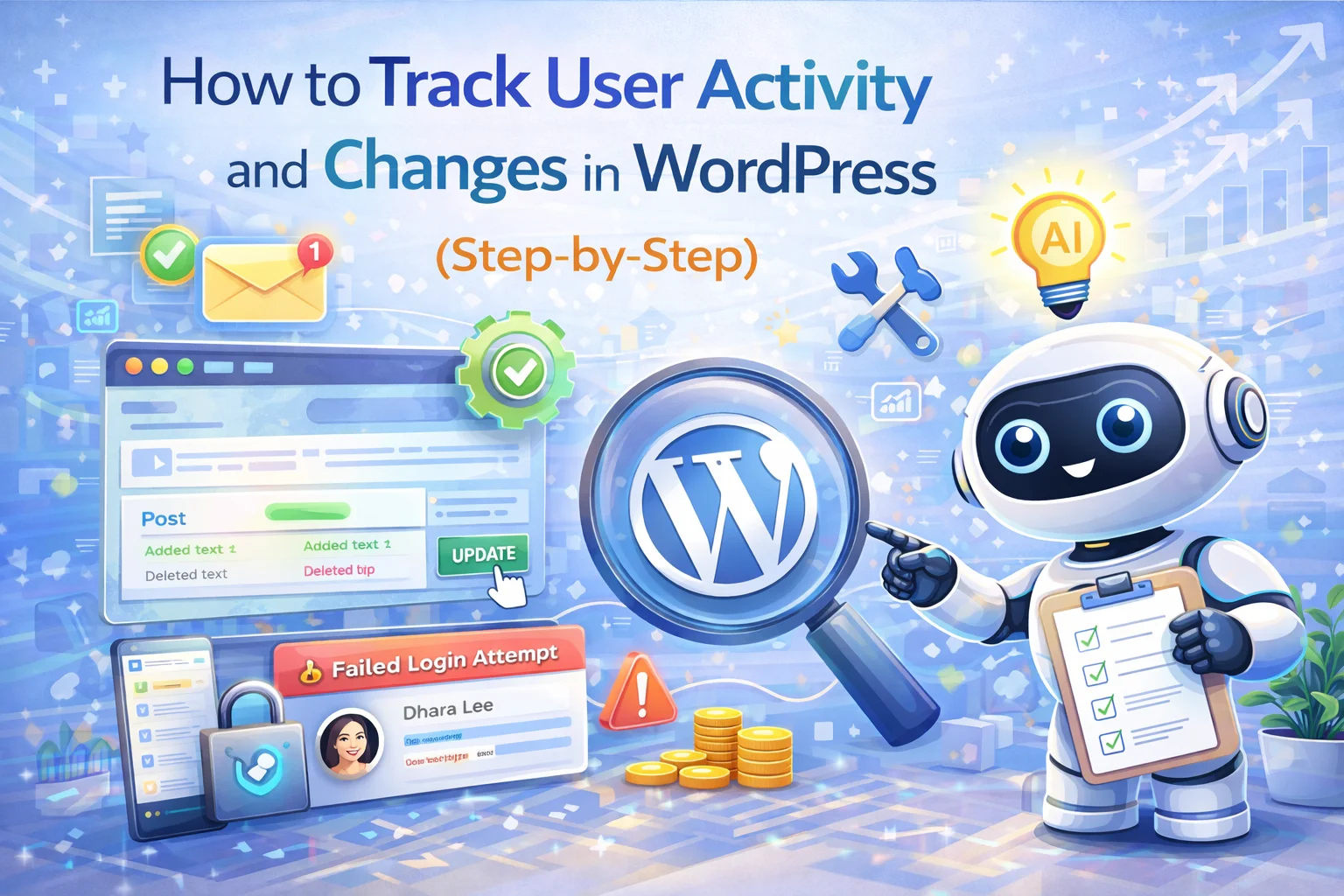
Tracking user activity in WordPress is not about distrust. It is about having answers when questions arise. It is about cutting a four-hour troubleshooting session down to ten minutes because you can see exactly what changed and when. It is about being able to tell a client or a stakeholder precisely what happened on their site during a given period. And yes, when a genuine security incident occurs, it is the foundation of any meaningful investigation.
This guide walks you through the entire process, from understanding what actually needs tracking to configuring a proper monitoring setup to interpreting what the data tells you. We use Nexu Activity Log for the practical examples because it is the most complete solution available for this job in 2026, but the principles apply regardless of which tool you end up using.
By the end of this guide, you will have a working user activity monitoring setup and a clear understanding of how to use it effectively.
Out of the box, WordPress keeps almost no meaningful record of what happens on your site. There is a basic post revision system that saves versions of content as you edit it, and there are some entries in the database that timestamp when things were created or modified. That is roughly the extent of it.
WordPress does not log who logged in or when. It does not record which user deleted a post. It does not track plugin activations, settings changes, user role modifications, or failed login attempts. There is no built-in record of when someone last accessed your site, what pages they visited in the admin, or what actions they took during their session.
This is not a design oversight. WordPress was built as a publishing platform, and comprehensive audit logging is a different kind of infrastructure from content management. The result, though, is that every meaningful WordPress site running without an activity log plugin is operating with no accountability layer at all.
Before setting anything up, it is worth being clear about what actually matters to track. Not all events are equally important. Trying to monitor everything with equal attention creates noise that drowns out the signals that matter. Here is how to think about it.
New administrator account creation. Changes to existing user roles, particularly privilege escalation. Plugin deactivation, especially security plugins. WordPress core file modifications. Failed login attempts above a threshold. Password changes on admin accounts. These are the events where delayed awareness can mean real damage. They need immediate notification, not a daily digest.
Plugin activations and updates. Theme changes. Settings modifications in WordPress core and major plugins. Post and page publication, editing, and deletion. User profile updates. WooCommerce product and order changes. Media uploads and deletions. These events are important for accountability and troubleshooting but rarely demand immediate action. A daily or weekly review is appropriate.
Successful logins with timestamps, IP addresses, and device information. Logout events. Session durations. Failed login attempts per user and per IP. Login times relative to each user’s normal patterns. Individual events here may be unremarkable. Patterns across multiple events reveal things that individual data points cannot: unusual login times, logins from new locations, account behavior that deviates from established baseline activity.
Here is the complete process for getting a proper WordPress user monitoring setup running from scratch. Each step builds on the last. Do not skip the configuration steps at the end, they are where the real value comes from.
From your WordPress admin, go to Plugins, then Add New Plugin, and search for your chosen activity log plugin. For the most complete coverage including AI analysis and real-time monitoring, install Nexu Activity Log. After uploading the plugin zip file, click Activate. The plugin will immediately begin capturing events from the moment it goes live. It does not backfill historical data, which is one more reason to install it before you need it rather than after.
Navigate to the plugin’s settings and review which event collectors are active. In Nexu Activity Log, you have 14 specialized collectors available, each covering a distinct category of WordPress activity. Enable all collectors that are relevant to how your site is used. For most sites, that means everything: user authentication, content management, plugin and theme management, settings changes, user management, and WooCommerce events if the plugin is installed. Only disable collectors for categories that genuinely do not apply to your site.
Decide how long you want to retain log data and configure automatic cleanup of records older than that threshold. For most sites, 90 days is a sensible baseline that balances the ability to investigate past incidents against database growth. Sites with compliance requirements should set retention to match their specific framework, which may require 6 months, 1 year, or longer. Configure the automatic pruning schedule to run regularly so old records are cleaned up without manual intervention.
This is the step most people skip and then regret. Alerts are what make the difference between a log that you look at when you already know something went wrong and a monitoring system that tells you when something needs your attention. Start by building rules for your critical events: new admin user creation, plugin deactivation, failed logins exceeding a threshold, and settings changes in core WordPress. Assign each rule to the appropriate notification channel. Immediate threats go to Slack or Telegram. Operational events can go to email on a scheduled digest.
If your activity log plugin supports AI-powered analysis, this is the step that transforms monitoring from a passive record into an active intelligence system. In Nexu Activity Log, connect your preferred AI provider in the settings and enable daily AI summaries. The AI will analyze the previous 24 hours of log data, identify patterns and anomalies, and present you with a concise summary of what happened and what warrants your attention. Instead of reviewing hundreds of raw log entries each morning, you read a structured analysis that surfaces the things that matter.
Configure automated reports that give you or your team a regular structured summary of activity over a defined period. A weekly report covering all significant events is a good baseline for most sites. Sites with compliance requirements should set up monthly reports that can be exported and stored as documented audit records. Scheduled reports ensure that log review happens consistently rather than only when a problem forces your hand.
Before you consider the setup complete, run a test. Log out of WordPress, log back in, make a small edit to a draft post, activate and then immediately deactivate a plugin, and change a minor setting. Then check the activity log to confirm all of those actions were captured correctly with the right user attribution, timestamp, and event details. Check that your alert rules fired as expected. A five-minute verification step confirms your monitoring is actually working before you rely on it.
Once your monitoring setup is running, the question becomes: how do you actually use it without it consuming significant time every day? The answer is a tiered review workflow that scales your attention to the level of concern each data type warrants.
The dashboard in a quality activity log plugin is your starting point. At a glance, it tells you whether anything significant happened in the last 24 hours that falls outside normal patterns. A clean dashboard with no highlighted anomalies is a meaningful data point in itself: it tells you that nothing critical occurred that the system flagged for your attention. That reading takes about five seconds.
If the AI summary is enabled, read it each morning before you look at anything else. The AI has already reviewed everything that happened and ranked it by importance. It will tell you whether yesterday was routine or whether there is something in the log worth investigating. Most days, the summary will confirm that everything is normal. The days when it does not are exactly the days you needed to know about quickly.
The real-time live stream is most valuable during active work sessions when multiple team members are making changes. You can watch events appear in real time and confirm that everything happening is expected. If you see an event you did not anticipate, you can address it immediately rather than piecing it together from logs hours later.
When something goes wrong and you need to use your log data to understand what happened, there is an investigation workflow that makes the process as fast and conclusive as possible. Here is how to approach it.
Identify exactly what changed and when it was first noticed. Use that timestamp as your anchor point and filter the log to show everything that happened in the window before and around it. You are looking for the action that directly caused the outcome, not necessarily the first suspicious thing you see. Keep the investigation scoped to the relevant time window initially.
A flat list of events sorted by time is hard to interpret when you are trying to understand a causal chain. Switch to the timeline view, which presents events as a connected sequence and makes it much easier to see which actions preceded which outcomes. The timeline view is particularly valuable when multiple users were active simultaneously.
If you have identified a specific user account as potentially involved, filter the log to show only their events within the relevant time window. Review their full session from login to logout. Look for actions that fall outside their normal scope or pattern. The per-user activity view in a quality log plugin shows you everything a specific user did across their session in a single view.
If the events look wrong but the user account is legitimate, check where the session originated. An IP address from an unusual location, a device that has never connected before, or a login time that is well outside the user’s normal pattern are strong indicators that the account was compromised rather than that the legitimate user took the suspicious actions. This distinction matters enormously for how you respond.
Before you start changing things in response to an incident, export the relevant log records. If the incident involved a compromised account, you may need to delete or suspend that account, which could affect associated log data. Having an exported record of the investigation before remediation begins gives you documentation that survives whatever changes the cleanup process involves.
Different types of WordPress sites have different monitoring priorities. Here is how to think about user activity tracking for the most common scenarios.
For e-commerce sites, the monitoring priorities extend beyond security into operational accountability. You need to track product changes including price modifications, stock adjustments, and product visibility changes. Order status changes and refund processing should be logged with full user attribution. Shipping and tax setting changes warrant immediate alerts. Any modification to payment gateway settings is a critical event that should trigger instant notification, as it directly affects your ability to receive payments and is a target for financial fraud.
Content teams with multiple editors need monitoring focused on content accountability and workflow integrity. Track every post status change, not just publication. Log which user moved content from draft to published and back. Monitor category and tag modifications that affect content organization. Pay particular attention to post deletions, which on a busy site can be genuinely accidental or can represent a more serious attempt to remove content. Trash events and permanent deletion events should be captured distinctly.
Sites where regular users have the ability to create accounts, submit content, or interact with protected areas need an additional layer of monitoring focused on user account behavior. New user registrations should be logged with IP and location data. Bulk user registration from similar IP ranges is a red flag for bot activity. Changes to membership access levels or permissions need to be tracked carefully. Failed login patterns by non-admin users can indicate credential stuffing attacks targeting your member base.
For agencies managing WordPress sites on behalf of clients, activity logging serves both security and client relationship purposes. Detailed logs of what your team did on the site are invaluable when a client asks what changed or questions why something looks different. They also protect your agency by documenting that changes were made correctly and as requested. Configure scheduled reports that your account managers can share with clients as a routine part of site management communications.
Setting up proper WordPress user activity tracking is not a complex project. It is a deliberate configuration step that, once done correctly, runs quietly in the background and gives you answers whenever you need them. The difference between a site with monitoring in place and one without is most apparent precisely when something unexpected happens, which is when you need clarity the most.
The tools to do this well are available, affordable, and genuinely not difficult to set up. Nexu Activity Log brings together the event coverage, AI-powered analysis, real-time monitoring, and alert infrastructure that a complete WordPress monitoring setup requires. Everything covered in this guide is achievable within a single afternoon of setup time.
The question is not whether tracking user activity in WordPress is worth doing. For any site with real stakes attached to it, the answer is obviously yes. The question is whether you want that monitoring in place before the next incident, or after.
Nexu Activity Log captures every user action, analyzes patterns with AI, alerts you in real time on the channels you actually monitor, and gives you the forensic tools to investigate anything that needs investigating.






Hey! had a little panic when a post disappeared, but this log totally saved me
Finally found a guide that actually walks you through the process instead of just saying "install this plugin and you're done.
As an RN running a clinic site on the side, I don't have time to chase mysteries when things break. this guide finally showed me how to pull logs for exactly when a post disappeared last month no more guessing if it was user error or a plugin issue. Took 15 minutes to set up Nexu's tool and another 5 to track down the problem (turns out it was a well meaning intern). nothing fancy, but it gets the job done. Would've saved me so much stress during our last audit!