Next-Level Code. Nexuvibe Style ...
Hrs
Min
Sec

Every WooCommerce store has a small group of customers who are already doing something remarkable: they are telling people about you. Without being asked. Without being paid. Without a system, a link, or a coupon code. They mention your products in conversations, recommend you in group chats, post about their purchases on social media. They are doing, voluntarily and for free, exactly what a sales team does — except they are more credible than any sales team you could hire, because they are real customers with a real experience to share.
The problem is that this behaviour is invisible, untracked, and completely unscalable in its natural state. You cannot measure it. You cannot reward it. You cannot amplify it. You have no idea which customers are sending you the most referrals, which ones have the widest reach, or how much revenue their word-of-mouth is actually generating. All of that potential is happening off the books, and it stays off the books until you build a system that brings it into the light.
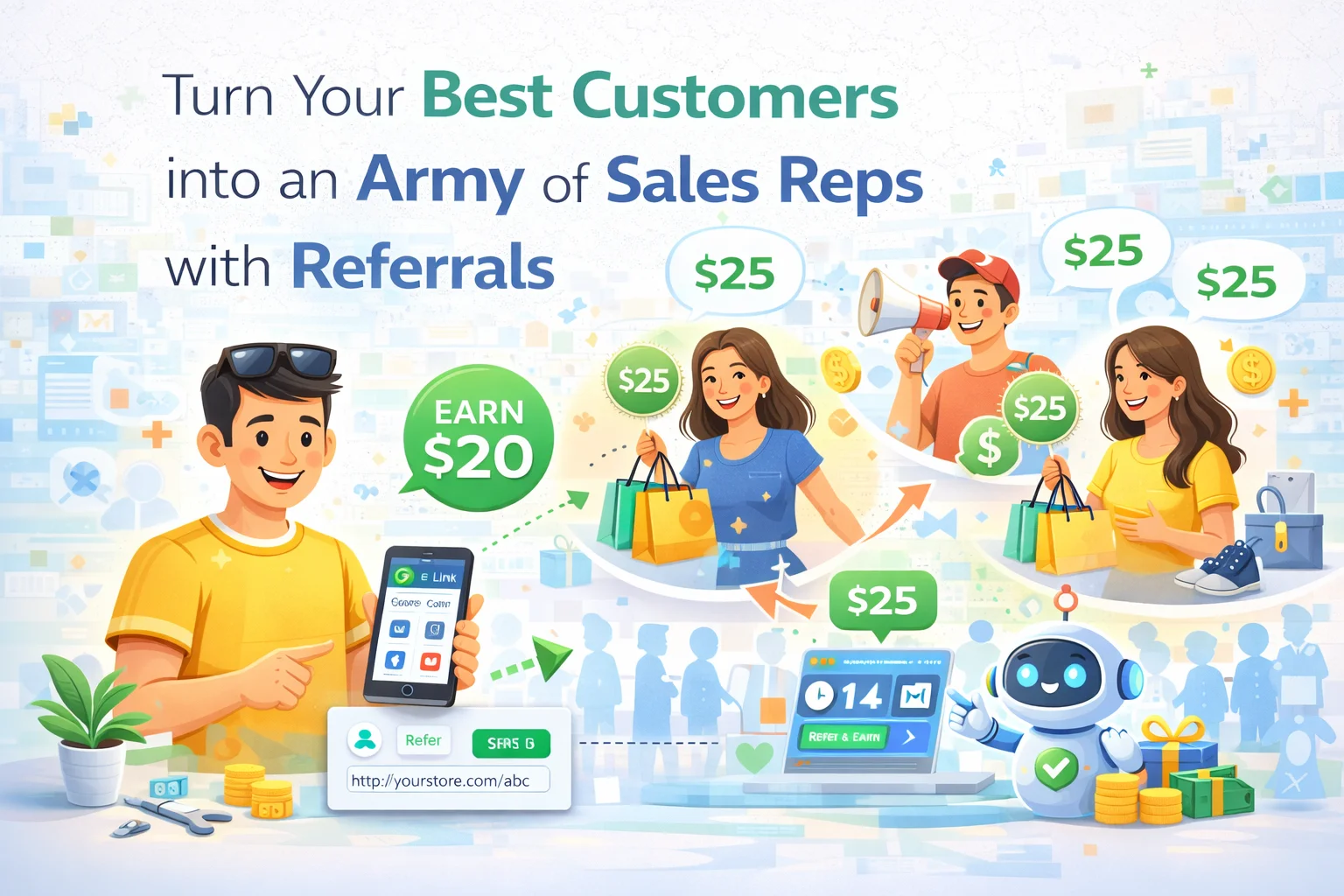
A referral program is that system. It does not create a behaviour that did not exist before — it takes a behaviour that already exists and makes it trackable, rewardable, and repeatable. When your best customers have a referral link and a commission waiting for them every time someone buys through it, the conversations they were already having become intentional, structured, and financially meaningful for both of you.
This guide is about how that conversion happens in practice — what makes a customer referral program work, what makes one fail, and how Affiliate Engine – Ultimate WooCommerce Referral & Affiliate Marketing Plugin gives you the infrastructure to make it sustainable.
There is a specific reason that a recommendation from a friend converts at a dramatically higher rate than an ad from a brand — even a very good ad. The person making the recommendation has no obvious financial incentive. They have already used the product. They are putting their own credibility on the line by telling someone they trust to try it. When that context is present, the barrier between “interested” and “I’ll buy it” collapses in a way that no amount of targeting or creative optimisation can replicate.
This is not a soft, unmeasurable effect. Customers acquired through referrals consistently show higher initial order values, lower return rates, longer customer lifetimes, and higher rates of themselves becoming referrers. The economics compound in a way that standard customer acquisition does not. You are not just getting a sale — you are potentially getting a customer who stays longer and who brings in the next customer behind them.
The challenge for WooCommerce store owners is that this machinery — the word-of-mouth that is already working in your favour — is running without any structure. Customers who would happily refer more people have no tool to do it consistently. The ones who do refer people have no way to know if their referrals actually led to purchases. And you, as the store owner, have no way to see any of it, reward it, or build on it. A referral program does not invent the sales force. It organises the one you already have.
Not every customer is equally likely to become an active referrer, and understanding which segments to target first dramatically improves the early performance of a new referral program. There are three customer profiles that consistently produce the most referral activity for WooCommerce stores.
A customer who has ordered from you multiple times has already given you the clearest signal that they are satisfied. Repeat purchase behaviour is the strongest proxy for genuine enthusiasm about a product — people who are merely satisfied stop at one purchase; people who come back are telling you something. These customers already have a mental script for your brand that they can use when recommending it.
A customer who takes the time to write a positive review has already done the emotional work of turning their experience into words they are comfortable sharing publicly. The cognitive gap between writing a five-star review and telling a friend about a store is almost non-existent. These customers have already decided you are worth recommending — a referral program simply gives that decision a mechanism.
Email engagement is a reliable signal of brand affinity. A customer who opens most of your emails is actively maintaining their relationship with your store — they are interested in what you do, not just in their last order. These customers are primed to respond to a well-timed referral program invitation, especially if the email acknowledges their loyalty explicitly before asking them to share.
Most WooCommerce stores that try customer referral programs and abandon them within a few months do so because of the same set of structural problems — and almost none of those problems are about the product or the customers. They are about the program design, the friction in the affiliate experience, and the visibility of the results.
The consistent thread across all of these is transparency. Referral programs fail when participants cannot see what is happening. When a customer shares a link and has no way to confirm whether anyone clicked it, whether a purchase happened, or when they will be paid — they stop sharing. Trust erodes silently, without complaint, because it is easier to stop than to ask questions. The fix is not to ask customers to trust more. It is to build a system that makes the data visible and the process predictable.
The commission rate question gets more thought than almost any other aspect of a referral program, and it deserves it — but not for the reason most people think. The commission rate itself is almost never the deciding factor in whether a customer becomes an active referrer. What matters more is clarity and fairness. A customer who earns 8% of every sale and receives it reliably, on a predictable schedule, after a transparent approval process, will refer more aggressively than a customer who earns 15% but is never sure if the tracking worked or when the payout will arrive.
The practical starting point for most WooCommerce stores is a percentage-based commission in the 8–15% range, calculated on the order subtotal before shipping and tax. This range is generous enough to feel meaningful — a referred sale of £80 generates £6.40–£12 in commission — while remaining sustainable across a range of product margins.
Two commission settings that are easy to overlook but genuinely important: the hold period and the self-referral rule. The hold period defines how long after a sale a commission sits in Pending before it becomes eligible for payout. Setting this to match your refund window — if you offer 14-day returns, set a 15-day hold — means you never pay commission on a sale that subsequently gets refunded. The self-referral rule prevents customers from using their own referral link to get a commission on their own purchases, which is worth blocking explicitly even if your current affiliates seem trustworthy.
The dashboard your customer-affiliates use is where the referral program lives or dies in their perception. It does not need to be elaborate — in fact, the more minimal and clear it is, the better. What it needs is completeness: every piece of information a referrer needs to feel confident about the program, in one place, without requiring them to contact you to answer basic questions.
When you use Affiliate Engine for your WooCommerce referral program, It does not need to be elaborate — in fact, the more minimal and clear it is, the better. What it needs is completeness: every piece of information a referrer needs to feel confident about the program, in one place, without requiring them to contact you to answer basic questions.
When you use Affiliate Engine for your WooCommerce referral program, the customer-affiliate dashboard lives inside the WooCommerce My Account area — the same place where your customers check their order history. There is no separate login. There is no new platform to learn. The referral tools appear in an account tab they already use, which means the friction between “I want to check my referrals” and “I can see my referrals” is as close to zero as it can be.
The dashboard gives each referrer their personal link with a one-click copy button, a link generator for creating direct links to specific products (so they can share a link to the exact item they are recommending rather than your homepage), a record of every referral with its approval status, their current earnings balance, and the payout request form when they have eligible commissions. Each of these elements answers a specific question that affiliates would otherwise email you about. The dashboard exists so they never need to.
Links are the standard referral mechanism, and for many sharing contexts — Instagram stories, YouTube descriptions, blogs, newsletters — they work perfectly. But there is a large category of referral behaviour where links are impractical: verbal recommendations, podcast mentions, video content where the audience is watching rather than clicking, in-person conversations. In all of these contexts, a coupon code works where a link cannot.
When coupon attribution is enabled in Affiliate Engine, each affiliate receives a personal coupon code in addition to their referral link. Both methods track to the same affiliate — a customer can share their link online and mention their code verbally, and the attribution is recorded either way. For a store owner, this doubles the surfaces on which your customers can effectively refer new buyers without any additional setup on your part.
Running a customer referral program requires a daily admin workflow — not a demanding one, but a consistent one. You need to review new applications, approve the ones that meet your criteria, keep an eye on referral activity and commission status, process payout requests promptly, and occasionally check the fraud signals to make sure the program is not being gamed.
Affiliate Engine’s admin dashboard is designed for this kind of daily check-in — not for a long investigation session, but for a five-minute review that tells you everything that needs attention. The main dashboard tab gives you a program overview. The Requests tab shows pending affiliate applications. The Referrals tab shows every tracked conversion. The Payouts tab shows submitted withdrawal requests. The Fraud tab surfaces any unusual patterns that the system flagged automatically.
The moment you launch your referral program matters almost as much as the program itself. The way you introduce it to your existing customers sets the tone for how they perceive it — as a genuine opportunity to earn from something they are already doing, or as a sign that the store is struggling to grow and needs customers to do the marketing for them. These two framings produce very different response rates.
The approach that works best is one that acknowledges the existing behaviour first. If you know which customers are your most loyal — based on order history, review activity, or email engagement — reach out to them before announcing the program publicly. Tell them you are launching a referral program and you wanted them to be among the first to have access because of their history with the store. Give them early access before the registration form goes live on the site. This creates the exact dynamic that produces the most motivated early referrers: customers who feel specifically chosen, rather than customers who responded to a generic announcement.
Identify repeat buyers and reviewers. Email them personally, acknowledge their loyalty, explain the program briefly, and give them a direct link to apply. No public announcement yet.
Once they have applied and you have approved them in Affiliate Engine, send a follow-up email with their dashboard link, a quick explainer of how referrals track and when commissions pay, and any promotional assets you have prepared.
Add the registration page to your site navigation, mention it in your regular newsletter, and add a brief reference in your post-purchase email sequence. By now, your early cohort has two weeks of data and will have asked any questions that reveal gaps in your onboarding.
Use the Referrals and Visits tabs in the admin dashboard to see which affiliates are generating traffic, which links are converting, and which affiliates have gone quiet. Reach out personally to the quiet ones — often a brief check-in is enough to reactivate them.
Your best customers are already your most effective salespeople. They are already having conversations that lead people to your store, already answering “where did you get that?” with a recommendation, already influencing purchase decisions inside their networks. A referral program does not ask them to do something new. It asks them to do something they are already doing — with a link, a code, a dashboard, and a commission that acknowledges the value they are creating.
Affiliate Engine – Ultimate WooCommerce Referral & Affiliate Marketing Plugin gives you everything you need to build that system inside WooCommerce — the tracking, the commissions, the dashboard, the payout workflow — so the word-of-mouth that was already working for you starts working harder, and you can finally see it clearly.
Referral link tracking, coupon attribution, commission tiers, fraud detection, payout management, promotional creatives — everything your customer referral program needs, built natively into WooCommerce at a flat one-time price.








The idea itself is great turning happy customers into brand advocates totally makes sense, and I get why tracking referrals would be useful. But the execution feels a little undercooked. The people who actually refer others have no way to tell if those referrals turned into sales, which kinda misses the point of calling it "automatic" tracking. If I'm gonna reward my best customers, I need them to trust the system and that means they should be able to see what's happening.
Hey! As a nurse, I don't have time for guesswork, and this referral system actually shows me exactly who's driving sales. no more wondering it tracks everything automatically. totally worth it
Hey everyone, I just had to share my experience with this referral system. As someone who's studied consumer behavior for years, I know trust is everything and it's way easier to lose than to build. What really impressed me was how smoothly this taps into the trust my best customers already have
Got loyal fans talking about me already
I bought this thinking it would finally let me reward my loyal clients for sending business my way, but the execution falls flat. The core issue is that while it tracks referrals, there's no straightforward way to actually deliver rewards without jumping through hoops. My clients refer people all the time, but if I can't easily credit them or even see who's driving the most sales in real time, what's the point? the system feels half baked like it was designed to track behavior but forgot the most critical part: making it worth their while.