Next-Level Code. Nexuvibe Style ...
Hrs
Min
Sec

A standard affiliate program has one commission layer: someone refers a customer, the customer buys, the affiliate earns. That model works. It drives referrals from people who are motivated to promote your store, and it scales as you recruit more affiliates. But there is a ceiling on that motivation — and it is the affiliate’s own promotional capacity. They can only reach as far as their own audience.
A multi-tier affiliate program — also called a network commission structure or MLM-style affiliate program — adds a second motivation: earning on the sales made by affiliates you recruited. When an affiliate knows that every person they bring into your program also generates income for them, their incentive shifts from “how do I promote this store?” to “how do I promote this store and build a team?” That shift creates compounding growth — your affiliate base recruits itself.
This guide explains exactly how multi-tier commissions work in WooCommerce, the specific configuration that makes them function correctly, and how Affiliate Engine – Ultimate WooCommerce Referral & Affiliate Marketing Plugin implements multi-level commissions through its free MLM Matrix add-on — including the technical logic that governs how upline commissions are calculated and paid.
Start with the fundamentals: what is actually happening in a multi-tier commission when a sale is made?
When a sale happens in a standard affiliate program, one referral record is created: the direct affiliate earns their commission, and the transaction is complete. In a multi-tier program, that same sale triggers a chain of additional commission records — one for each upline sponsor up to the configured depth. Each of these upline commissions is calculated as a percentage of the same commission base as the original referral, and each is a separate record in the system with its own status, approval, and payout workflow.
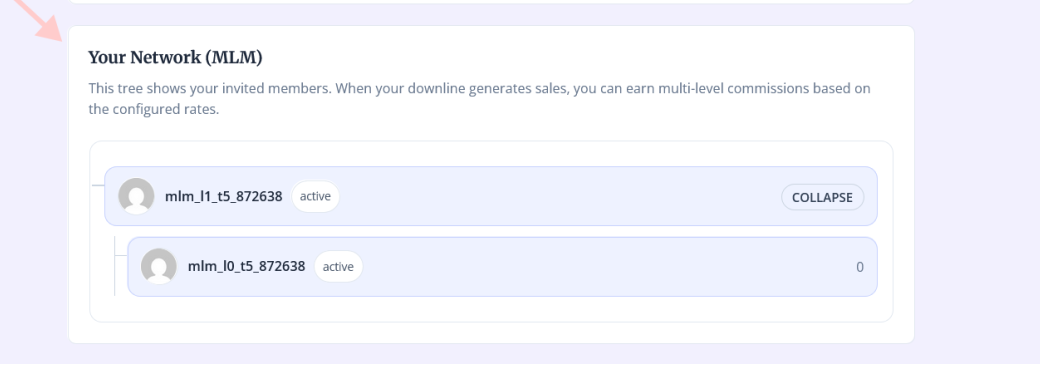
The key term to understand is sponsor. In Affiliate Engine’s MLM system, every affiliate has a sponsor — the affiliate who referred them into the program at the time they registered. This sponsor relationship is established once, at sign-up, and is permanent. When a sale is made, the system walks up the sponsor chain — Level 1 is the direct affiliate’s sponsor, Level 2 is that sponsor’s sponsor, and so on — creating a commission record for each level that has a configured rate.
Affiliate Engine handles multi-tier commissions through a dedicated free add-on: nexu-affiliate-engine-addon-mlm-matrix. The add-on is included with the plugin at no extra cost and hooks directly into the core affiliate system — meaning it uses the same referral records, the same payout workflow, and the same admin tabs that manage your standard affiliate program. There is no separate MLM admin area and no separate payout system to manage.
Here is exactly what happens in the system when a sale occurs. The core plugin creates the Base Referral for the direct affiliate — checking self-referral rules, minimum order amounts, and any commission overrides before creating the record. Once the Base Referral is created, it fires an internal event. The MLM add-on listens for this event and immediately walks the sponsor chain upward. For each configured level that has a sponsor, it creates a new referral record with source set to mlm and a reference back to the Base Referral. The upline commissions are calculated and stored independently — each one has its own status, and they follow the Base Referral’s status for approval and rejection.
One of the most important configuration decisions in a multi-tier program is how the total payout behaves. Affiliate Engine’s MLM add-on supports two distinct modes — and the choice between them determines whether your multi-tier structure increases total commission costs or keeps them close to what you were already paying.
Upline commissions are paid on top of the direct affiliate’s base commission. The direct affiliate receives their full base commission unchanged. Uplines receive their level commissions in addition.
Best when: You want MLM to be a genuine bonus layer and your margins support the higher total payout.
Upline commissions are paid, but their total is deducted from the direct affiliate’s base commission. The overall payout stays close to the original base commission. The direct affiliate receives less — potentially zero.
Best when: You want multi-level rewards without increasing total commission cost — the existing budget is redistributed across the chain.
The upline chain only functions if every affiliate has a sponsor recorded in the system. In Affiliate Engine’s MLM add-on, sponsors are assigned at user registration: when someone registers after arriving through an affiliate’s tracking link, the system saves that affiliate as the registrant’s sponsor. This relationship is stored persistently and does not depend on cookies — it is a permanent user-level relationship that governs all future MLM commission calculations for that affiliate’s sales.
This matters operationally. It means that an affiliate who registered through your program two years ago — before you activated the MLM add-on — may not have a sponsor assigned, because the relationship was not recorded at the time of registration. For affiliates who joined before your multi-tier program launched, you can assign sponsors manually from the admin. For affiliates who join after you enable the add-on and who register through a tracked link, the sponsor assignment happens automatically.
One of the technically important aspects of the MLM add-on is how upline commission records respond to changes in the Base Referral’s status. This is not a minor detail — it is what protects your program from paying out network commissions on orders that were subsequently cancelled or refunded.
The logic is straightforward: upline referral records follow the Base Referral. When the Base Referral is approved (because the associated order moved to a status that triggers approval), the MLM referrals at each level are also approved. When the Base Referral is rejected or cancelled — for example because the order was refunded — all derived MLM referrals that have not yet been paid are also rejected or cancelled. Commission records that have already been paid are not reversed, which is why the hold period configuration matters here: setting a hold period that extends past your refund window ensures MLM commissions are not paid out before refund protection closes.
Beyond per-sale upline commissions, the MLM add-on supports an optional Leader Bonus — a fixed commission that is triggered when a sponsor’s cumulative team sales cross a configured threshold. This is a different reward mechanism from the per-sale network commission: rather than earning a percentage on every sale below them, a sponsor earns a one-time bonus when their team’s combined referred revenue reaches a milestone.
The Leader Bonus is valuable for programs that want to reward long-term network building rather than just individual referral activity. An affiliate who has recruited twenty sub-affiliates and grown their team’s collective output to £50,000 in referred revenue is a different kind of asset from an affiliate who refers individual customers — and the Leader Bonus is a way to financially recognise that network contribution with a milestone reward that goes beyond the standard commission structure.
The rate configuration for each level is the most consequential decision in a multi-tier program. Set rates too high across multiple levels and the total commission burden on each order becomes unsustainable at volume. Set them too low and the upline incentive is too small to genuinely motivate network building. The goal is to make each level meaningful enough to drive behaviour while keeping the total payout within your margin.
| Level | Conservative setup | Aggressive setup | Notes |
|---|---|---|---|
| Direct affiliate | 10% | 15% | Base referral. Standard consumer affiliate rate. |
| Level 1 sponsor | 5% | 8% | Half the direct rate is a reasonable starting point. |
| Level 2 sponsor | 3% | 5% | Meaningful but not dominant. Motivates depth recruiting. |
| Level 3 sponsor | 2% | 3% | Diminishing returns. Enough to reward deep networks. |
| Total (Extra mode) | 20% of order | 31% of order | Check total against your product margin before launching. |
In Extra mode, total payout is the sum of all levels. In Deduct mode, total payout stays close to the base commission — the upline amounts are redistributed from it.
Because each upline commission is a separate referral record in Affiliate Engine, payouts work the same way as for any other commission — each affiliate’s approved balance accumulates in their account, they submit a payout request from their dashboard, and the admin processes the payout from the Payouts tab. The fact that a commission originated from an MLM upline relationship rather than a direct referral does not change the payout workflow.
This matters practically: a Level 2 sponsor who earns small commissions on dozens of sales across their downline accumulates those amounts in their balance and requests a payout the same way a direct affiliate does. There is no separate MLM payout system to manage and no additional admin complexity introduced by the multi-tier layer. The Payouts tab in the admin shows all pending payout requests — from direct affiliates and upline sponsors — in one place.
A multi-tier affiliate program is not the right structure for every WooCommerce store. It adds complexity, it changes the financial calculus of every commission-generating order, and it requires careful rate configuration to remain viable at scale. But for stores that want to create genuine network growth — where affiliates are motivated not just to promote, but to recruit — it is one of the most powerful structural changes available to an affiliate program.
The fact that Affiliate Engine – Ultimate WooCommerce Referral & Affiliate Marketing Plugin includes the MLM Matrix add-on at no additional cost — with the full depth, Extra/Deduct payout modes, status synchronisation, and Leader Bonus functionality — means you can test a multi-tier structure without committing to an additional tool or subscription. The same flat one-time licence that covers your standard affiliate program also covers the network commission layer on top of it.
Standard affiliate tracking, commission tiers, fraud detection, payout management — plus the free MLM Matrix add-on for multi-level network commissions with configurable depth, Extra/Deduct payout modes, status synchronisation, and Leader Bonus milestone rewards. All in one flat one-time licence.






I've been running a small online shop for years, and this multi tier affiliate setup actually makes a lot of sense to me. The way commissions flow up the chain like if Alice refers someone who buys a bunch of stuff, she gets her cut and the person who recruited her does too that part's pretty straightforward. my only hang up is whether the tracking can handle all those layers without mess ups. If referrals aren't logged just right, someone might not get paid what they're owed
just wanted to share my experience with this multi tier affiliate setup. As a restaurant owner who also runs an online store for our signature sauces, I was pretty skeptical about switching from a basic affiliate program to this kind of structure. But honestly, the difference in motivation is night and day
So I'm running a side gig with my department's gear store, and this multi tier setup sounds like a good option. My question is if I stick with the basic single tier model, am I missing out on extra cash?