Next-Level Code. Nexuvibe Style ...
Hrs
Min
Sec

Customers do not experience “wallet architecture.” They experience tension at checkout when their balance does not match their mental model of money, disappointment when refunds land somewhere unexpected, and panic when a top-up fails after they believed funds moved. Support becomes the interpreter between ledger precision and human emotion. Without training, agents compensate with refunds that feel generous in the moment yet inflate liabilities or contradict finance policies written months earlier.
Good programmes treat training as continuous. Launch-day briefings decay within weeks because marketing introduces new promotions, gateways adjust fraud scoring, and themes ship checkout tweaks that alter how wallet fields render on mobile. The sections ahead focus on durable skills: reading transaction lines, naming states accurately, escalating with evidence, and coaching shoppers without improvising policy.
Equip your team with tooling that makes invisible states visible. NEXU Smart Wallet serves as a WooCommerce customer wallet plugin with admin Transactions history that mirrors customer-facing clarity, which turns edge-case conversations into shared observation instead of argument.
Split tender is economically rational yet psychologically brittle. A shopper sees available wallet balance, applies part of it, and expects the remainder to disappear from “money owed.” When the checkout still shows a card charge, some customers interpret that as paying twice because they mentally merged wallet funds with external payment into one vague obligation. Agents must narrate structure before emotions escalate: wallet reduced liability by the applied amount; the gateway captured only what remained due after tax, shipping, coupons, and adjustments settled.
Training should include deliberate rehearsal with anonymised screenshots where totals shift after cart edits. If a shopper removes an item after applying wallet funds, fragments may re-render asynchronously depending on theme behaviour. Agents should never promise instantaneous wallet rebalancing without verifying transaction lines. Instead, teach them to refresh My Account history alongside the live order screen so customers watch state converge.
Bundle shipping and pickup edge cases into the same rehearsal deck. When customers switch from delivery to click-and-collect after applying wallet funds, totals may shift because fees move or tax treatment changes. Agents who understand those transitions avoid promising fixed wallet application amounts before the cart stabilises. Encourage shoppers to confirm the final payable summary before submitting payment whenever they materially edit fulfilment choices mid-checkout.
“Your wallet covered part of this order; the card payment handled only what remained after that credit was applied.”
“Everything looks fine on our side” without referencing order numbers and wallet lines invites continued suspicion.
Position partial pay guidance alongside a WooCommerce checkout wallet balance plugin that applies store credit before card capture without splitting orders so agents anchor explanations in product behaviour customers actually experienced.
Document how taxes and shipping interact with partial application in your specific stack. Some regions display tax-inclusive prices while gateways authorise slightly different totals when wallets absorb part of the base; others keep tax lines explicit so shoppers see GST or VAT computed on the payable remainder. Agents should never guess jurisdiction behaviour from memory. Provide them a one-page regional cheat sheet approved by your tax advisor and rehearse borderline tickets where digital goods, mixed carts, or B2B exemptions alter totals after wallet funds apply. When agents speak precisely about tax lines, customers hear competence instead of corporate fog.
Refund policy is where legal language, customer expectations, and ledger mechanics converge uncomfortably. Some merchants default refunds to wallet because cash preservation matters; others prioritise returning funds to the original card for compliance reasons. Support must never improvise destination when policy already exists. Training decks should include explicit decision trees: if payment included wallet balance, outline how partial refunds allocate across rails; if promotional cashback contributed to purchase, clarify whether refunded amounts distinguish principal from incentive credit.
Reference WooCommerce fundamentals when agents explain timing. The managing orders documentation clarifies statuses many shoppers misread as “money returned” when finance still sees pending settlement. Pair that external anchor with internal guidance on how long wallet credits appear after admin actions versus automated flows.
Link coaching materials to refund-to-wallet workflows inside Smart Wallet for WooCommerce that keep ledger entries readable for both agents and accountants.
Role-play exchanges where shoppers demand card refunds because they “never asked for store credit.” Those moments reveal whether your published policy matches operational reality. If marketing promised flexibility your implementation cannot honour, fix the copy before you blame agents. When policy genuinely routes refunds to wallet for legitimate economics, train agents to explain the trade-off clearly: faster reuse, reduced fees, consistent rewards alignment. Pair words with optional pathways—such as exceptions for regulated categories—so tier-two teams have documented relief valves instead of improvising heroics that audit teams cannot reconstruct later.
Top-up failures produce shame fast. Customers worry they were charged twice, that the store stole money, or that their bank punished them unfairly. Many failures are benign: transient gateway timeouts, three-dimensional secure challenges abandoned mid-flow, or mobile browsers that refresh during redirect return. Agents should gather structured facts before apologising: timestamp of attempt, payment method brand, whether an authorization hold appears on the bank statement, and whether wallet history shows a pending line versus nothing at all.
Duplicate clicks deserve special coaching. Customers sometimes mash the pay button when latency spikes, producing multiple authorizations that later settle or fall off. Agents should explain authorization holds using bank-neutral language and recommend the shopper contact their issuer when holds linger beyond stated windows. Never promise charge reversal timelines your store cannot control; instead provide order references and calm checkpoints.
Add locale-aware guidance for markets where cards routinely SMS one-time passwords during redirects. Trainees should rehearse explaining why the wallet balance did not increase until authentication completed, and why abandoning mid-challenge leaves no permanent harm when no settlement occurred. Pair that explanation with visible encouragement on the top-up page—progress indicators, explicit “do not close this window” copy—to reduce abandonment born from uncertainty rather than rejection.
The Transactions tab is your shared source of truth. Train agents to filter mindfully, correlate rows with WooCommerce order IDs, and narrate each line aloud with customers on the phone. When shoppers hear calm enumeration—“Here is the debit tied to order 48219, here is the cashback credit still pending”—they shift from moral outrage to observational patience. Avoid jargon like “ledger event” unless your audience already uses finance vocabulary.
Create micro quizzes monthly: present a redacted Transactions snippet and ask agents to draft the customer explanation in under five sentences. Score answers on accuracy, tone, and whether they cited next verification steps. Gamification sounds trivial until you realise how quickly muscle memory decays when teams hire seasonal staff during peak retail months.
Supplement quizzes with listening drills. Play audio snippets of frustrated callers—sanitised for privacy—and ask agents to transcript which facts they still need before opening admin panels. Many mishandled wallet tickets begin when agents jump to conclusions because emotional volume feels like proof of system failure. Slowing down to request order numbers and timestamps saves everyone time. Consider pairing senior coaches with newcomers for silent shadowing weeks where veterans narrate their screen movements aloud; juniors absorb rhythm and restraint that slides cannot teach.
Locate matching WooCommerce orders before discussing wallet lines in isolation.
Walk chronologically: top-up, spend, refund, adjustment — customers reason in stories, not tables.
Tell the shopper what should change on screen if they refresh after an expected delay.
Cashback introduces time into money, which humans dislike. Pending states exist for operational integrity: they align rewards with fulfilment, returns windows, and fraud checks. Agents must resist the urge to manually unlock pending amounts simply because a VIP complained loudly. Training should explain the business reasons in customer-grade language—without sounding defensive—and offer legitimate acceleration paths only when policy permits.
Pair explanation with My Account visuals. When shoppers see two numbers, teach agents to describe each label exactly as rendered. If your storefront distinguishes “Cash balance” from “Rewards pending,” mirror those words on the phone instead of substituting generic synonyms that invite mistrust. Consistency across touchpoints reduces cognitive load faster than empathy paragraphs alone.
Where programmes blend promotional rules, document stacking conflicts explicitly. If coupons disqualify cashback on certain carts, agents should cite that exclusion calmly and offer alternatives permitted by merchandising—never improvising percentages. Tie operational discipline back to cashback staging controls bundled into Nexu Smart Wallet for WooCommerce merchants who need programmable reward lifecycles.
Address subscription and membership intersections deliberately. When renewal orders charge automatically, shoppers sometimes forget wallet rules differ from one-off carts. Publish internal reminders about whether wallet credits apply to subscription renewals, whether tax-inclusive subscription pricing interacts with wallet slices, and how failed renewals behave if wallet balance alone cannot cover unexpected price changes after a plan migration. Agents who understand subscription nuance prevent churn disguised as wallet bugs.
Disagreements happen. Themes re-render fragments, caching layers serve stale wallet slices, or an admin adjustment occurred while the shopper simultaneously edited their cart. Tier-one should not issue blanket credits to silence confusion. Escalation packages must include: order ID, user ID, timestamps, wallet transaction IDs, screenshots from Transactions tab, and any gateway logs your payment partner allows support to view. Finance or engineering can then trace root causes without replaying the entire emotional arc of the ticket.
When discrepancies span multiple sessions or devices, ask whether the shopper switched accounts—social login collisions and duplicate WordPress users remain rare but memorable. Agents should verify email addresses against wallet recipient records before theorising plugin defects. Document each confirmed edge case in your internal knowledge base so the next teammate inherits insight instead of rediscovering panic.
Encourage agents to reference HPOS implications only when relevant—many shoppers need empathy, not database education. Internal escalation notes can mention storage modes when engineering suspects metadata retrieval discrepancies across admin screens.
Education, timing explanations, duplicate click guidance, macro-approved goodwill within limits.
Missing ledger rows, mismatched IDs, suspected double spend, suspected gateway mis-posting.
Run quarterly wallet war games. Present scenarios drawn from anonymised ticket peaks: partial wallet pay after coupon stacking, refused card after wallet slice applied, cashback pending during a refund request. Score teams on accuracy, calm tone, and adherence to policy. Record best responses as updated macros rather than letting excellence live only in star performers’ heads.
Augment drills with QA rubrics that weight evidence gathering over speed. Fast wrong answers damage trust more than slightly slower correct ones. Publish monthly summaries celebrating agents who escalated properly—not only those who closed fastest.
Institutional memory also depends on documentation hygiene. When engineering toggles settings, require a mirrored update to support briefings within forty-eight hours. Wallet programmes drift silently otherwise, and agents absorb the blame for inconsistencies they did not author.
Capture anonymised call transcripts where de-escalation succeeded and annotate why language choices worked. Over time your library becomes richer than generic empathy templates because it reflects your shoppers’ vocabulary, seasonal stressors, and regional idioms. Rotate facilitators so no single coach becomes a bottleneck when teams scale internationally.
Manual wallet credits can soothe tempers yet distort liability reporting if applied without oversight. Define thresholds: tier-one may credit small rounding differences; tier-two handles goodwill above X; finance approves anything resembling revenue recognition impact. Log every adjustment with ticket references so month-end reviews trace motivation.
Finance should receive digest summaries—not raw ticket streams—highlighting manual credits, refund volumes to wallet, and top-up failure rates. That rhythm keeps support empowered without letting operational generosity silently reshape margin narratives.
Schedule quarterly cross-functional retrospectives where support shares anonymised patterns—recurring confusion about partial pay, spikes in failed top-ups after theme releases, seasonal refund requests—and finance translates those signals into policy or configuration adjustments. Without retrospectives, governance documents become graveyards of intent while reality diverges quietly on the storefront.
Anchor governance expectations to tooling that exposes consistent histories on both sides of the counter. Stores standardising on Smart Wallet and Cashback for WooCommerce by NEXU WP with parallel admin and customer wallet views shrink the probability that agents defend invisible states.
Training is never finished because commerce never freezes. Treat wallet edge-case education as infrastructure: refresh macros whenever promotions shift, rehearse Transactions literacy before peak seasons, and celebrate teams who convert anxious shoppers into informed participants. Mechanical empathy wins long-term loyalty louder than scripted apologies ever could.
Finally, tie recognition programmes to behaviours that reduce systemic risk: celebrate agents who escalate correctly, who document anomalies clearly, and who propose macro improvements backed by ticket evidence. Wallet excellence is quieter than flashy sales metrics, yet it preserves margin and reputation when checkout storms arrive. Teams that honour precision alongside kindness build shopper trust that no single campaign headline can manufacture overnight. Keep iterating: every wallet edge case you train once becomes cheaper the next time it appears.
NEXU Smart Wallet & Cashback pairs storefront wallet experiences with admin transaction visibility so coaching stays grounded in facts.






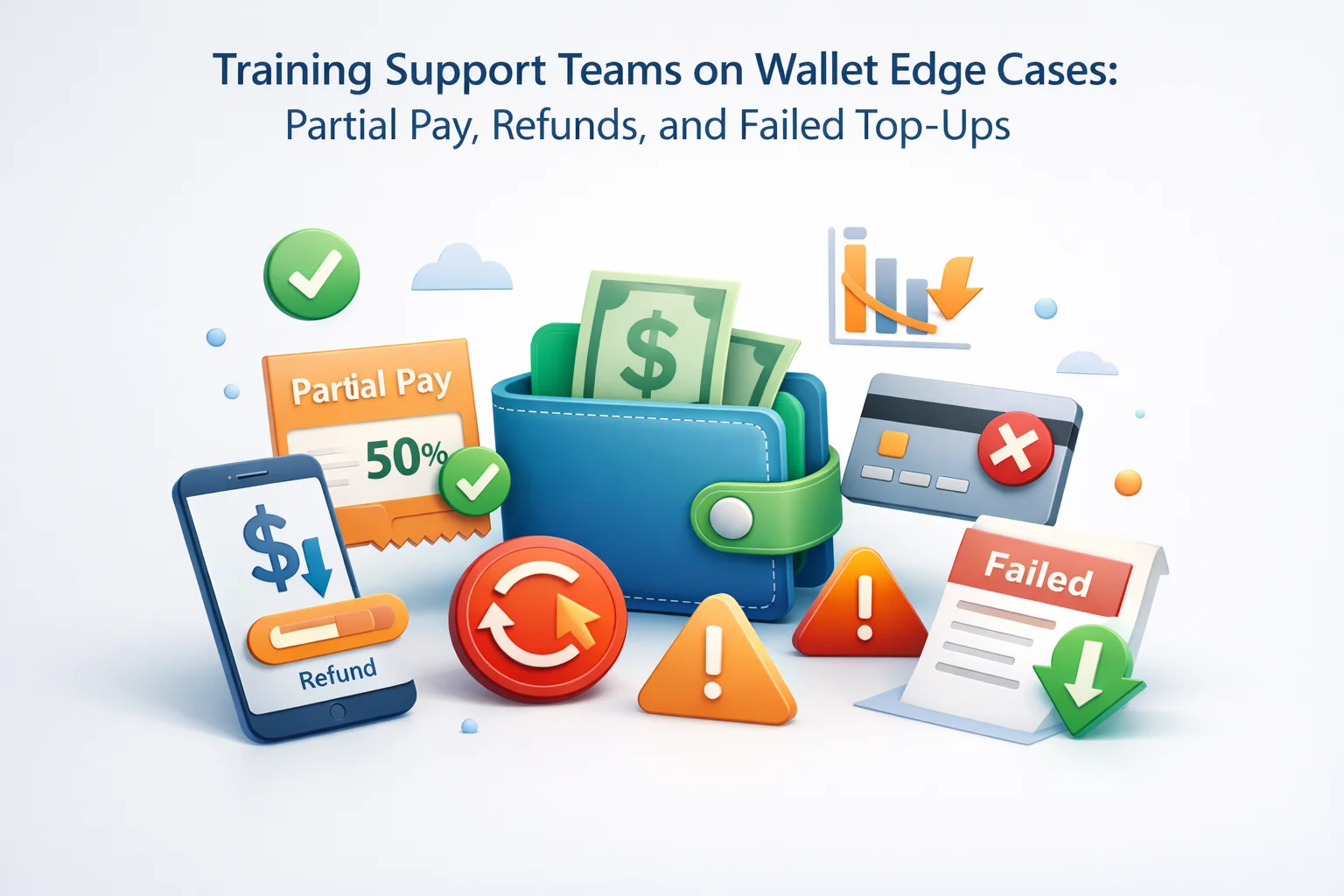

This training deck actually tackles that super awkward moment when a customer's wallet balance doesn't line up with what they expected mid checkout. Most training guides just dump a bunch of policy links on agents and call it good, but this one digs into why partial payments feel off to shoppers even when the numbers add up.
Set up the training module for my team, and the Transactions tab itself is actually really helpful. But I'm running into one issue how do you coach agents to explain discrepancies to customers without making it sound like they're blaming the shopper?
This guide's section on partial payments really skips over how WooCommerce actually recalculates the cart. My team keeps running into issues when customers switch from delivery to pickup after applying their wallet balance