Next-Level Code. Nexuvibe Style ...
Hrs
Min
Sec

Gift-card products often behave like digital entitlements while the rest of the cart still needs boxes, labels, and carrier-compliant addresses. Checkout must name who receives each artifact: PDF or email delivery for the card, parcel routing for merchandise, notifications that should not leak surprises. Generic “order notes” cannot carry that nuance; structured fields and per-product scoping can.
This guide maps patterns for mixed carts: separating purchaser and recipient identities, conditional clusters that appear only when gift cards sit beside physical lines, email template parity, Blocks-safe layouts, and JSON exports so seasonal gift logic rolls forward without theme forks.
WooCommerce checkout fields that separate gift card recipients from parcel shipping addresses pair with conditional visibility, per-product targeting, drag-and-drop ordering, WooCommerce Blocks support, and import-export for field definitions between staging and production.
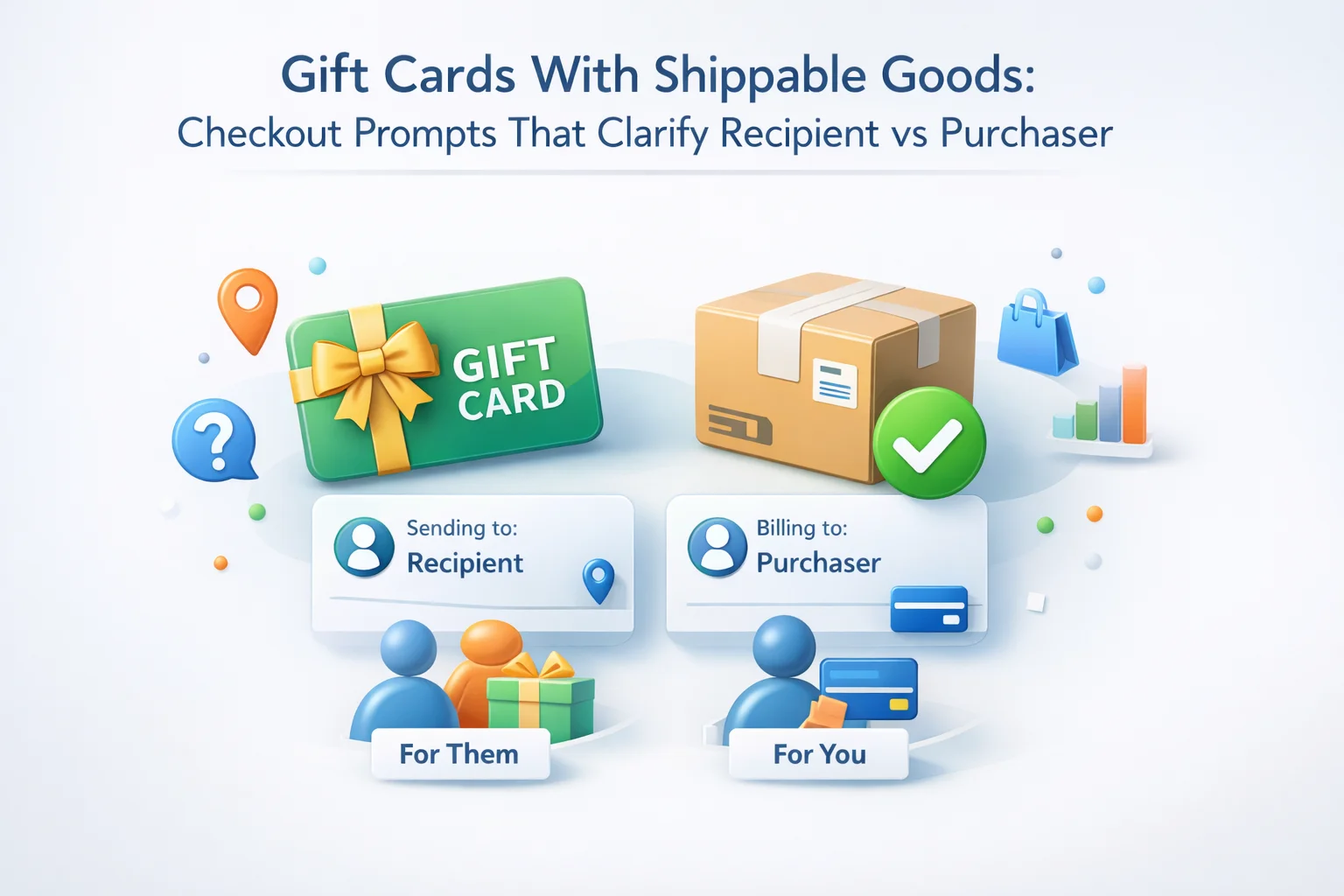
Classic checkout assumes the buyer is also the receiver. Gift cards break that assumption when codes email to someone else. Physical goods break it when the buyer ships a present to a friend. Mixed carts can require both patterns simultaneously: capture billing for fraud and receipts, capture recipient email for entitlement delivery, and capture shipping for parcels without conflating the three.
Name each cluster in plain language. “Gift card delivery” versus “Where we ship your items” beats a single ambiguous block that tries to do everything. Shoppers forgive extra rows when each row has an obvious owner.
Billing, receipts, charge disputes, loyalty if applicable.
Email or phone for digital delivery, schedule if allowed.
Structured address for carriers, access notes if needed.
Attach recipient email and schedule prompts to gift-card product IDs or tags such as gift_card_digital. Physical SKUs should not inherit those fields unless you also sell physical gift cards that ship as plastic. Merchandising and engineering must share the same vocabulary or prompts misfire after every import.
Per-product checkout fields for WooCommerce gift cards in mixed carts keep commodity lines from being interrogated about redemption inboxes they will never touch.
Show recipient email fields when digital gift cards are present. Show full shipping when shippable weight exists. Hide parcel prompts for digital-only carts. Mixed carts need both predicates evaluated without duplicate address blocks or contradictory required flags when a shopper removes one line mid-session.
Conditional WooCommerce checkout logic for gift cards and physical shipment together should be documented beside each rule for holiday handoffs.
Preserve autofill by keeping billing and shipping cores contiguous. Insert gift-card recipient rows in a labeled annex after billing unless your fraud flow demands otherwise. Splitting street address fields with unrelated email inputs frustrates mobile keyboards and password managers.
Drag-and-drop checkout field ordering for gift and physical lines in WooCommerce lets teams rehearse placement without maintaining parallel checkout templates.
Developers extending native checkout should align with WooCommerce’s tutorial on customising checkout fields using actions and filters so structural keys remain stable when gift copy changes each season.
Block checkout introduces different spacing rhythms. Multiple annexes for gift and shipping can collide with Apple Pay or Google Pay regions. Rehearse on real devices after theme updates. Mirror production caching with realistic WordPress environment settings so AJAX visibility matches what shoppers see live.
WooCommerce Blocks checkout compatibility for gift-card and parcel prompts should be part of your regression suite, not a launch-night experiment.
Gift buyers often need confirmations without revealing product titles to recipients who share an inbox. Segment templates: purchaser receipts can list SKUs; recipient delivery emails should show redemption instructions, not the surprise mug graphic. If you cannot guarantee separation, say so in checkout before payment.
SMS or push templates need the same discipline; a ping that names the item ruins surprises faster than email.
Email-delivered codes need recipient inboxes and sometimes scheduled send times. Plastic cards need parcel addresses and may require activation disclaimers. Tag products distinctly so checkout never asks for a ship-to when the cart is digital-only, and never emails a code to someone who bought a card meant to arrive in a gift box.
Bundled “gift set plus card” SKUs should declare which fulfillment path owns the card: printed insert, separate email, or both. Ambiguity creates duplicate sends or missing codes.
Warehouses may ship merchandise while gift codes generate from another system. Order meta should label which line triggered which notification. Pickers should not print redemption secrets on packing slips meant for the recipient if your policy keeps codes digital-only.
If partial refunds cancel only the physical line, confirm recipient email fields tied to surviving gift SKUs remain valid and visible in admin.
Collecting a third party’s email at checkout implicates privacy policies and marketing suppression. Add concise consent copy beside recipient fields: you are notifying someone, not subscribing them to promos without permission. Link to how data is used and how recipients opt out of non-essential mail.
Minimize recipient PII to what redemption requires; “nice to have” phone numbers become retention problems later.
Jurisdictions treat gift cards and merchandise differently. Subtotal presentation should remain legible when lines carry distinct tax classes. Sudden jumps without explanation feel like bugs and trigger support chats during peak weekends.
Finance should review copy near recipient fields if exemptions or inclusive pricing apply; marketing language must not promise net amounts the ledger cannot support.
Gift cards attract automated abuse. If fraud tools delay code generation, say so before payment so legitimate gifters understand why email delivery lags. Do not silently promise instant delivery when review queues exist.
Velocity limits and mismatch checks between billing and recipient identities may add friction; balance with clear error copy so honest buyers know how to fix typos without calling support.
Scheduled sends should display the store’s timezone or convert explicitly. Cross-border carts may need sober duty copy for physical lines while digital codes send regardless; do not paste international essays on purely domestic digital carts.
Localized storefronts should localize recipient validation messages; English errors on a non-English checkout read as neglect.
Offer optional scheduled delivery only when your fulfillment systems honor it; promising a morning send that operations cannot guarantee creates angrier tickets than honest same-day dispatch windows.
Publish a short RACI for gift tags and checkout JSON. Merchandising owns SKU classification. Customer experience owns spoiler-safe templates. Legal owns consent strings. Engineering owns exports and regression tests when WooCommerce or gift plugins update.
Quarterly audits of stray gift tags after imports prevent unrelated buyers from seeing recipient prompts meant for a single product line.
Freeze high-risk JSON merges during peak gift windows unless rollback files are rehearsed the same day; mixed carts amplify the cost of small mistakes.
Holiday gift logic is configuration, not prose. Version exports with dates and owners. Diff files before merging to production; accidental required flags on recipient emails spike abandonment when tags misfire on commodity SKUs after a bulk import.
Import and export WooCommerce checkout field JSON for gift-season campaigns keeps staging rehearsals aligned with production freezes.
Run digital gift card plus shippable SKU, multiple gift denominations, removal of the card after typing a recipient email, guest versus logged-in buyer, international ship-to with domestic billing, stackable coupons, and local pickup if you offer it alongside digital lines. Complete sandbox payments when possible. Print packing slips to confirm parcel data never prints gift codes meant for email.
Add a path where the purchaser edits recipient email after partially completing checkout but before pay; session state must update predicates without stale required flags blocking the order.
Re-run QA after gift-plugin updates; third-party extensions sometimes reorder hooks or inject their own recipient UI that fights your field clusters.
Many stores pair checkout field editors with dedicated gift-card extensions that generate balances, PDFs, or QR codes. Document which system owns recipient capture. Duplicate prompts confuse shoppers and create conflicting meta keys downstream. If the plugin already collects recipient email, your annex should complement, not compete.
When redemption happens in a separate portal, checkout copy should set expectations: immediate email versus activation after fraud review versus printable PDF on the thank-you page.
After major WooCommerce upgrades, verify hooks still fire in the order your predicates assume; silent changes behave like configuration drift.
Track support tags for “wrong recipient,” “duplicate code,” “late send,” and “spoiled surprise.” Correlate spikes with deploy dates and catalog imports. Mixed gift carts often fail quietly in analytics while support hears the truth.
Segment completion funnels by presence of gift SKUs; a global average hides pain concentrated in gifters on mobile.
Celebrate operational wins when pick accuracy improves after clarifying which lines ship versus which lines email; revenue follows reliability.
B2B buyers may purchase dozens of cards for clients while also ordering branded merchandise. PO numbers and cost centers belong in a business annex that does not merge with recipient romance copy. Finance metadata and gift messages should never share one textarea.
If bulk CSV upload happens post-checkout, say so plainly; shoppers should not assume per-recipient emails are captured at payment when your workflow collects them later in a portal.
When loyalty points or store credit apply to merchandise but not digital gifts, state that beside totals; ambiguous math reads like checkout bugs and drives refund requests that finance must unwind.
Mixed carts of gift cards and shippable goods are a compliment to your catalog breadth. Checkout should repay that compliment by naming roles, scoping prompts, and routing notifications without spoiling surprises. Per-product fields, disciplined ordering, conditional stacks, Blocks-tested layouts, and versioned exports turn a fragile scenario into a repeatable operational story.
Advanced WooCommerce Checkout Field Editor for gift-card and physical mixed checkout gives merchants editor control while preserving export trails finance and support can trust.
Tag support tickets that mention “wrong email” or “spoiled surprise” to specific field keys; spikes after imports usually mean tag drift, not sudden user error.
Revisit prompts when you add printable PDF gifts; delivery semantics differ from email codes and from parcel inserts.
Pair A/B tests on headings with warehouse reality; inviting gift copy that promises hand-calligraphy your pickers cannot deliver erodes trust.
Accessibility reviews belong beside visual QA: expanding recipient clusters should announce calmly for assistive tech without spamming every keystroke.
When marketplace channels partially mirror gift products, document which recipient prompts apply only on web so support does not overcommit.
Stress partial refunds: gift balances and physical lines split differently in admin; answers should remain attached to the correct fulfillment artifact and visible to agents without hunting through raw meta dumps.
Coach agents to use the same vocabulary shoppers see at checkout; internal slang for recipient clusters creates preventable tickets fast.
Run one slow-network rehearsal on mobile; latency exaggerates flickering conditions and makes cautious gifters abandon even when desktop looks fine on typical fast office Wi-Fi.
Finally, celebrate completion-rate wins on mixed carts after headings name roles explicitly; that is revenue earned by empathy, careful QA, and notification discipline, not by shorter forms alone.
Great gift checkout feels calm because every question knows whether it serves an inbox, a truck, or a receipt.
If your personalization engine recommends add-ons mid-checkout, re-test gift predicates weekly; surprise line items can reopen recipient clusters after shoppers thought they were finished.
Offer a concise “how delivery works” link near digital gift lines without dumping policy novels; curious buyers click, busy gifters skim, and chargebacks drop when expectations match reality.
When edge caching serves checkout fragments, rehearse cold and warm loads so recipient rows appear reliably after AJAX refreshes rather than flashing empty on first paint or tempting buyers to pay before fields settle.
Document fallback behavior if your email provider delays transactional sends; support macros should match the same timelines shoppers see in helper text.
Train seasonal agents with side-by-side screenshots of purchaser versus recipient confirmations so live chat vocabulary matches what customers actually received in their inboxes.
Archive one “golden” mixed-cart order each season as a reference payload for integrations; when webhooks change shape, diff against that artifact before blaming shoppers for bad data entry or rushing a hotfix that breaks gift delivery.
A maintainable WooCommerce checkout field toolkit for digital gifts and parcel lines together belongs next to your holiday runbook, not buried in an undocumented child theme.
Advanced WooCommerce Checkout Field Editor helps stores separate recipients, shippers, and payers without theme forks.




Hey this saved my bacon during the holiday
Hey guys, just wanted to say the email setup here is chef's kiss. Bought a candle and a gift card for my sister's birthday, and the system actually kept the gift card code out of my confirmation email. no accidental spoilers! Even the packing slip only showed the candle no "hey here's your $50 code" blunder. little things, but it saved me a panic text to her. only reason it's not 5 stars is I had to dig in settings to turn on the "hide from purchaser" toggle. Maybe make that default?
I've tried a bunch of WooCommerce gift card plugins over the years, and this one almost gets the checkout flow perfect. the way it keeps billing (for me) separate from the gift delivery details (like when I'm sending a birthday surprise to a patient) is exactly what my practice needed