Next-Level Code. Nexuvibe Style ...
Hrs
Min
Sec

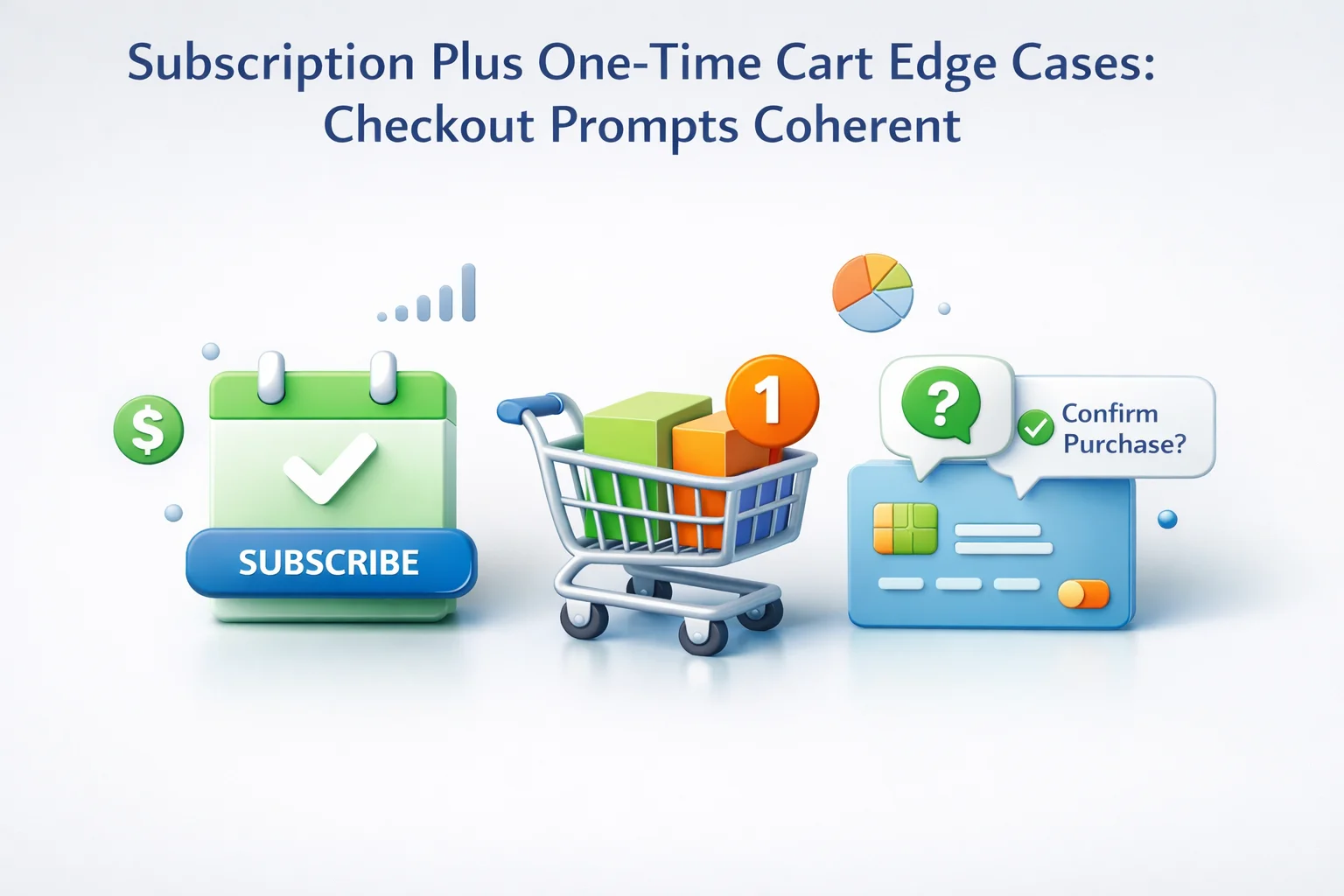
WooCommerce merchants often extend checkout to capture delivery nuance, compliance attestations, or gifting detail. Those extensions multiply in complexity when a subscription plugin schedules renewals while a one-time SKU ships immediately from another warehouse. Coherent prompts reduce chargebacks driven by misunderstood timing, cut support macros about “which order the note referred to,” and keep fulfillment systems from writing subscription metadata onto a single-shipment line.
This article treats mixed carts as a product design problem: scope labels, conditional stacks keyed to cart composition, per-product fields, Blocks-safe layouts, and JSON promotion discipline so teams can iterate without fragmenting their theme with ad hoc snippets.
Advanced WooCommerce Checkout Field Editor for subscription and mixed-cart checkout layouts provides drag-and-drop field order, conditional visibility, per-product targeting, WooCommerce Blocks compatibility, and import-export of field JSON between staging and production.
Single-purpose carts let copywriters say “your order” without ambiguity. Mixed carts combine different fulfillment clocks: an immediate shipment, a subscription parent line, possible pre-orders, and digital entitlements. Prompts that assume one delivery event become misleading. The fix is explicit scoping—headings, helper text, and field keys that name whether data applies to the initial checkout shipment, all recurring shipments, or only non-subscription lines.
Operations needs the same clarity. Warehouse software should read meta that references subscription IDs or renewal flags when integrations support them; otherwise use human-readable notes that dispatchers can interpret without opening three admin tabs.
Start from the shopper’s mental model: they think in boxes arriving at doors, not database rows. Mirror that language until internal systems prove they need colder terminology.
Place subscription-aware summaries or toggles where shoppers confirm cadence before they answer add-on questions. If a one-time accessory field appears above the plan recap, buyers assume the accessory controls the subscription itself. Drag-and-drop checkout field ordering with Advanced WooCommerce Checkout Field Editor helps teams test sequences without redeploying PHP for each experiment.
Developers customizing core should consult WooCommerce’s tutorial on customising checkout fields using actions and filters so keys remain stable when subscription plugins update hooks.
Avoid duplicating the same instruction block in two clusters; divergent wording trains customers to ignore both.
A refill pouch may need a dispenser compatibility attestation while a one-time mug needs gift wrap. Global questions conflate those contexts. Per-product fields attach instructions to the SKU that triggered them, reducing mistaken assumptions that the mug’s ribbon applies to twelve monthly coffee shipments.
Per-product checkout fields with Advanced WooCommerce Checkout Field Editor let merchandising add nuance without bloating every subscription checkout.
Use concise headings above scoped clusters: “Notes for your add-on items” versus “Preferences for your subscription first box.”
Effective predicates combine signals: contains subscription product class, contains non-subscription physical good, cart total thresholds, digital-only subsets, or tags like “gift eligible.” Document each rule with example carts so engineers do not break logic when SKU IDs change.
Conditional checkout stacks with Advanced WooCommerce Checkout Field Editor keep predicates maintainable compared with nested theme conditionals scattered across files.
Beware AJAX cart updates that re-render fragments and flash hidden fields; test subscription frequency changes mid-checkout if your UX allows them.
Door codes and concierge names may apply to every delivery or only the first drop when carriers later use lockboxes. Ask explicitly. Defaulting silently to “apply forever” generates privacy concerns; defaulting to “first only” without saying so creates failed renewals.
Offer radio clarity: “Use for all shipments on this subscription” versus “Only for the non-recurring items in this cart” when both coexist. Store answers on the correct meta object per your subscription extension’s expectations.
If carriers cannot read subscription metadata, echo critical instructions on the packing slip template for renewal orders.
Gift messages should state whether they accompany the first subscription box, a one-time add-on, or both. If recipients differ from payers, duplicate address clusters with clear headings rather than one ambiguous textarea.
Email templates should repeat the same scoping language as checkout; mismatches drive “I thought this note was for the refill” tickets.
Preview transactional emails on staging with realistic mixed carts; environment configuration should mirror production mail routing to catch mistakes early.
Subscriptions raise commitment anxiety even when one-time items are cheap. Keep custom fields from appearing “below the fold” of a clear total breakdown on mobile. If shoppers cannot see what they are funding, they invent worst-case interpretations.
Fields that imply additional future charges need explicit consent adjacent to the control, not separated by unrelated inputs.
Trial periods and introductory pricing should be reflected in headings near any optional add-on that affects the first shipment only.
Block checkout composes payment and shipping in collapsible regions. Mixed carts lengthen the page. Custom clusters should not trap keyboard focus or hide legally required text inside collapsed panels without summaries.
WooCommerce Blocks checkout compatibility with Advanced WooCommerce Checkout Field Editor should be regression-tested whenever your theme updates spacing or z-index on overlays.
Test iOS Safari with subscription summary expansions open and closed; reflow bugs often appear only with virtual keyboards visible.
Subscription merchandising shifts seasonally. Export field JSON before each change; attach diffs to tickets. Roll back by restoring a file, not by improvising in production while renewals process.
Checkout field import and export with Advanced WooCommerce Checkout Field Editor keeps staging aligned when you remove a redundant question discovered in user testing.
Version compatibility: subscription plugin updates may alter available hooks; retest mixed carts after upgrades even if field JSON unchanged.
When a one-time SKU is on backorder while a subscription line is in stock, checkout copy must explain whether the cart splits shipments or holds everything. Custom fields asking for delivery preferences should reference the split explicitly—“Applies to in-stock items shipping now”—so buyers do not assume preferences bind delayed lines.
Pre-order deposits beside subscription signups amplify confusion about when cards charge. Place financial clarifications adjacent to payment selection, not only in FAQ links.
If your stack allows partial captures, document which custom answers propagate to child orders created when stock arrives; missing lineage creates silent data loss.
Buyers sometimes combine monthly coffee with quarterly supplements. Fields about delivery day preferences need per-plan scoping or explicit priority rules when answers conflict. A single global dropdown pretending to cover both plans will misfire.
If skip-ahead or pause policies differ by product, surface the stricter constraint in helper text near any question about scheduling flexibility.
Operations should validate that warehouse cuts respect the same cadence labels shoppers see; otherwise renewals look “wrong” when picks happen early.
Custom acknowledgements at checkout sometimes imply uninterrupted service. Ensure legal and lifecycle emails align with dunning realities. Overpromising in a checkbox beside a one-time add-on can create regulatory exposure when retries fail.
Capture explicit consent for storing payment methods when mixed carts default wallets on; ambiguity shows up in chargeback narratives months later.
Review retry copy whenever payment gateways update SCA flows; fields referencing “today’s charge” may be inaccurate after asynchronous authentication.
Hardware subscriptions sometimes ship return kits with refill consumables. Ask which address should receive the kit versus the consumable if they diverge, and whether the answer persists for renewals or resets each cycle.
Serial number fields belong beside the SKU that requires them, not in a global cluster that implies every line needs a serial.
Logistics partners need predictable keys; rename labels freely for humans but stabilize identifiers for integrations.
German compound words widen buttons; Japanese polite forms lengthen helper text. Mixed-cart headings should be translated as a set so pronouns and scope markers stay aligned across locales.
Date formats in subscription summaries must follow local norms; a US-style month-first string beside EU tax copy signals sloppiness and erodes trust.
QA each locale with a cart containing at least one subscription parent and two one-time SKUs with conflicting field triggers.
Agents should use the same terms as checkout headings. If the UI says “first subscription shipment,” macros should not say “initial order” unless those phrases map to identical fulfillment behavior.
Link macros to field definitions so tier-one staff know which meta keys appear on admin screens.
Quarterly training with real mixed-cart examples prevents drift between storefront copy and phone support language.
Track post-purchase edits to addresses or notes segmented by mixed-cart flag. Spikes after checkout changes indicate copy or field-scope problems even when headline conversion looks flat.
Monitor renewal skip rates alongside one-time attach rates; if attach rises but skips rise faster, shoppers may misunderstand what the add-on binds to.
Tag support tickets with cart composition metadata when possible; product teams prioritize better when they see “mixed cart + gift field” clusters instead of vague “checkout issue.”
Session replay, if used, must follow strict privacy governance; lightweight moderated usability tests often surface scope confusion faster for subscription flows.
Lifecycle marketing, finance, and fulfillment should share veto rights on copy that references billing cadence. A well-meaning headline change can contradict terms of service if released without review.
Use change windows that avoid peak renewal days for risky experiments; rollback JSON packs quickly if error monitors trip.
Maintain a living matrix mapping SKU categories to required checkout attestations; subscription merchandising should not attach fields without ops sign-off.
Run paired releases when coupon engines introduce “first box free” mechanics; stacked promotions can change which line items appear subscription-class versus one-time-class in the cart, flipping predicates unless rules are regression-tested.
When loyalty points or credits apply asymmetrically to recurring lines, surface that asymmetry before optional add-on questions so shoppers do not misattribute discounts to the wrong SKU family.
Finally, rehearse account-merge scenarios: if shoppers log in mid-checkout and inherit saved subscription addresses, confirm custom prompts re-evaluate predicates so hidden fields do not stale-submit empty values to the order record.
Automate a nightly sanity job that flags orders where subscription lines shipped but expected per-product meta is missing—early warning beats slow, manual spreadsheet archaeology across teams.
Mixed carts reward merchants with higher AOV and better discovery of add-ons. They punish vague checkout. Coherent prompts—scoped, conditional, per-product when needed, Blocks-tested, and versioned through JSON—turn complexity into confidence.
Advanced WooCommerce Checkout Field Editor for WooCommerce subscription and hybrid carts gives operators the layout and logic tooling to keep those prompts honest as catalogs evolve.
Invest in labeling once; repay in fewer refunds, cleaner renewals, and customers who trust that the add-on in their cart is exactly what they think it is.
Schedule post-mortems after high-volume mixed-cart weeks; patterns reveal whether you need clearer scope copy or stricter per-product attachment rules.
Avoid recycling holiday gift copy into evergreen subscription flows without rereading every predicate; seasonal humor ages poorly when attached to the wrong line item.
Instrument funnel drop-off at the step where subscription terms appear; if the field cluster is innocent but the summary above it is confusing, fix the summary first.
When launching new add-ons, pilot with staff accounts and realistic renewal dates before exposing prompts to all traffic.
Archive retired prompts with deprecation notes so contractors do not resurrect outdated instructions during theme refreshes.
Align analytics event names with checkout headings; dashboards should speak the same language as shoppers.
If digital and physical lines coexist, state which custom fields affect license delivery versus parcel delivery—silent overlap breeds entitlement confusion.
Finally, celebrate when renewal complaint volume falls after a copy tweak; small clarifications compound across thousands of shipments.
Treat every ambiguous “this order” string as debt; mixed carts convert better when pronouns disappear in favor of concrete nouns buyers recognize from the cart screen.
Rehearse chargeback disputes with saved checkout screenshots showing scoped labels; compelling evidence often hinges on what the buyer saw, not internal meta alone.
Partner with finance when introductory discounts change tax display; mismatched totals beside custom fields erode trust faster than verbose forms.
Document API rate limits on subscription lookups if checkout plugins query remote services; timeouts should degrade with human-readable errors, not silent field loss.
Coherent mixed-cart checkout is recurring revenue hygiene: it keeps first impressions aligned with every cycle that follows.
Revisit field copy whenever your subscription plugin release notes mention cart or checkout hooks—upstream changes are the silent majority of regression risk.
Advanced WooCommerce Checkout Field Editor helps stores scope prompts, order fields cleanly, and promote JSON configs safely.






I was really excited to try this out after my buddy swore by it for his supplement store, but I've gotta say the checkout fields tripped me up. When you've got a subscription box and a one time add on in the same cart, the little notes under each field need to be crystal clear about which part they're talking to. I added a gift note for a friend's first box and spent 10 minutes wondering if that message would also print on my refill orders
Finally found a solution that actually handles mixed carts without making customers guess what goes where. The per product fields let me add gift messages for one time items while keeping subscription details separate and clean
My friend told me to try this for mixed carts, but the checkout fields are way too confusing. I added a gift note for a one time item and it ended up attached to the subscription instead.