Next-Level Code. Nexuvibe Style ...
Hrs
Min
Sec

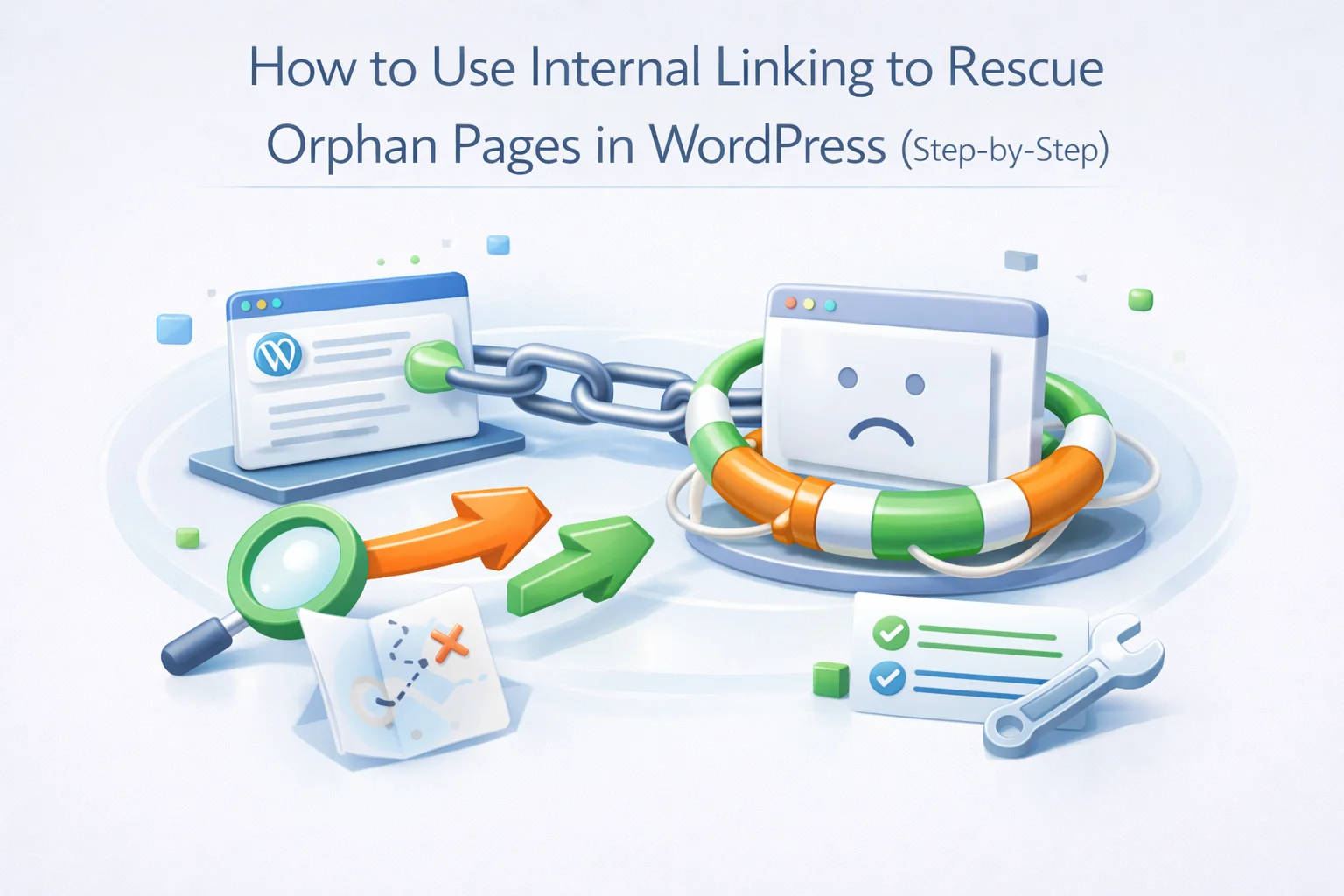
Orphan page rescue is different from most SEO improvements in one important way: the impact is nearly immediate compared to other structural changes. When you add incoming internal links to a page that previously had none, Googlebot typically recrawls it within two to four weeks, which is significantly faster than the months-long timelines associated with content quality improvements or external link building. The pages were always there. The links are what make them visible to Google’s crawl process.
What makes orphan rescue more complex than simply adding a few links is the prioritization and quality question. Not all orphans are worth rescuing with the same urgency. Not all rescue links are equally effective. The source page matters, the anchor text matters, and the number of rescue links per orphan matters. Getting these decisions right is the difference between a rescue operation that produces measurable ranking improvements and one that adds links without moving the needle.
This is the complete step-by-step guide to orphan page rescue. It covers every stage from discovery to verification, with specific guidance on each decision point. The implementation examples use Nexu Link Brain, but the process and prioritization logic applies regardless of the tool you use.
You cannot rescue orphans you have not found. The first step is building a complete, accurate list of every page on your site that has zero incoming internal links from other indexed pages.
Navigate to the Bulk Linker tab and look for the orphan pages health card. Click through to the full Orphan Pages report, which lists every post and page with zero incoming links identified by the link scanner. The report shows the page title, URL, last modified date, word count, and the number of outgoing links from each orphan. Export this list to a spreadsheet. This is your working rescue queue.
Crawl your site with Screaming Frog, then navigate to Reports and select Orphan Pages. This generates a list based on pages in your sitemap that received no inlinks from the crawl. Cross-reference with Google Search Console’s Coverage report to add any pages showing “Discovered but not indexed” status that are not in the Screaming Frog list. Combine both sources into your master orphan queue.
On any established site, you will have more orphans than you can rescue in a single session. Prioritization determines which rescues produce the most ranking and traffic improvement per unit of effort. Score each orphan on three criteria and rescue in order of total score.
Not all rescue links have the same value. A rescue link from a page with 20 incoming internal links and several external backlinks passes substantial PageRank to the orphan. A rescue link from a page with 1 incoming link passes almost none. The authority of your rescue source pages determines how quickly the rescued orphan benefits from being connected.
For each orphan in your priority batch, identify two to four source pages that meet these criteria: they are topically related to the orphan (semantic relevance above 0.75), they have at least 5 incoming internal links themselves, and they are recently crawled by Google (check URL Inspection for last crawl date). Source pages that are themselves recently crawled will carry Googlebot to the rescued orphan faster through link-following than a source page that is rarely revisited.
With your priority orphans identified and your source pages selected, you create the rescue links. The process differs slightly depending on whether you are using automated suggestions or creating links manually.
In the orphan report or bulk linker, filter suggestions to show the orphaned page as the target. The system surfaces source pages ranked by a combination of topical relevance and source page authority. Review the top 3 to 5 suggestions per orphan. For each suggestion, check that the generated anchor text is specific and descriptive rather than generic. Apply suggestions with relevance scores above 0.78. For borderline scores (0.68 to 0.77), use cinematic mode to verify the paragraph context makes the link feel natural.
For some orphans, particularly very new content or content on niche topics, the AI may not find strong enough existing connections at the relevance threshold. In these cases, open the source page in the WordPress editor, find the most relevant paragraph, and manually add a contextual link to the orphan using anchor text that accurately describes the target page’s content. Manually created rescue links follow the same quality rules as AI-generated ones: descriptive anchor text, contextually appropriate placement, natural fit within the surrounding paragraph.
A rescue link gets the orphan connected. Cluster integration gets it properly positioned within your site’s topical architecture. These are different operations, and completing only the first produces an improvement while leaving the second on the table.
After applying rescue links, check which topic cluster the rescued page belongs to. If it is a subtopic of one of your main cluster areas, ensure it links to the cluster’s pillar page using appropriate anchor text, and that the pillar page links back to it when the topic is relevant. This bidirectional integration completes the cluster structure for the rescued page rather than simply rescuing it into isolation-with-one-link.
Also check whether the rescued page should link to two or three other cluster members. An orphan that linked to related pages before being rescued (it has outgoing links even if no incoming ones) is already partially integrated. One that had no outgoing links needs both rescue links in and cluster links out to become a fully integrated cluster member rather than a page that is merely reachable.
Rescue verification follows a predictable timeline that confirms the operation is working correctly. Knowing what to look for at each stage prevents both premature concern and premature celebration.
According to Google’s documentation on internal links, Googlebot discovers new pages primarily by following links from known pages. Orphan rescue is the direct application of this principle: creating the link paths that make previously invisible pages visible to Googlebot’s discovery process. The WordPress orphan page rescue and internal linking tool automates the hardest part of this process by finding the authority-weighted source pages, generating contextual rescue link suggestions, and applying them at scale across your entire orphan queue in a single session.
Nexu Link Brain detects every orphan on your site, generates authority-weighted rescue link suggestions from semantically related high-authority source pages, applies links in bulk, and tracks your orphan rate reduction as your link health score improves.




I've been using this orphan page rescue method for a few weeks now, and I totally get why prioritizing which pages to fix first matters. But I'm still a little stuck on one thing how do you actually figure out which rescues will give you the biggest boost in rankings and traffic for the effort you put in?
Export list is useless without CSV.
Got my list super fast huge time saver
This guide finally clicked for me why some of my pages just weren't ranking even though they'd been up for months. that part about sitemaps and noindexed archives not actually counting as real links? total lightbulb moment I wish I'd figured that out way earlier. and the spreadsheet export trick alone probably saved me hours of manual work. The only thing I'd tweak is the prioritization section it could really use more concrete examples for total beginners like me. but honestly, if you're serious about fixing crawl issues, this is absolutely worth your time