Next-Level Code. Nexuvibe Style ...
Hrs
Min
Sec

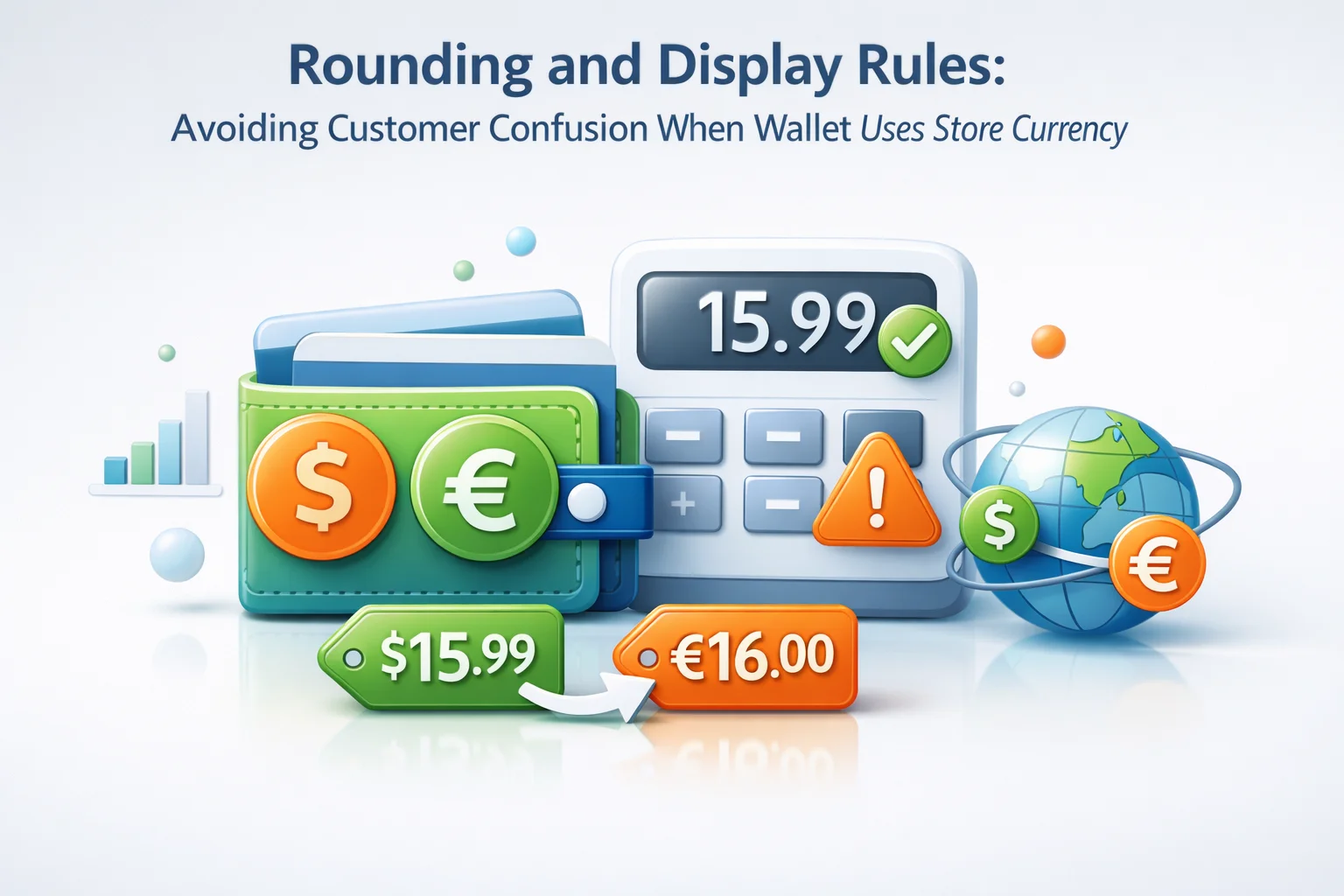
Customers forgive slow shipping before they forgive arithmetic they cannot reconcile. Store credit is emotionally “their money,” which raises the evidentiary standard for every digit you print. When wallet balances share the store currency symbol with product prices but follow different rounding paths—perhaps because cashback accruals compute on net lines while coupons shrink the basket first—you inherit tickets that sound like fraud accusations even when the ledger is technically consistent. Prevention is operational design: define rounding once, publish display rules once, echo them wherever balances appear, and verify that partial wallet payments, gateway captures, and refund conversions narrate the same tale.
Teams standardising wallet behaviour inside WooCommerce often consolidate configuration in NEXU Smart Wallet and Cashback for WooCommerce, pairing member-facing surfaces with administrative controls so display decisions do not scatter across bespoke theme snippets. The proposition is straightforward: fewer implementations of “what a dollar looks like” yield fewer unexplained pennies.
Official commerce references still matter. WooCommerce documents how rounding can be influenced at the store level alongside tax and currency settings—use that baseline before you overlay wallet programmes. Likewise, publishers aiming for durable organic reach should weigh Google’s guidance on helpful content when writing FAQs about balances: specificity beats slogans; shoppers should be able to verify claims against a worked example order.
For architectural background on how WordPress binds capabilities to accounts—relevant whenever wallet balances attach to logged-in identities—consult WordPress documentation on roles and capabilities alongside your WooCommerce tier so caching and session nuances do not desynchronise personalised wallet totals from anonymous catalogue views accidentally.
Shoppers mentally model wallet credit like cash in hand: divisible, immutable, directly comparable to shelf prices. Reality layers transformations: vendor rounding on line items, cart-level coupon adjustments, jurisdictional tax rounding, gateway settlement rounding, FX display modes for multi-currency storefronts, and deferred cashback staging that activates only after fulfilment milestones. Each layer may be lawful yet cumulatively produce a residual cent that looks like deception when My Account truncates aggressively while checkout prints bankers’ rounding. Customers rarely request your internal calculation order—they report “the website stole one penny,” and support inherits the burden of proof.
Engineering maturity is not maximal precision everywhere; it is coherent precision communicated honestly. Decide whether shoppers see balances truncated to store decimal settings or displayed with intermediate precision internally while rendering rounded surfaces. Whatever you decide, propagate it consistently through emails, PDF invoices if applicable, SMS alerts, and admin-adjustment notes so agents reference the same vocabulary. Operators consolidating presentation through the Nexu WP WooCommerce smart wallet extension with Appearance controls and member-facing cards reduce one major variable: fragmented theme injections that bypass central styling rules.
Coupons shrink eligible subtotals before cashback bases are determined; taxes may compute per line or per basket depending on configuration; gateways sometimes capture minor differences versus displayed totals under certain partial-capture workflows.
My Account widgets, checkout blocks, and transactional emails sometimes originate from different templates maintained by different teams—each may round independently unless governed.
Agents improvising rounding explanations magnify inconsistencies; authoritative documentation anchored to ledger events restores trust faster than conversational creativity.
Measure ticket volume correlated with fractional currency stores (three decimal places) or historically inflationary currencies where shoppers obsess over small denominations. Early instrumentation saves brand equity: tag support cases mentioning “rounding,” “penny,” “wrong total,” “wallet balance mismatch,” then review weekly during promotional weeks when coupon penetration spikes and rounding differences amplify.
Partial refunds deserve explicit mention because they re-open rounding debates after the customer thought the story closed. When a shopper returns one item from a multi-line basket that originally mixed wallet debits, coupons, and tax adjustments, the refund engine must allocate credit back across lines in an order your policy can defend. If wallet restoration rounds differently than the original debit because line allocation rules evolved between plugin versions, you will hear accusations of selective arithmetic even when aggregate liability is conserved. Document whether you restore wallet credit using the exact cent amounts debited per line or using freshly computed proportional shares, and ensure customer-facing descriptions match whichever approach you chose. Seasonal retailers especially should rehearse peak-week scenarios—gift-heavy carts with aggressive coupons—before volume makes every edge case a public review.
Policy begins with sequencing, not slogans. Write down the ordered operations for a representative cart: merchandise subtotal adjustments, coupon distribution across lines, tax calculation method, wallet debit application, shipping allocation, gateway fee absorption, loyalty accruals. Next, specify rounding boundaries: per line versus basket, half-up versus half-even, truncation for display versus storage. Finance should sign the sequencing because tax audits and payment disputes will reference your narrative. Marketing should not invent parallel language—“we always round fairly” communicates nothing under scrutiny; “we round each line item to two decimals before summing” communicates an auditable mechanic.
WooCommerce merchants benefit from aligning financial settings centrally; see WooCommerce setup documentation covering store currency basics before layering wallet specifics. Combine that foundation with tooling that exposes wallet totals using the same decimal configuration your catalogue prices respect—stores evaluating the cashback-focused WooCommerce wallet plugin that keeps admin previews aligned with storefront behaviour shorten the iteration loop when pricing teams adjust currency precision seasonally.
Transactional emails remain the stealth rounding amplifier because templates frequently lag storefront logic until someone notices divergent totals in forwarded screenshots. Bake wallet amount formatting macros into the same utilities rendering My Account balances for deterministic precision. When multilingual stores localise separators, regression-test RTL layouts specifically—misplaced currency glyphs beside wallet credits read like tampering during high-stakes refund conversations with impatient customers.
Wallet presentation is product design. Colour contrast, numeric scale, iconography, and button proximity determine whether balances feel authoritative or ornamental. Admin previews exist precisely so merchandisers catch illegible combinations—emerald text on emerald gradients may fit brand mood boards yet fail WCAG-informed scrutiny on phones in daylight. Treat the Appearance tab as the contract between engineering defaults and brand reality: adjust card themes, sizing, and accent colours until the wallet module visually belongs beside orders and addresses without stealing cognitive focus from urgent actions like reorder or support contact.
The screenshot below shows Appearance controls with live preview—use it as the canonical reference when debating whether balance typography should increase a half step for older demographics or marketplace categories with higher average ages.
Accessibility intersects rounding clarity: tabular lining figures reduce misread balances; thousand separators appropriate to locale reduce double-takes on four-digit seasonal credits. If your marketing site toggles between serif storytelling and sans-serif commerce templates, align wallet numerals with whichever face dominates checkout for cognitive continuity.
Members expect wallet surfaces to resemble lightweight banking summaries: balance first, movements second, contextual actions third. When balances appear without accompanying explanation of pending versus available amounts, shoppers assume malice when pending cashback inflates headline numbers momentarily. Segment labels honestly—available now, awaiting activation after shipping, reserved for open subscription renewals if your policies allow holds—rather than blending states into one ambiguous hero figure. The structural layout of buttons matters as much as colours: destructive or irreversible actions should not share visual weight with routine top-ups.
This illustration shows wallet and button cards as regular customers encounter them inside the account area—compare spacing and hierarchy against your theme’s generic blocks to identify friction.
Checkout is unforgiving of asynchronous updates. When shoppers toggle shipping, coupons, or address-driven tax changes, wallet applicability may shift—perhaps a coupon disqualifies partial wallet stacking under your policy, or tax rounding adjusts the payable remainder. If wallet fields refresh slower than totals, customers suspect manipulation. Mitigate with deterministic refresh ordering: every cart mutation triggers a single recomputation path that outputs both payable card amount and wallet debit suggestion derived from the same intermediate snapshot. Avoid displaying stale wallet balances drawn from cached session fragments while totals stream live from recalculation endpoints.
Ensure wallet suggestions reference the same cart revision ID the totals widget displays.
After partial wallet coverage, restate card or local payment due before submission.
Post-order messages should replicate wallet debits using identical formatting tokens.
Stress-test split tender with micro remainder scenarios—wallet nearly covers total leaving a trivial card balance—to ensure gateways permit authorisations customers perceive as sane. Some acquirers behave unpredictably near minimum capture thresholds; wallet programmes shine when operations pre-empt those cliff-edge totals with educational microcopy rather than silent failure codes.
Mobile browsers intensify timing issues: soft keyboards resize viewports, coupon fields collapse into accordions, and lazy-loaded wallet widgets occasionally hydrate after totals render. QA should capture screen recordings on mid-tier Android hardware over 3G-throttled networks—the painful combination where asynchronous wallet refresh becomes statistically noticeable. If your storefront relies on progressive hydration or translation plugins that alter string lengths, verify that wallet labels do not wrap in ways splitting currency symbols from amounts; that typographic glitch reads like a fraudulent alteration to anxious shoppers even when numerically harmless.
Multi-currency storefronts sometimes present browsing prices converted for convenience while wallets remain denominated in settlement currency. Failure to label that distinction invites accusations of bait-and-switch when shoppers assume wallet credits convert freely at hypothetical mid-market quotes. Banner-level clarity—“Wallet balances are maintained in GBP” adjacent to dynamically converted catalogue hints—costs little and saves executive escalations. Tax-inclusive jurisdictions compound nuance: customers mentally compare VAT-inclusive shelf tags with VAT-exclusive wallet entries unless you unify presentation policy across flows.
Compliance teams occasionally request plain-language disclaimers referencing consumer protection statutes—coordinate those requests with UX leads so disclosures enhance comprehension rather than drowning critical figures in legal boilerplate.
Publish which rate source powers optional display conversions versus settlement.
Rotating FX widgets on marketing pages conflicting with wallet ledger currency.
Operations mature when support agents open a timeline that mirrors finance exports: issuance events, redemption debits, reversals tied to refunds, manual goodwill credits with ticket references. Narrate adjustments using the same verbs customers see online—avoid internal jargon like “ledger sweep” unless your knowledge base defines it. When rounding differences emerge defensibly from tax law rather than software bugs, explain by walking through the cart line table rather than asserting authority. Customers calm down faster when math is reconstructible.
Monthly reconciliation between aggregate wallet balances and gateway net settlements catches configuration drift early—especially after WooCommerce upgrades altering tax classes or shipping plugins inserting fee lines post-wallet calculation. Instrument anomaly thresholds: sudden divergence between wallet liability growth rate and gross merchandise volume signals either promotional generosity or rounding regression.
Merchants needing unified cashback, wallet issuance, and reporting frequently deploy the Smart Wallet and Cashback WooCommerce toolkit from Nexu WP so administrators and finance share dashboards instead of debating three exports from disparate plugins.
Treat display adjustments like pricing experiments: define success metrics (support mentions, checkout completion among wallet holders, voluntary wallet redemption rate). Roll out staged to internal staff accounts seeded with fractional balances before exposing production customers. Regression-test refund-to-wallet conversions to ensure reversal lines respect the same rounding discipline as forward purchases. Coordinate translation updates simultaneously—rounding explanations mislocalized become viral social posts faster than benign UI bugs.
Ultimately, disciplined rounding and unified display honour the intangible asset your wallet programme monetises: trust that numbers mean what they say in the currency your storefront claims as canonical. Honour that promise and customers spend mental energy choosing products—not auditing arithmetic.
Stakeholders sometimes ask whether obsessive rounding governance slows innovation. The counterexample is reputational drift: each unexplained cent fuels negative word-of-mouth among financially astute segments who influence communities more than average star ratings imply. Investing hours in cohesive rounding documentation therefore pays dividends in reduced chargeback inquiries, shorter mean-time-to-resolution for wallet disputes, and cleaner diligence conversations if investment or acquisition ever surfaces. Treat display consistency as infrastructure, not ornament—and revisit it whenever WooCommerce core updates alter price rendering hooks or when your theme vendor ships a minor point release that “only touched typography.” Those innocent releases historically destabilised tightly coupled wallet snippets.
Rounding belongs in policy, not in apologies—when Appearance, checkout, and ledger storytelling align, wallet balances feel as solid as the currency symbol printed beside them.
Explore Smart Wallet & Cashback for WooCommerce
Estimated editorial reading pace varies; analytical commerce prose often lands near fifteen minutes at moderate speed.
Approximate reading time: 15 minutes at typical editorial pace.





Finally found a guide that treats wallet rounding like the trust exercise it is. My client's store kept getting support tickets over "missing pennies" between the My Account balance and checkout totals turns out their cashback plugin and tax calculator were rounding at different steps in the flow
The guide on rounding and display rules was actually a really solid read for anyone handling wallet systems in WooCommerce. It doesn't waste time chasing some unrealistic ideal just focuses on keeping things consistent and clear, which is exactly what matters when you're dealing with customer balances
Okay, so I get why keeping wallet balances in the same currency as the store helps avoid those little penny mismatches. But I'm still not totally clear on how partial refunds work with rounding