Next-Level Code. Nexuvibe Style ...
Hrs
Min
Sec

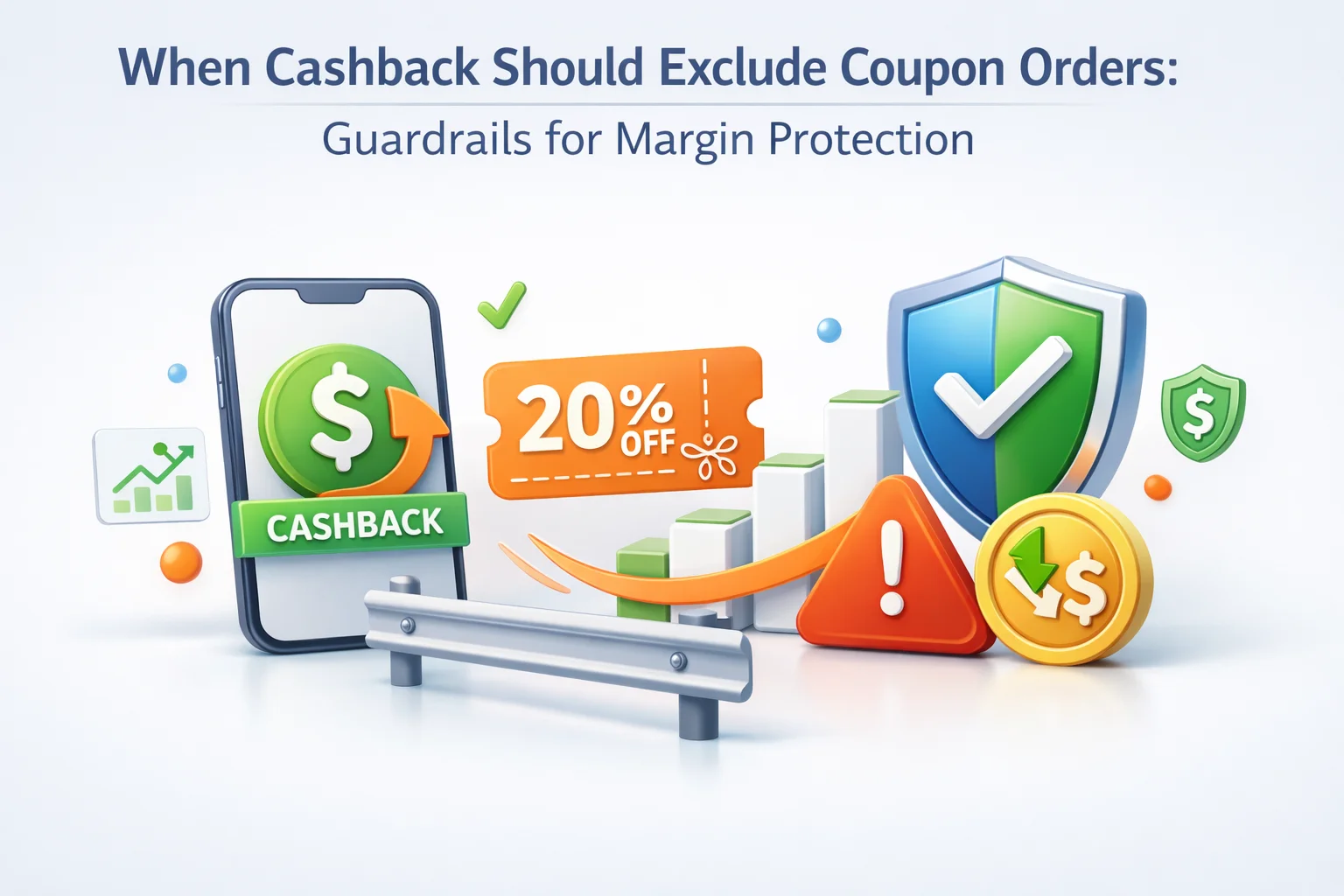
Margin protection begins with naming what each lever does. A coupon answers “why buy now” with an explicit reduction at capture. Cashback answers “why return later” by deferring value into wallet liability that should ideally fund a second profitable purchase. When both apply to the same order without structural limits, you risk paying twice for the same conversion event—especially if the coupon already reflects channel fees you pay affiliates or social platforms. Excluding cashback when a qualifying coupon is present is the cleanest guardrail when your commercial plan assumes coupons carry acquisition economics while cashback funds retention.
The operational nuance is that shoppers rarely distinguish “types” of discounts in their heads; they notice outcomes. That makes transparent cart messaging essential. Your exclusion policy should appear as a neutral explanation adjacent to totals, not as punitive fine print. Technically, WooCommerce records coupons as distinct line items and metadata you can reference when deciding whether wallet accruals should fire. Teams standardising on a single wallet layer often choose the Nexu WP smart wallet plugin that pairs WooCommerce cashback with coupon-aware eligibility rules so merchandising and engineering share one vocabulary.
Finance cares about predictability: if cashback accrues on net totals after coupons, liability tracks closer to realised gross margin; if cashback accrues on pre-discount totals while coupons stack aggressively, liability balloons relative to cash collected at the gateway. Document your intended base—subtotal after product discounts, net of shipping, excluding tax depending on jurisdiction—and align exclusions to that definition. Misalignment between marketing language and ledger math is where disputes bloom, especially when partial refunds adjust orders that originally mixed coupons with wallet incentives.
Catalog teams should weigh category-specific coupons differently from storewide codes: a narrow SKU promotion might still leave adequate margin for deferred incentives, whereas an aggressive universal markdown might not. Rather than flipping a binary switch seasonally, document thresholds—such as disallowing cashback when coupon percentage exceeds X or when discounted margin falls below Y—then programme those thresholds alongside merchandising approvals so finance reviews floors before coupons go live rather than discovering violations after cashback posts.
Exclude cashback on coupon orders when the coupon already purchases the incremental conversion you wanted—or when stacking would push unit economics below your floor even before fulfilment variability.
Healthy promotions express a single dominant economic story per order: either you funded discovery through an upfront concession, or you funded repeat behaviour through deferred liability. When both stories compete on the same checkout, neither owner feels accountable—marketing celebrates coupon redemption while loyalty celebrates cashback attachment, yet operations ships a parcel whose combined incentives erase contribution. Food and beverage subscriptions, apparel with high return rates, and electronics with thin manufacturer margins suffer first because variable costs swamp tiny residual spreads faster than headline averages suggest.
Retailers sometimes argue that cashback on discounted orders still “locks in” future purchases. That may be true when deferred liability converts quickly into high-margin second baskets. But if your coupon already yields negative or near-zero first-order margin by design, adding cashback transforms a calculated acquisition loss into an unplanned double subsidy. Measure blended margin by cohort: coupon-only, cashback-only, and stacked. If stacked cohorts show substantially worse ninety-day profitability with similar repeat rates, exclusion is rational—not punitive. Official references on managing WooCommerce coupons help teams align stacking behaviour with cart calculations before wallet rules enter the picture.
Merchant-level diagnostics help separate structural stacking problems from transient campaign misconfiguration. When average order value drops sharply during a promo week but coupon depth stays constant, investigate whether cashback accruals fired on unintended bases—tax-inclusive where policy intended tax-exclusive, or on shipping when only merchandise should qualify. Silent misconfiguration behaves like margin erosion yet resists diagnosis until someone compares cashback liability growth to gateway capture growth line by line. Scheduling a monthly reconciliation between wallet pending totals and discounted order exports closes that gap faster than quarterly business reviews typically allow.
Ambiguity destroys trust. Define whether any applied coupon disqualifies cashback or only coupons above a threshold, only certain categories, or only publicly distributed codes versus account-level courtesy credits. Wholesale partners sometimes receive partner codes that behave like coupons in WooCommerce while meaning something different commercially; label them internally so automation does not mis-classify goodwill adjustments as promotional stacking. Where stores run automated courtesy credits after service failures, decide whether those credits count as coupons for cashback eligibility—often they should not, but only if your policy states so plainly.
Customer-facing definitions should mirror backend detection. If your system checks for `coupon_discount` totals greater than zero, say that in FAQ language without exposing implementation detail. If you exclude only cart-percent coupons but allow free-shipping coupons, spell out the distinction because shoppers interpret “coupon” broadly. Implementation teams evaluating extensions benefit when a WooCommerce cashback extension that can skip accruals when coupons are present exposes rule toggles aligned with those definitions rather than forcing brittle custom code paths that break during plugin updates.
Exclusions should feel consistent. If long-time customers earn loyalty coupons that reflect tenure, slamming the door on all cashback may signal ingratitude. Some merchants exclude cashback only for externally sourced coupons—affiliate or influencer codes—while permitting internally issued retention coupons to stack with deferred incentives under capped rates. Those hybrids demand rigorous testing: simulate carts that combine category coupons, wallet partial pay at checkout, and pending cashback from prior orders to ensure nothing double-counts inadvertently.
Segmentation helps. VIP tiers might regain limited stacking because their cohort margin profile supports it; bargain-bin clearance events might disallow both coupons and cashback simultaneously to prevent disaster carts. Whatever matrix you choose, encode it where merchandisers can audit rationale. Otherwise each holiday becomes a spreadsheet negotiation. Centralising cashback logic alongside wallet balances is why operators adopt NEXU Smart Wallet and Cashback for WooCommerce merchants protecting net margin on stacked promotions instead of scattering one-off snippets across theme files.
Regional pricing adds complexity: EU VAT displays, US tax-exempt nonprofits, or Australian GST-inclusive storefronts change the numbers shoppers compare even when WooCommerce computes consistently behind the scenes. Align exclusion messaging with the visible totals shoppers actually scan in the cart summary rather than internal wholesale figures. Where subscription boxes renew with automatic coupons, clarify whether recurring orders inherit first-order exclusions or evolve into standalone cashback-eligible cycles once introductory coupons expire—continuity surprises drive churn louder than single-checkout confusion.
Tone drives perception. Replace “Cashback denied” with “Cashback applies to qualifying purchases without campaign coupons—this order used a promotional code.” Pair the message with an actionable path: remove the coupon to qualify for cashback if your policy allows mutual exclusivity, or proceed knowing the coupon delivers immediate savings while cashback awaits future eligible orders. Never surprise shoppers post-purchase; confirmation emails should echo the same explanation the cart displayed.
Accessibility matters. Low-contrast rose text on pale backgrounds fails readers; maintain WCAG-minded contrast even inside themed skins. Icons can reinforce comprehension—Font Awesome check and info glyphs help scanning thumbs—but keep labels explicit. For legal transparency in promotional advertising, consult reputable primers such as the FTC advertising FAQs for businesses when drafting hero banners so claims match operational behaviour.
“Shoppers forgive complexity when they see fairness. They do not forgive discovering hidden stacking limits only after supporting three inbox rounds with customer service.”
Configuration screens are where intent becomes behaviour. Walk through each toggle with a multi-department lens: marketing cares about headline rates, finance cares about bases, IT cares about compatibility with caching and checkout plugins. Capture screenshots in your internal knowledge base—not for public distribution necessarily, but so seasonal hires do not reinterpret fields creatively every November. When settings expose preview logic (“cashback accrues on net product total after discounts”), validate those phrases against real orders containing mixed tax locations and shipping bundles.
If your storefront uses dynamic pricing or role-based discounts that do not surface as traditional coupons, decide whether those mechanisms should mimic coupon exclusions for cashback purposes. Dynamic pricing might already compress margin without wallet liability; letting cashback ride on top could silently violate floor targets. Document decisions in release notes whenever merchandising adjusts algorithms. Teams seeking cohesive controls frequently rely on the smart wallet and cashback plugin for WooCommerce with administrative cashback guardrails to keep those policy choices in one place rather than scattered across snippets.
Change management should accompany every settings update. Announce internal diff summaries: what shoppers will see, what finance should expect in liability reports, and what support macros require tweaks. Silent changes are how finance variance analysis turns into archaeology. Especially after WooCommerce core updates, regression-test carts with coupons spanning multiple lines, bundled products, and wallet partial payments—interaction bugs often lurk where plugins overlap.
Mobile layouts deserve explicit spot checks because conditional messaging often wraps unpredictably on narrow screens; a logically ordered desktop sentence can read like an accusation on mobile if line breaks isolate phrases such as “not eligible.” User acceptance testing with real devices—not only browser resize—flags contrast and truncation problems before launch. Pair that with slow-network simulation so asynchronous cart refreshes do not flash contradictory states while coupons apply.
Dashboards should spotlight divergence between discount intensity and cashback accrual. If average coupon depth climbs while cashback liability remains flat, your exclusion rules may be working—or redemptions collapsed because customers abandoned carts when messages felt confusing. Slice data by coupon campaign and SKU margin cohort; leakage often concentrates in narrow slices rather than evenly across the catalogue. Compare weeks before and after exclusion policy changes while controlling for traffic mix to avoid false attribution from seasonal demand alone.
Watch support ticket themes. Spikes mentioning “missing cashback” after coupon campaigns often indicate unclear UI rather than hard failure. Qualitative coding of those tickets tells you whether to rewrite copy, adjust thresholds, or fix a genuine bug where coupons misfire as zero-value metadata yet still block accruals. External context on ecommerce metrics from resources like foundational ecommerce metrics guidance helps frame which secondary indicators—return rate, time-to-second-order—should move in tandem with policy shifts, even when your store runs on WooCommerce rather than another platform.
Exclusion policies fail when exception culture runs wild. Name a single approver for short-term stacking experiments—typically a finance partner plus a commercial lead—and require written hypotheses: expected lift, margin floor, measurement window, and rollback trigger. Exceptions should expire automatically unless reviewed. This discipline stops the slippery slope where every campaign negotiates its own physics, leaving engineering to patch emergent contradictions across checkout, wallet, and refunds.
Quarterly resets help teams re-anchor to baseline guardrails after holiday noise. Bring sample orders spanning edge cases—international VAT, mixed cart subscriptions if applicable, and courtesy credits—to the table. Stress-test refund paths: when coupons and partial wallet usage combine, ensure recalculated cashback or its absence remains legible on customer statements. Operators seeking durable configuration patterns often standardise on NEXU WooCommerce cashback tooling with merchant dashboards for coupon-aware programmes so governance reviews plug into numbers everyone trusts.
Escalation paths deserve clarity too. When a high-value customer insists on stacking where policy forbids it, empower agents with a finite toolkit: courtesy wallet grant sized to the avoided cashback, alternative shipping upgrade, or loyalty-tier review next quarter—not unauthorized rule suspension that corrupts analytics. Each exception should leave a CRM note tying back to the policy version in force so future reviewers understand historical behaviour without guessing which interpretation applied that week.
Treat enforcement like a minor product launch. Align merchandising calendars so exclusions do not contradict hero coupon creatives mid-flight. Validate translations if you operate multiple languages; ambiguous conditional sentences become lawsuit-adjacent frustration fastest in checkout flows. Confirm email automation templates do not promise cashback on orders that routinely include acquisition coupons unless you carve explicit exceptions.
Embed finance sign-off on how refunds allocate coupon value versus wallet deductions—especially when partial returns leave residual coupon impact on remaining lines. Document how support issues courtesy credits after failed deliveries and whether those credits emulate coupons for cashback purposes. Technical teams should verify that third-party checkout accelerators honour the same detection logic native checkout uses. Finally, revisit the WooCommerce smart wallet plugin that separates coupon-driven discounts from cashback accrual logic whenever you refactor pricing architecture so exclusion rules migrate intact.
Coupon exclusions for cashback are guardrails, not grievances—when your definitions are clear, your dashboards honest, and your storefront copy aligned, shoppers accept trade-offs between immediate codes and deferred wallet rewards. Anchor that balance in tooling your whole team can audit.
Explore Smart Wallet & Cashback for WooCommerce
Reading time estimate assumes roughly 230 words per minute for analytical commerce prose; individual pace varies.
Approximate reading time: 13 minutes at typical editorial pace.



Just got this set up and it's running smooth so far, but I've got a quick question. the guide says cashback gets excluded on coupon orders to keep margins safe that part I get. but where do I actually add the little note explaining why to customers?
Just grabbed this guide on a whim and it's already paying off. the breakdown on how to configure coupon vs cashback exclusions in WooCommerce saved me hours of digging through forums.
Hey! as a nurse who runs a side hustle selling scrubs, I was worried about double discounting messes. This guide's segmentation tip just flagging orders with any coupon discount saved me hours of manual checks.
been a customer for years and I've gotta say this guide really didn't work for me. i run a small shop and was hoping for clear steps on setting up exclusions in WooCommerce without messing up my existing discounts. Instead, I got a bunch of theory about "margin protection" and "commercial plans" which doesn't help when I'm up at 2 AM staring at my coupon settings, wondering why cashback is still applying to discounted orders. Where's the actual how to? do I need another plugin for this? How do I even test if it's working?