Next-Level Code. Nexuvibe Style ...
Hrs
Min
Sec

Setting up the technical side of a WooCommerce affiliate program — the plugin, the commission settings, the payout workflow — takes a day. Filling that program with affiliates who actually promote your store is the work that takes longer and gets far less attention in most guides. The result is a pattern that plays out constantly: a store owner spends weeks configuring a well-structured affiliate program, launches it, and then waits for sign-ups that trickle in slowly or not at all.
Affiliate recruitment is not a passive activity. You do not build a program and wait for affiliates to find it. You actively identify the right people, give them a compelling reason to join, and make the entry experience smooth enough that they are actually sharing within a week of being approved. The ten strategies in this guide cover the full spectrum from the highest-conversion approaches (your existing customers) to the most scalable ones (content creator outreach and SEO for your program page).
Throughout this guide, we reference the affiliate management workflow inside Affiliate Engine, a WooCommerce referral and partner management plugin — particularly how the registration flow, approval dashboard, and creatives tools support a deliberate recruitment strategy.
Affiliate recruitment strategies only deliver results when the infrastructure they point to is solid. Sending people to a registration page that loads slowly, a commission structure that sounds unappealing, or a dashboard that is confusing to use will convert a fraction of who they could. Before actively recruiting, make sure three things are genuinely in place.
Your commission offer needs to be worth an affiliate’s time before you start recruiting. Research what competitors in your niche pay. An uncompetitive rate is the fastest way to get a “no thanks.”
Anyone who considers your program will visit a page first. It needs to explain what they earn, when they get paid, how the program works, and what support they get — in under 60 seconds of reading.
After approval, affiliates need to access their link, see commissions accumulating, and request payouts without friction. Test this experience yourself before your first real affiliate goes through it.
Your existing customers are the highest-converting affiliate recruitment source available to you. They already know your products, they already trust your store, and they already have personal experience to draw on when talking to potential buyers. An existing customer who loved what they bought does not need to be convinced your products are good — they know, because they own them.
To identify your best candidates, look at your WooCommerce order history for customers who have made multiple purchases, left positive reviews, or engaged with your email campaigns. These are the people most likely to be genuinely enthusiastic about your products — and genuine enthusiasm is what makes an affiliate effective.
Contact them personally, not with a mass email. A short, direct message that says “You have been one of our best customers, and we wanted to offer you early access to our affiliate program — you would earn [X]% on every sale you refer” converts at a dramatically higher rate than a generic newsletter blast. The personal recognition matters as much as the financial incentive.
The highest-intent moment to introduce a customer to your affiliate program is not immediately after purchase — it is 7 to 14 days later, once they have received and used what they bought. At that point, satisfaction is at its peak and the experience is fresh. A well-timed post-purchase email sequence that invites satisfied customers to join the affiliate program is a scalable, automated version of the direct outreach in Strategy 1.
A short email asking how they are enjoying their purchase. No sales pitch, no affiliate mention. This email builds rapport and gives you a natural reason to follow up.
Ask for a review, and then in a postscript or second paragraph mention that if they love the product and want to earn by sharing it, you have an affiliate program. Link to the program page. Keep this casual — the review request is the main purpose, the program mention is secondary.
A dedicated email focused entirely on the affiliate program invitation. By this point, customers who clicked the earlier link but did not apply get a second chance. New customers who missed the first mention see it for the first time. Include the specific commission rate, a clear description of how it works, and the direct link to apply. This email consistently generates the highest affiliate sign-ups of the three.
This sequence can be set up in any major email marketing platform connected to WooCommerce — Klaviyo, Mailchimp, ActiveCampaign, or the built-in WooCommerce email system with a trigger on order completion. Once it is configured, it recruits continuously without ongoing effort. Every new customer who has a good experience goes through the sequence automatically.
Content creators — bloggers, YouTubers, podcast hosts, and newsletter writers — who produce content in your product category already have an audience that buys products like yours. They are pre-filtered by relevance. If your store sells outdoor gear, a YouTuber who reviews hiking equipment is speaking to exactly the audience you want to reach. The question is how to find the right ones and approach them effectively.
Search Google for “[your product category] review”, “[your product category] best of”, and “[your product category] guide”. The blogs and YouTube channels that rank for these terms already have your target audience. On YouTube, search for your product category and sort by “view count” to find established creators. On Instagram and TikTok, search your product category hashtag and look for accounts with 5,000 to 100,000 followers — mid-tier creators often have better engagement rates and are more accessible than massive accounts.
Content creators receive generic affiliate pitches constantly. To stand out, be specific: mention a specific piece of their content you read or watched, explain why your product fits their audience, and lead with what they earn rather than what you need. A pitch that opens with “I watched your video on [specific topic] and noticed your audience asks a lot about [specific product need] — our solves exactly that, and we pay [X]% commission” will get far more responses than a template that could have been sent to anyone.
For content creators who review physical products, offering a complimentary sample alongside the affiliate invitation dramatically increases the response and activation rate. A creator who has the product in their hands has both the material to create content and a personal experience to speak from. The cost of a sample is almost always justified by the promotional value of a genuine review from an established creator in your niche.
Volume matters with outreach. Even a well-crafted pitch will see single-digit response rates from cold outreach. Plan to contact 50 to 100 creators to generate 5 to 10 active affiliates. Keep a simple tracking spreadsheet of who was contacted, when, and their response status. Follow up once after 10 days if there is no response — a single follow-up roughly doubles response rates without being annoying.
If you have an email list of subscribers who have opted in to hear from you, you have a warm audience who already knows your brand. Some percentage of that list will have audiences of their own — friends, social followers, a blog, or a community they are active in. A dedicated email to your list introducing the affiliate program will find those people.
The key with email list recruitment is to segment rather than blast. Send the affiliate program invitation to your most engaged subscribers first — people who open your emails regularly and click through to your store. They are more likely to be enthusiastic participants than subscribers who have not opened an email in six months. Most email marketing platforms let you create segments based on open rate and click rate.
In the invitation email, be specific about what they earn, how the program works, and what they need to do to get started. Include a single clear call to action: a button that goes directly to the affiliate program registration page. One CTA, one link, one decision. The more choices you give people in a recruitment email, the fewer actually apply.
People actively search for affiliate programs in product categories they are interested in. Searches like “outdoor gear affiliate program,” “natural skincare affiliate program,” or “WooCommerce plugin affiliate program” are typed every day by content creators and promoters looking for programs to join. If your affiliate program page is optimized for these searches, it recruits passively without any outreach effort on your part.
The commission rate stated clearly and prominently. The payout schedule and minimum threshold. A brief explanation of how the program works — link-based, coupon-based, or both. What promotional materials and support affiliates receive. Social proof if available — number of active affiliates, total commissions paid, or testimonials from affiliates. The registration form embedded directly on the page, not behind another click. Pages that bury the registration form or fail to state the commission rate lose a significant proportion of motivated visitors.
Your page title and H1 should include “[Your niche/product category] affiliate program” as the primary keyword. The page URL should be something like your-store.com/affiliate-program. Include a paragraph describing what your store sells, who your typical customers are, and why your program is a good fit for content creators in that space. Internal links from your blog posts and homepage to the affiliate program page help Google understand it is an important page worth ranking.
A well-optimized affiliate program page takes a few hours to build and then recruits indefinitely. It is the highest long-term ROI recruitment channel because the effort is front-loaded and the ongoing benefit is compounding. Affiliates who find your program through search are actively looking to join a program in your category — they are the most motivated applicants you will ever receive.
Your store’s social media following consists of people who are already interested in what you sell. Among them will be micro-influencers, community managers, and enthusiastic customers who have their own following. Periodic posts about your affiliate program — not constant, but regular enough to reach people over time — expose the opportunity to this warm audience.
The most effective social media recruitment posts are specific and concrete: “We pay [X]% on every sale you refer, with monthly payouts. If you love our products and want to earn by sharing them, link in bio to apply.” Vague posts that say “join our community and earn” do not give people enough information to make a decision. The commission rate is the hook — put it front and center.
Instagram Stories with a swipe-up link to the program page, pinned posts, and LinkedIn updates (particularly if your products have a professional-use angle) all work for different audience segments. Vary the format to reach different parts of your follower base. A story post reaches people who do not see your feed. A pinned post reaches new profile visitors who are first learning about your brand.
Every product niche has online communities — Reddit, Facebook groups, Discord servers, forums, and Slack groups — where enthusiasts gather to discuss products, ask questions, and share recommendations. These communities are filled with people who are deeply knowledgeable about your product category and often influential within their own networks. They are also exactly the kind of person who makes a valuable affiliate.
Facebook groups in your product niche, Reddit subreddits related to your category, and Discord servers for enthusiasts in your space are all worth exploring. On Reddit, a genuine contribution to a thread about affiliate programs in your niche — rather than a standalone promotional post — is usually well-received. The community members who respond positively are often exactly the high-engagement advocates you are looking for.
Businesses that sell complementary products to the same customer base you serve are natural referral partners. A store selling yoga equipment might partner with a business selling nutritional supplements, athletic wear, or meditation apps — same customer, different product. A co-promotion arrangement where each business mentions the other’s affiliate program to their customers expands your recruitment reach without advertising spend.
This works best when the relationship is mutual and both businesses benefit roughly equally. An email introduction to your respective lists, a mention in your newsletters, or a co-hosted piece of content that introduces each brand to the other’s audience — all of these create affiliate recruitment opportunities without the competitive concern that would prevent collaboration with direct competitors.
Complementary business partnerships also tend to generate higher-quality affiliates than cold outreach, because the business introducing your program implicitly vouches for it. A recommendation from a business someone already trusts carries more weight than an unsolicited pitch from a stranger.
For physical goods stores, the package insert is one of the most underused affiliate recruitment channels available. Every order you ship is a direct touchpoint with someone who just paid you money — they have already made the trust decision. A small card inside the package that mentions your affiliate program reaches them at the exact moment their satisfaction with the purchase is highest.
An effective packaging insert for affiliate recruitment is brief and specific: “Love what you got? Share it with friends and earn [X]% on every sale you refer. Learn more at [URL] or scan this QR code.” Include a QR code pointing to your affiliate program page — most people receiving physical packages have a phone in their hand and will scan a code far more readily than they will type a URL later.
The cost per insert is negligible — a few cents per card. The conversion happens at the moment of peak positive experience with your brand. Stores that add this consistently report it as one of the highest-conversion affiliate recruitment touchpoints, particularly for the customer-as-affiliate programs that generate the most authentic promotion.
This strategy functions as both a recruitment tool and a retention tool. One of the most common reasons potential affiliates decline to join a program or become inactive after joining is that they do not know what to say or share. When you provide ready-to-use promotional materials — product images, pre-written captions, banner graphics, comparison tables, and video clips — you remove the creative friction that stops affiliates from starting.
When pitching potential affiliates — whether by email, through social media, or on your program page — the availability of creatives is a genuine competitive differentiator. A pitch that says “join our program and we will give you product photos, pre-written Instagram captions, banner ads, and a dedicated affiliate contact you can reach with questions” is significantly more appealing than one that says “sign up, here is your link, good luck.”
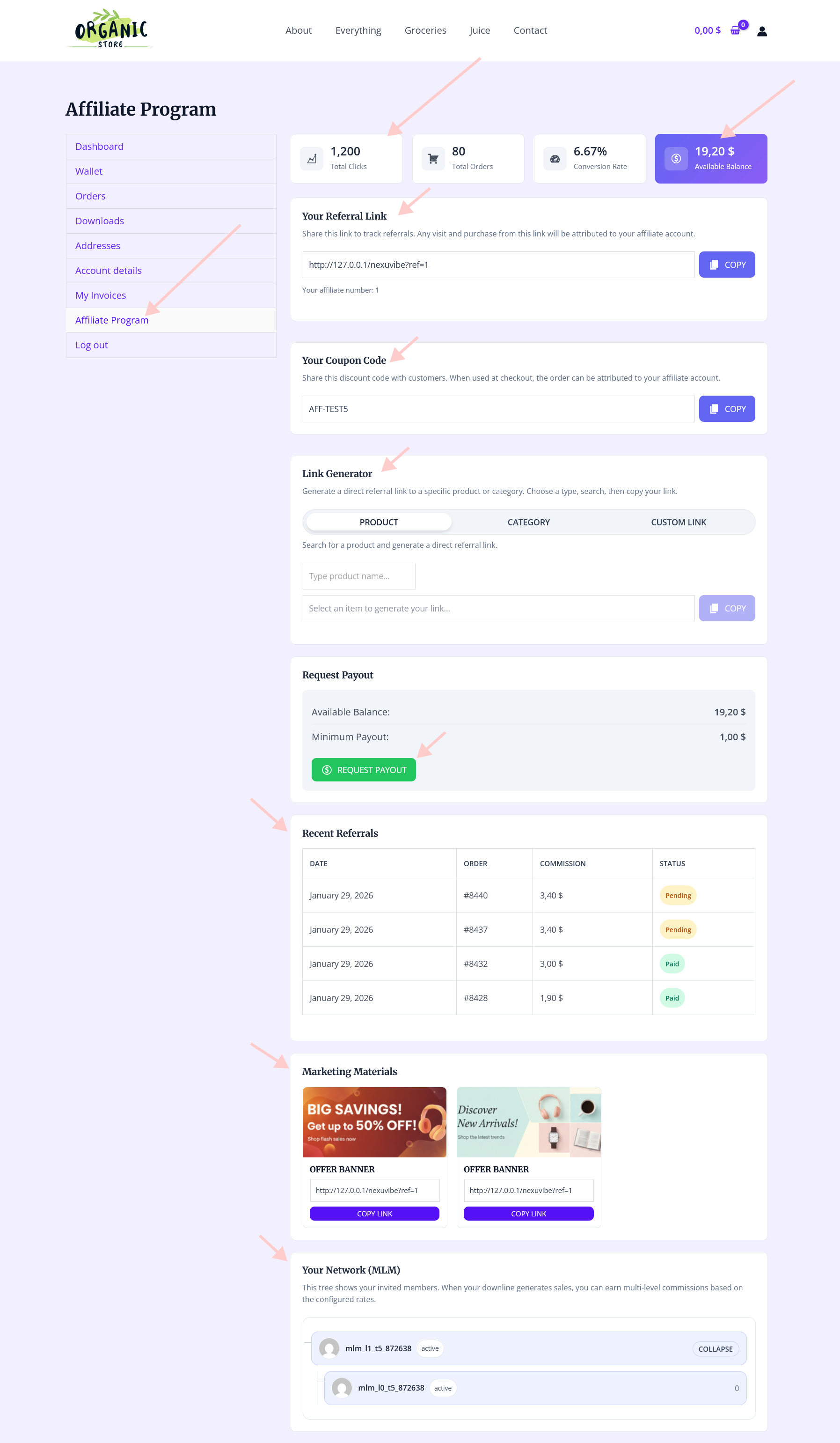
In Affiliate Engine, the Creatives tab in the admin dashboard is where you publish promotional materials for affiliates to access directly from their account. Add product images at different aspect ratios (square for Instagram, landscape for blogs and banners), suggested caption templates, and any brand guidelines affiliates should follow. Update these when you launch new products or run seasonal promotions.
Recruitment strategies only deliver results if the application flow converts interest into active participants. An affiliate who applies and waits a week for approval — or gets approved but receives no onboarding — is an affiliate who starts with reduced momentum. The admin workflow for managing incoming applications needs to be fast and the onboarding needs to be structured.
Aim to review and approve applications within 48 hours. For a customer who applied after your post-purchase email, that window is the period when they are most engaged with your brand. A week-long wait cools that enthusiasm significantly. Check the Requests tab at least every other day, review the application details, and approve or decline with a brief reason.
With ten strategies available, the question of where to start matters. Not all strategies have the same effort-to-return ratio, and for a store launching an affiliate program for the first time, starting with the highest-conversion approaches builds momentum before moving to more scalable but slower-burning channels.
One thing every experienced affiliate program manager learns, usually by ignoring it first, is that a large affiliate list with mostly inactive participants is worse than a small list of genuinely active promoters. Inactive affiliates do not cost you money directly, but they create noise in your dashboard, dilute your metrics, and make it harder to identify who is actually performing.
Selective approval is one of the most powerful program management decisions you can make. Reviewing applications carefully, approving those with genuine promotional potential, and declining those who show no evidence of an audience or relevant content takes fifteen minutes per batch. The quality improvement in your program’s data and outcomes is worth many times that investment.
The ten strategies in this guide are all designed to bring in quality applicants rather than volume. When you recruit from your own customer base, from relevant content creators in your niche, and through channels where people are actively interested in your product category, the quality of the applicant pool is fundamentally higher than mass recruitment through generic affiliate directories.
Affiliate Engine’s WooCommerce affiliate and partner recruitment plugin gives you the infrastructure to support every stage of this process: a configurable registration form that filters applicants, a requests dashboard for review and approval, a creatives tab for promotional materials, notification emails for onboarding, and a full affiliate management panel to track who is active and generating results. The recruitment strategies are yours to execute — the operational support for all of them is built into the plugin.
Affiliate Engine gives you a configurable registration form, application review dashboard, creatives management, onboarding notifications, and full affiliate management — the infrastructure every recruitment strategy in this guide needs to convert interest into active promoters.



Just bought this and the onboarding section alone makes it worth it. my affiliates went from signing up to sharing links in just 3 days no more ghost signups!
Finally, a guide that gets it recruitment isn't
Finally a guide that cuts the fluff and gives real numbers.
Hey! the guide mentions existing customers are the best affiliates. But how do you actually approach them without coming off pushy? Do you email them, add a banner in their account, or something else? Curious what's worked best for others