Next-Level Code. Nexuvibe Style ...
Hrs
Min
Sec

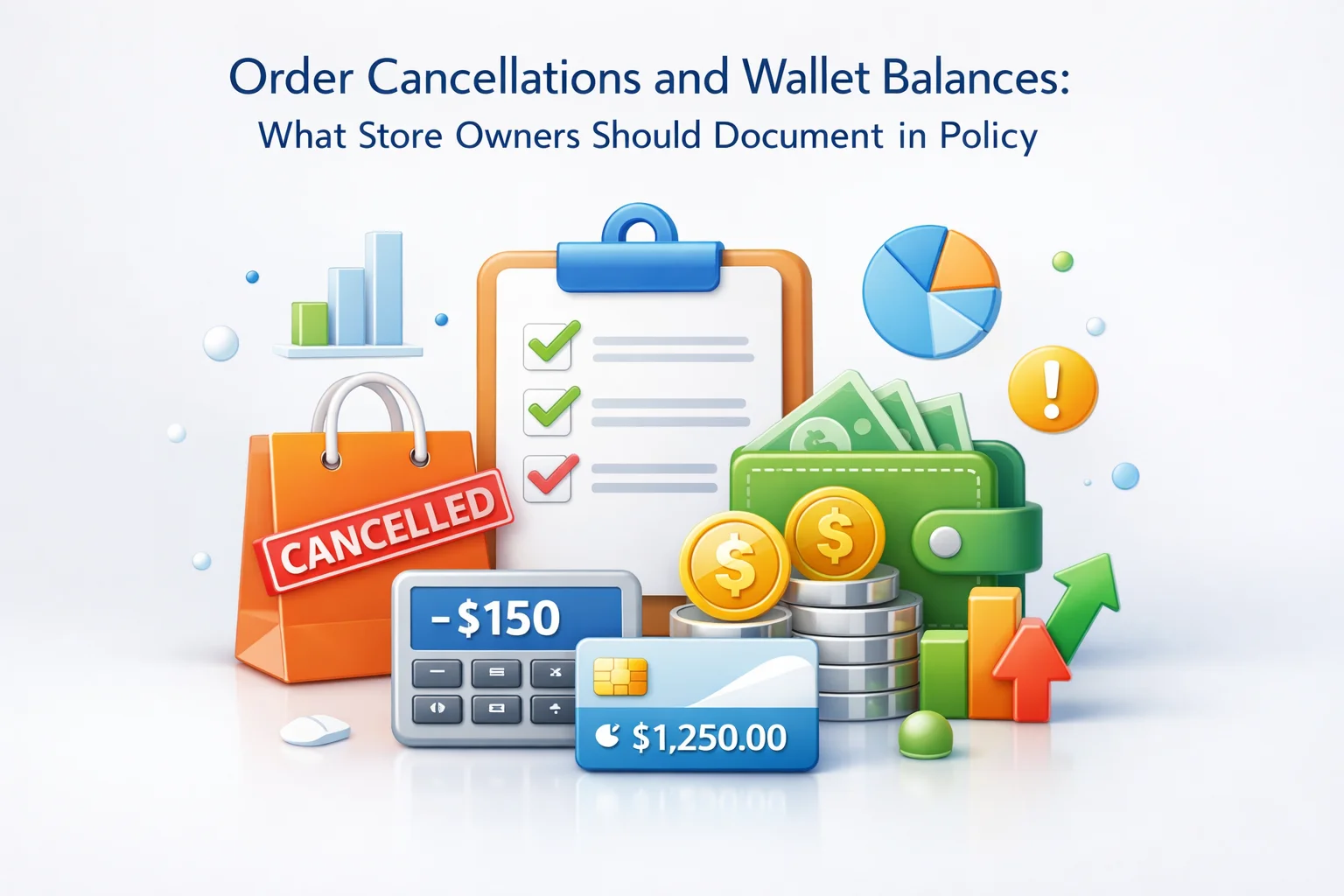
Customers experience cancellations as reversals of intent: they changed their mind, realised the shipping date fails an event, discovered a duplicate order, or flagged fraud early enough to stop fulfilment. Operators experience cancellations as state transitions that must reconcile stock, payments, refunds, wallet liability, and audit trails. When part of the original tender lived inside a wallet balance, the reversal is no longer only a gateway story; it is also an internal ledger story that must match what My Account displays.
Policy documentation exists to bridge those two realities. It should answer, in plain language, what happens to wallet debits when an order leaves Processing, whether partial line removals are supported, how quickly credits become spendable, and who may override defaults. Without those answers committed in writing, support teams improvise metaphors finance cannot reconcile and shoppers compare screenshots that disagree with emailed totals.
The headings below mirror how counsel, finance, and operations jointly review programmes: define terms, bind behaviours to order states, expose buyer-facing surfaces, map exceptions, then schedule maintenance whenever commerce settings shift. Store owners anchoring cancellation policy to a single wallet stack frequently evaluate NEXU Smart Wallet and Cashback as WooCommerce-native store credit tooling with configurable cancellation workflows before they seal customer-facing guarantees that engineering must honour at scale.
Policy clarity starts with naming. “Cancelled” sounds absolute, yet WooCommerce order states intersect with payment capture states, fulfilment milestones, and digital delivery events. Your public terms should map each phrase customers recognise to internal states staff actually use. If shoppers read “Cancelled” but the finance team thinks in “Refunded partial line with wallet credit remainder,” you have invented bilingual confusion without realising it.
Anchor consumer language to WooCommerce core semantics when possible so training materials align with widely circulated merchant documentation. The WooCommerce managing orders documentation explains how order statuses relate to inventory and reporting; your wallet-specific addendum should extend that explanation rather than contradict it. Where custom statuses exist for ERP bridges, publish a customer-safe translation table internally and in help centre footnotes when edge cases spill into public view.
Cancellation request, cancellation accepted, wallet reversal, refund to original tender, irreversible digital fulfilment, made-to-order exclusion, pre-shipment window, restocking fee cap. Each entry needs one sentence your legal team agrees with and one sentence support agents may quote verbatim.
Marketing automation inherits cancellation vocabulary through tags and segments. Mislabelled flows send win-back emails to shoppers mid-dispute. Policy documentation should explicitly list forbidden automations during cancellation arcs.
Surfacing a Cancel button without qualifying rules invites mismatch between aspiration and logistics. Buyers assume immediate freedom until fulfilment begins; warehouses sometimes commit stock within minutes; digital goods may deliver irrevocably the moment payment clears. Policy must define the latest moment a shopper may self-cancel without human review, what happens when the window closes, and how wallet-funded portions behave differently from card-only purchases if your acquirer rules vary by tender type.
Document cross-border nuance when domestic consumers enjoy cooling-off rights that your default automation might overlook. Policy should flag categories excluded from instant cancellation even if WooCommerce technically allows state changes; regulated goods, personalised items, and perishables commonly belong on that list. Support scripts should cite the same exclusions your lawyers approved, not parallel improvisations invented during chat volume spikes.
Treat the Cancel affordance as a miniature contract amendment. When shoppers click, they believe they have exercised a right your terms already granted. If backend workflow sometimes rejects cancellation because a dropship vendor already acknowledged pick, your policy must disclose that intermediate state explicitly rather than letting the UI imply certainty. The same discipline applies to marketplace-style scenarios where third-party sellers fulfil subsets of the basket: buyers rarely parse mixed fulfilment unless you teach them early in checkout.
Operations leaders should rehearse cancellation flows with warehouse calendars open. Black Friday week reveals conflicts between promised customer autonomy and labour constraints every year. Capture those rehearsals as annotated screenshots stored beside your policy version history so future analysts understand why cutoff times shifted between seasons without branding it as arbitrary caprice.
Wallet-funded orders split accounting attention: external settlement may cover only the card remainder while your internal ledger tracks debits taken from stored value. Cancellation needs to unwind both narratives synchronously or shoppers perceive phantom balances. Policy should declare whether reversal posts immediately as spendable credit, moves into a pending hold pending fraud checks, or splits across promotional versus deposited buckets when your programme distinguishes sources.
Reopened orders after accidental cancellation pose an edge case teams forget until peak week. Document whether inventory returns to salable quantities automatically, whether wallet debits reapply when the customer reorders the same cart, and how long asynchronous webhooks have to converge before support promises “everything is restored.” Payment processors publish refund lifecycle references useful when training finance on card-side timing; Stripe’s materials on how refunds propagate remain a practical external anchor alongside your internal wallet timelines in Stripe refunds documentation.
Wallet reversals should mirror the sequence of the original tender application when fairness demands symmetry: if the shopper applied wallet funds before charging the residual to card, restoration typically credits the wallet first because that portion never traversed external settlement rails in the same form. Exceptions appear when anti-fraud holds require temporarily freezing credits earned from referral bonuses or influencer incentives; policy should admit those freezes candidly and name expected release windows so patience becomes rational instead of suspicious.
Audit trails benefit from consistent identifiers. Require agents to paste order notes referencing wallet transaction IDs whenever manual interventions occur. Later, when leadership asks whether cancellation-related credits spike ahead of promotional periods, analysts can filter noise from structural failures versus campaign reactions. Without identifiers, dashboards tell stories marketing reinvents instead of data everyone trusts.
Full-order cancellation is easier to narrate than surgical edits. Yet merchandising reality often demands removing one line because colour availability shifted while preserving the remainder. Partial cancellations require proportional math across tax, shipping allocations, discounts, and wallet segments. Policy must state whether shoppers may request partial cancellation through self-service tools or only via support, expected turnaround times, and rounding rules when cents would otherwise strand in ledger limbo.
Merchants implementing configurable cancellation plus wallet governance frequently validate scenarios in staging against a WooCommerce wallet plugin that pairs partial order adjustments with transparent transaction history for customers so screenshots attached to policy PDFs reflect production themes.
Attach worked examples with anonymised numbers to internal policy appendices. Finance respects narratives that include arithmetic they can trace from order screen to CSV export without opening four browser tabs.
Bundles complicate proportionality when only one component fails. If your catalogue frequently sells curated kits, publish whether partial cancellation dissolves bundle pricing retroactively or preserves bundle discounts on surviving SKUs. Wallet credits should reflect that decision instantly; otherwise shoppers argue arithmetic using screenshots from yesterday’s cart against today’s ledger. Merchandising and finance must co-author those paragraphs because each side sees different failure modes.
Quantity-driven incentives such as “buy four for the price of three” create cliff edges: removing one unit might rebound everyone to higher per-unit pricing. Spell out whether cancellations roll back incentives holistically or honour promotional intent when substitute quantities remain above thresholds. Ambiguity here generates goodwill credits your CFO never budgeted because frontline managers patch sentiment ad hoc.
Cancellations interact with shipping labels purchased in advance, non-refundable freight surcharges, import duties paid on behalf of customers, and restocking fees where statute permits. Wallet programmes add complexity because fees might be deducted from returned credit rather than charged anew. Write fee rules as positive statements of what you charge, when the charge attaches, and how disputes escalate. Avoid hiding material deductions inside generic “processing” language that customers interpret as procedural overhead rather than economic harm.
Label carrier charges, rush packaging, gift wrap, environmental fees, and payment method surcharges separately so wallet reversals apportion correctly when only part of an order cancels.
Cross-border cancellations may require tax adjustment notes your invoices already exposed. Reference official guidance where consumers verify rights; for example, FTC guidance on shopping online helps U.S. merchants anchor baseline expectations while counsel handles specifics.
Customers assemble truth from fragments: order confirmation, shipment notice, cancellation acknowledgement, wallet history row. Policy documentation should explicitly require that each template references the same order ID, monetary figures, and fee breakdown style. When labels diverge, shoppers assume fraud or incompetence before they assume rounding. Centralised wallet implementations help because history screens become the reconciliation anchor both sides trust.
Include deliverability considerations: transactional email domains authenticated with SPF, DKIM, and DMARC reduce spoofing fears during emotionally charged cancellations. Link to help articles that explain wallet entries using identical vocabulary to admin configuration labels. Apply structured clarity principles on public policy pages so customers researching cancellation paths land on explanations that match transactional email totals rather than orphaned marketing promises.
Accessibility belongs in policy discussions because cancellation stress intersects disability needs: screen reader users rely on headings that announce outcomes clearly; cognitive load spikes when contradictory numbers appear across templates. Aligning semantic HTML in your theme’s email wrappers with plain-language summaries underneath transactional tables prevents panic-driven misreads. Teams referencing WordPress ecosystem standards should keep theme templates compatible with accessibility expectations summarised on WordPress.org’s accessibility page so improvements propagate without silent regressions during routine upgrades.
Localisation adds another alignment challenge. If you translate cancellation emails but leave wallet ledger labels partially untranslated because strings live in distinct plugins, shoppers bilingual by necessity perceive negligence rather than benign oversight. Maintain a glossary per locale where monetary formatting conventions differ; European shoppers expect comma decimals, Japanese shoppers expect currency symbols positioned differently. Policy writers coordinate with translators early rather than patching after social media screenshots circulate.
Chargebacks arrive when cardholders dispute charges with issuers, sometimes after your team already issued wallet credits for goodwill or correction. Policy must instruct agents not to stack remedies that cloud dispute evidence. Document freeze rules: when a dispute opens, wallet movements may pause until investigation completes, or partial credits may proceed only with documented customer consent that understands non-double-recovery.
Escalation owners, evidence packet contents, timestamps tied to wallet ledger IDs, and communication blackout windows while issuer review proceeds.
Parallel wallet top-ups while a chargeback seeks full reversal confuse both customer narratives and acquirer submissions unless counsel approves an explicit settlement strategy.
Mixed tender orders deserve explicit scripting: identify how much of the disputed amount sat in wallet versus card, because issuers adjudicate card captures, not internal credit. Finance should pair WooCommerce dispute exports with wallet CSVs using shared keys. Teams consolidating tooling review ledger exports from a WooCommerce smart wallet stack purpose-built for cancellation and refund correlation when designing month-end tie-outs.
Remember subscriptions and instalments: cancelling an order may not terminate an underlying billing agreement if another plugin owns renewals. Policy cross-links reduce mistaken assurances from support agents focused solely on the cart record in front of them.
Enterprise buyers occasionally route disputes through procurement portals rather than card networks first. Procurement workflows may demand credit notes formatted unlike consumer receipts. Even if WooCommerce remains your system of record, policy should acknowledge document formats finance can produce upon request and expected turnaround. Wallet credits inside consumer-led programmes rarely satisfy enterprise audit unless accompanied by exportable detail; decide whether large accounts receive bespoke handling rather than forcing them through consumer automation that generates narrative conflict.
Gift purchases introduce emotional stakes beyond monetary stakes. When purchasers cancel gifts that recipients already received as notifications, communications must clarify whether wallet credits return to buyer accounts or remain neutralised pending recipient consent if your programme treats gifts as transferable entitlements. Silence breeds accusations of theft-of-convenience even when ledger mechanics behave correctly under the hood.
Commerce stacks drift. WooCommerce updates adjust checkout flows; gateway plugins revise capture semantics; wallet extensions introduce new buckets or automation. Static PDF policies silently rot until a viral complaint exposes the gap. Institute a quarterly policy review aligned with major releases, plus ad hoc triggers whenever someone toggles cancellation windows, refund defaults, or wallet eligibility rules in admin.
Strong programmes treat policy as executable code mirrored in configuration, not inspirational wallpaper. When documentation, admin settings, and shopper-visible ledgers converge, cancellations stop being reputation roulette and become measurable operations with predictable liability.
Incident retrospectives belong in maintenance rituals. After each major cancellation spike driven by carrier failures or inventory bugs, capture quantitative deltas: median time-to-credit, percentage of orders requiring manual wallet adjustments, refund channel distribution. Feed those metrics back into policy edits when systemic friction reveals language gaps rather than isolated misunderstandings. Leadership teams often resist rewriting terms mid-season; data-heavy retrospectives justify temporary addenda or FAQ expansions without reopening entire legal reviews until quarterly anchors arrive.
Vendor diversification matters when plugins interact. If payment gateways change capture semantics mid-year, cancellation timing assumptions baked into older wallet flows may silently desynchronise. Testing harnesses should include regression suites that simulate cancellation immediately after partial capture, immediately before batch settlement cutoffs, and during high-latency webhook delays. Document known fragility zones candidly for internal operators even when consumer-facing policy stays concise.
Store owners architecting durable cancellation rules alongside wallet balances benefit from consolidating references into one product narrative before stakeholders fragment across incompatible screenshots. Evaluate the Nexu WP Smart Wallet and Cashback solution for WooCommerce merchants documenting cancellation policy alongside wallet balances as the technical spine your written terms describe, then pressure-test every paragraph against staging orders until finance signs the reconciliation story.
NEXU Smart Wallet & Cashback ties configurable cancellation behaviour to wallet reversals customers can read in My Account and admins can audit in dashboards.

Get NEXU Smart Wallet & Cashback for WooCommerce cancellation and wallet policy alignment






Hey everyone, I picked this up during the spring sale and it's been great for figuring out our cancellation policy. the section on wallet balances was super helpful it finally got our finance and support teams aligned on how refunds show up in customer accounts. Fingers crossed they keep it updated for next year's tax changes!
Got the policy guide finally clear on wallet
Could've explained cross border returns better.
This guide saved my team hours of back and forth with accounting. We run a pet supply store with seasonal spikes, and cancellations used to be a mess especially when wallet credits were involved. The tip about rehearsing flows with warehouse calendars open was gold.