Next-Level Code. Nexuvibe Style ...
Hrs
Min
Sec

Full refunds feel binary in customer minds: something failed, you put the river back in its banks, the story ends. Partial refunds refuse that simplicity. They imply negotiation, judgement, proration across damaged goods, shipping disagreements, or goodwill gestures that cover half the pain because the other half sits inside policy grey zones. When part of that remedy lands as wallet credit rather than a visible card reversal, the shopper completes two mental audits at once: whether the numeric split was fair and whether your store credit system is a convenience or a cage.
Operators who centralise loyalty economics on WooCommerce increasingly pair refunds with ledger-grade wallet tooling so shoppers see one coherent narrative in My Account. That coherence is where trust becomes measurable instead of anecdotal: the ledger row is either legible alongside the agent’s explanation or it is not, and partial remedies amplify that visibility problem when card statements only tell half the tale.
Below, each heading isolates one trust variable, from the asymmetry of partials versus full refunds through governance controls that stop well-meaning agents from improvising economics that marketing then has to reinterpret. Teams standardising that narrative on one implementation typically evaluate NEXU Smart Wallet and Cashback as a WooCommerce store credit plugin with customer-visible transaction histories so finance exports, support macros, and shopper-facing lines reference the same objects. Bring this guide to your next loyalty, finance, and support triangle meeting as a shared script, not a theoretical essay.
A full refund carries a compact story: you took my money, you returned it, we are square. The shopper compares two large numbers on a statement and closes the chapter. Partial refunds introduce a third actor in the narrative: judgement. Someone inside the brand decided how much pain is enough, which line items matter, whether shipping was “on you” or “on us,” and whether a 30 percent credit acknowledges a scuff or insults someone who expected a replacement. Wallet routing adds another interpretive layer because the headline number on a card statement may only show the cash component while the remainder sits in store credit that does not appear in the same bank feed your customer checks at lunch.
That asymmetry makes communication load rise in direct proportion to how fragmented the remedy is. If your policy already allows split outcomes, train agents to narrate the structure before the shopper invents a worse one. The merchant who says “We are returning forty dollars to your card and placing ten dollars of service credit on your wallet for the inconvenience you experienced on the delayed shipment” is performing clarity. The merchant who says “We processed a refund” while the shopper only sees partial card movement is volunteering for distrust. Reference materials for core order lifecycle language remain important as a baseline alongside your wallet-specific copy. The WooCommerce managing orders documentation anchors vocabulary for order states and refunds that your team should not contradict when wallet entries also exist.
Psychologically, partial remedies prime loss aversion twice: once for the unresolved fraction of harm and once for uncertainty about where money actually landed. Brands that instrument loyalty honestly lean on tooling that exposes transaction lines customers can screenshot and send back to support. Evaluating a WooCommerce wallet extension that shows partial refund lines with order references on the shopper transaction history page closes the feedback loop between what agents assert and what the account proves. If you cannot point to the line item, do not expect the shopper to trust the paragraph in the ticket.
Retention is not a euphemism for trapping money. When store credit behaves like trapped money, you earn social media threads, not lifetime value. When it behaves like a faster, more flexible recovery path aligned to your catalogue, shoppers experience it as partnership. The difference is structural: clarity of expiry, eligibility with promotions, compatibility with subscriptions, visibility on mobile, and the ability to stack with or respect member tier benefits. Partial refunds magnify every footnote because the customer is already in a disappointed state. Credit that arrives with crisp rules feels like recovery. Credit that arrives with caveats buried in PDF terms feels like a second sale forced on someone who wanted out.
Wallet credit buys you reduced immediate cash outflow and a second purchase opportunity. It costs you transparent policy work and impeccable ledgers. If you are not willing to price both sides honestly, partial credit becomes a reputational subsidy for your finance team rather than a retention asset for your customer base.
Category-aware retailers often pair service recovery credits with merchandising hints: “This credit applies to replacements in the same family of products you purchased.” That is not coercion if the alternative was a straightforward return path and the shopper chose speed. Document the cross-sell intent openly in policy so nobody mistakes it for a dark pattern.
Teams standardising retention mechanics on WooCommerce frequently compare how cashback, top-ups, and corrective credits intermingle inside one wallet. Consolidation beats siloed coupon codes that sit outside the shopper’s mental model of “my money on file.” Merchants evaluating the stack often review cashback-aware wallet software that keeps promotional and remedial balances legible in one ledger before they commit headline refund rules in public terms.
Your transaction history is the contract customers believe. Email is the flourish; the ledger is the proof. If those two diverge, trust does not dip linearly; it collapses along the fastest path to public complaint. Partial refunds demand line-level descriptions that decode the business event: which order triggered the movement, whether the amount was tax inclusive, whether the entry represents a corrective credit versus a clawback of a mistaken reward, and which human-readable reason code a support agent can reference without opening three systems.
Operational email should avoid generic “Refund processed” subject lines when the economic shape is mixed. Prefer “Refund and store credit summary for order #12345” with a two-line recap: card total and wallet total, each with timestamps. Aligning this discipline with mainstream guidance on sustainable trust signals in digital commerce helps when you justify copy changes to stakeholders who worry about verbosity. Industry analysis of repeat purchase drivers, such as summaries published through Shopify enterprise ecommerce trend research, consistently points to post-purchase clarity as a lever you can operationalise even on self-hosted WooCommerce stacks.
When disputes arise, the shopper forwards the email thread, not your admin panel. Write for the forward. If partial refunds are routine in your vertical, bake a glossary into your help centre so “service credit,” “wallet balance,” and “refund to card” do not blur. Your support quality score will track the delta between forwarded emails and readable account lines more closely than it tracks average handle time.
Not every credit is withdrawable cash waiting behind a softer label. Programmes differ: some wallets are strictly spend-only store credit, others allow verified payout after anti-fraud thresholds, some separate promotional buckets from deposited funds. Partial refunds intersect painfully with those distinctions when shoppers interpret “credit” as “cash I can extract if I complain loudly enough.” Misalignment here produces more reputational damage than misalignment on discount percentages because it touches sovereignty over money.
Payment operators publish refund lifecycle expectations merchants should internalise before promising parallel wallet behaviour. When training finance on timing differences between ledger credits and card reversals, pairing your internal wiki with acquirer-facing references prevents agents from guaranteeing bank posting dates they cannot control. Stripe’s operational overview of refunds remains a concise external anchor for card-linked portions of mixed remedies; see Stripe refunds documentation for settlement framing that complements wallet-side immediacy narratives.
Product and policy teams evaluating wallet infrastructure should insist on administrator dashboards that mirror customer semantics. Ops maturity shows up when finance can explain bucket rules using the same words shoppers see in My Account. That is one reason practitioners compare admin dashboard wallet controls side by side with storefront wallet cards during vendor review workshops, validating that spend-only versus withdrawable language matches what logged-in shoppers read.
Macros are not laziness when they encode fairness. They are guardrails that stop junior agents from improvising metaphors about ledgers they cannot see end to end. The best macros for wallet programmes contain four blocks: acknowledgement of outcome frustration, numeric recap tied to order IDs, plain-language explanation of wallet versus card rails, and next actions with links to where the shopper can self-verify in My Account. Macros should fail closed: if data fields are missing, the macro refuses to fire rather than guessing amounts.
Pull amounts from the authoritative transaction row, not from human memory of the ticket thread. If two systems disagree, pause the macro and escalate before sending.
Use parallel sentences so skimming eyes catch both rails. Avoid passive voice that buries the wallet movement under generic refund verbs.
Tell shoppers exactly where to click, what label to expect, and how to screenshot if something still looks wrong. Empowering verification reduces repeat contacts more than apologising twice.
Quality programmes link macros to internal QA samples drawn from real partial refund tickets, anonymised, with scoring rubrics for clarity. That is how you scale tone without flattening judgement. Linking macro libraries to tools that expose consistent wallet strings keeps everyone literally on the same page as the shopper sees in customer-facing wallet ledgers that surface order-linked partial refund annotations without ambiguity.
Automation handles repetition; dignity handles outrage. Partial refunds often arrive at emotionally charged moments: the gift arrived late, the colour was wrong but not wrong enough for a free return label, the subscription renewal overlapped a cancellation request. A templated monetary adjustment without acknowledgement reads as bureaucracy. A short human note that references the specific failure mode and names the remedy structure signals respect. Pair that note with a proportional goodwill wallet top-up only when policy allows and finance has modelled liability. Random generosity trains customers to escalate loudly; consistent, explainable generosity trains them to trust process.
The failure mode is identity-sensitive (gifts, medical-adjacent categories, children’s products), the shopper explicitly asked for empathy, or you already issued a partial that risks feeling insulting without context.
Fraud signals cluster on the account, policy says no, or you would create arbitrage where frequent complainers systematically extract additive credits beyond fair remedy.
Goodwill entries should appear as distinct ledger lines with reasons that future agents can interpret. Blurring them into anonymous “bonus” rows erodes auditability. Teams that separate remedial credits from marketing bonuses protect both trust and month-end reconciliation, especially when wallet infrastructure labels corrective credits distinctly from promotional cashback accruals on exportable ledgers.
Trust claims should meet cohort analysis eventually. Define cohorts by remedy shape: partial refund to card only, partial refund mixed with wallet credit, full wallet credit partial in amount, and control cohorts with no refund but similar NPS outcomes if you can construct them ethically without withholding deserved remedies. Track repeat purchase rate at thirty, sixty, and ninety days, revenue per returning buyer, and time-to-second-order. Compare across merchandise categories because partial refunds cluster differently in apparel than in durable goods.
Measurement ethics matter. Do not withhold better remedies from a control group solely for analytics. Instead, exploit natural experiments when policy genuinely varies by region, product line, or season, and pre-register hypothesis tests so stakeholders cannot cherry-pick uplift stories after the fact. Integrate cohort tags into your warehouse so marketing automation does not accidentally blast contradictory messages to shoppers still inside sensitive refund journeys.
When reporting internally, separate short-term cash preservation from long-term relationship value. Wallet-heavy cohorts may show higher repeat revenue but different gross margin after accounting for category switching funded by credits. Finance should own that translation layer so executives do not celebrate repeat rate alone while contribution margin erodes quietly.
Non-standard partial refunds are where informal culture writes policy without telling legal. Someone with admin rights issues a generous split because the shopper sounded upset on the phone; finance discovers the liability spike weeks later during reconciliation; marketing hears about a viral complaint thread and counters with ad hoc credits that clash with wallet bucket rules. Governance turns individual heroics into an accountable system: thresholds by dollar amount, dual approval above certain limits, mandatory note templates, weekly sampling audits, and explicit escalation paths when fraud review contradicts empathy-driven exceptions.
Technical enforcement beats policy PDFs when WooCommerce roles map to real capabilities. Limit who can issue certain refund types at the gateway, route wallet credits through approved flows, and log overrides. Align permissions reviews with HR changes so departed staff do not retain economic keys. Teams consolidating permissions narratives across WooCommerce admin and wallet apps often revisit enterprise-style governance patterns for wallet roles during quarterly access audits so empathy-driven exceptions cannot bypass segregation of duties.
Trust is not the absence of complaints; it is the presence of predictable processes shoppers can verify. Partial refunds routed to wallet credit amplify both the opportunity and the obligation to be boringly explicit. When history pages, emails, macros, dashboards, and approvals tell one story, repeat purchases become the lagging indicator of a programme that respects intelligence on both sides of the inbox.
Partial refunds will never feel as emotionally inexpensive as full refunds, yet they are often the economically honest response to imperfect realities in fulfilment and assortment. Owning that honesty in writing, in ledger lines, and in cohort metrics converts tension into proof. Merchants who invest in aligned tooling treat wallet credit as infrastructure for transparency rather than a substitute for apology. If your roadmap points toward unified ledgers and clearer splits between card reversals and internal credit, evaluating the Nexu WP Smart Wallet and Cashback plugin for WooCommerce merchants standardising refund-to-wallet journeys gives product, finance, and customer experience one shared surface to iterate against.
Ship policies before peak season, rehearse macros before launch traffic, and measure cohorts after you stabilise the behaviour you intend to reward. Trust compounds when shoppers notice that your story matches their screen.
NEXU Smart Wallet & Cashback unifies balances, corrective credits, and shopper-visible histories so mixed remedies stay coherent across email, My Account, and ops dashboards.






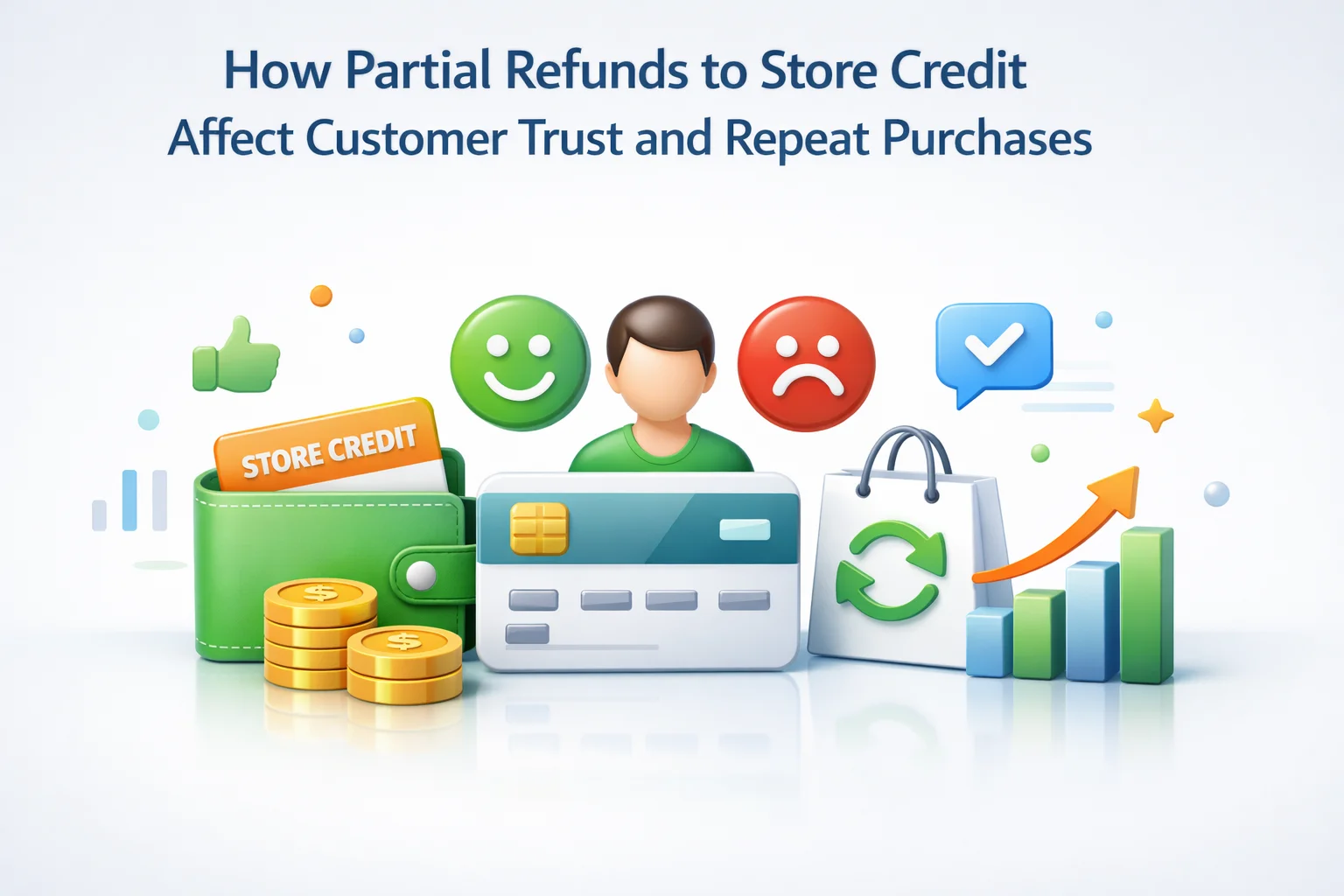


Wallet credit split makes refunds way clearer.
Snagged this guide last Tuesday during a total chaos moment with our refund policy. the part about wallet credit vs. cash refunds is super helpful especially how customers second guess what's "fair.
Hey, finally a refund policy that doesn't feel like a scam!