Next-Level Code. Nexuvibe Style ...
Hrs
Min
Sec

Pending states exist because commerce is asynchronous. Payment capture may succeed while warehouse picking has not begun; carriers issue tracking numbers late; buyers initiate returns before inspection completes. Crediting cashback immediately would force clawbacks when reality diverges from intent—turning goodwill into antagonistic adjustments. A disciplined timeline acknowledges those asynchronous facts while still promising determinism: customers should know what event promotes pending to credited, how long each stage typically lasts, and what exceptions pause or reverse progress.
Software can label states beautifully, yet labels mean nothing without congruent behaviour. If your emails say “credited after dispatch” but your system credits at payment capture, you manufacture inconsistency. Align copy to triggers. Teams implementing wallet-led programmes frequently adopt the Nexu WP WooCommerce wallet plugin with clear pending and credited cashback states so storefront language and ledger transitions reference the same conditions rather than divergent metaphors marketing invented last quarter.
Transparency also intersects regulation and card network expectations in subtle ways. While wallet incentives are not identical to card rewards, customers compare experiences mentally. When timelines feel opaque, they infer intent—even when none exists. Reduce inference by publishing timelines measured in business days tied to milestones shoppers already track: order confirmation, shipment, delivery, return window expiry. Anchor tone in empathy: waiting is tolerable when progress markers exist; waiting without markers feels like neglect.
Subscription or membership merchants should extend the framework: pending cashback on the first fulfilment cycle may synchronise differently than renewal cycles where payment tokens charge automatically. Define whether recurring orders earn cashback under the same velocity rules or whether loyalty milestones unlock faster crediting after proven tenure. Document cross-border tax receipts if shoppers attempt to reconcile wallet entries with invoices—ambiguous labels trigger unnecessary accounting inquiries from small business buyers who export statements monthly.
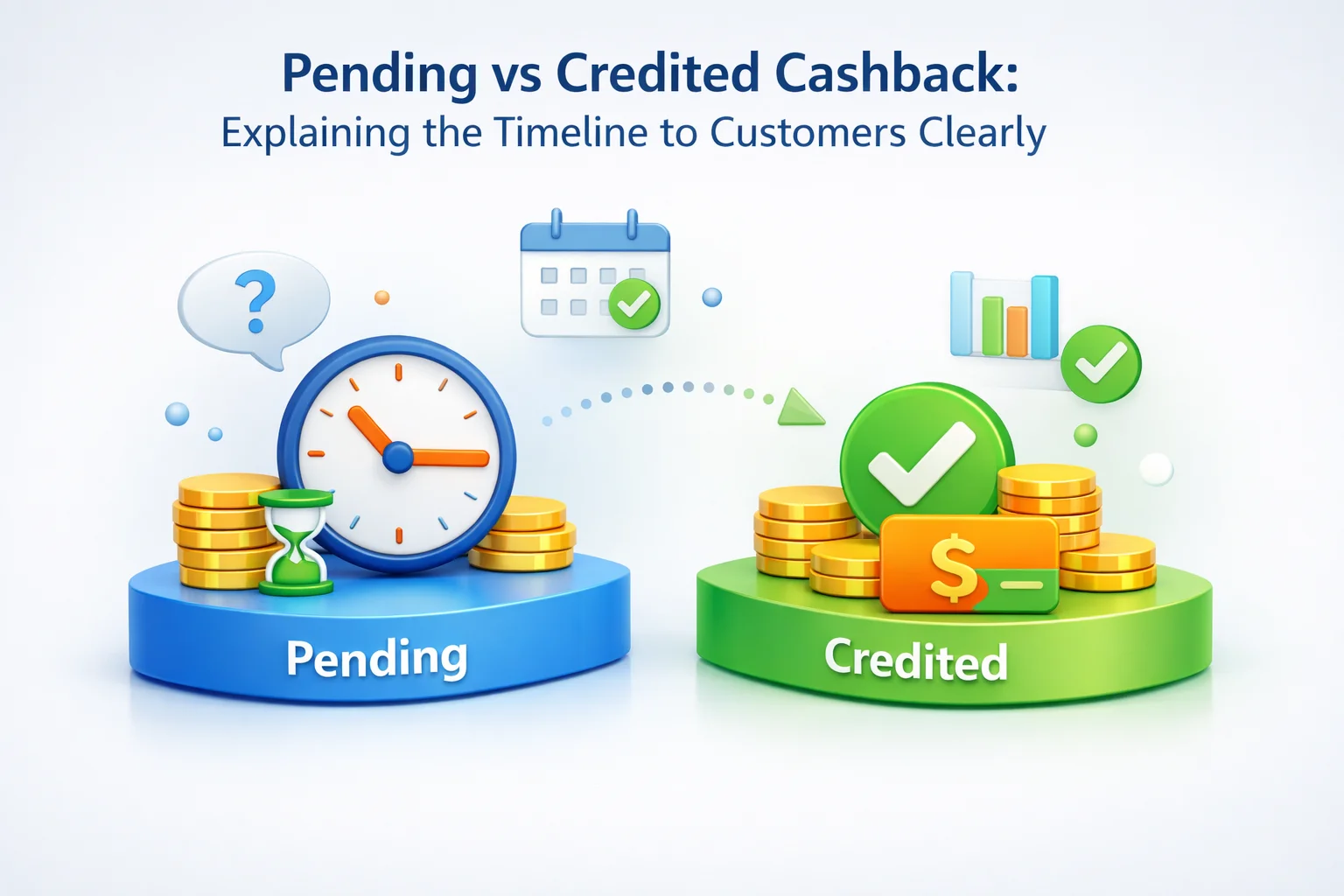
Pending means earned in principle but not yet spendable under your rules. Credited means spendable according to policy, with any remaining timing (like promotional spend-by dates) spelled out separately.
Pending is not miserliness dressed as engineering. It protects shoppers from misleading balances they cannot rely on at checkout and protects merchants from inflated liabilities tied to orders that might shrink through partial refunds or fraud reversals. Think of pending as “reserved intent.” It communicates that your store acknowledges the earning event while withholding finalisation until stabilising facts settle—inventory allocated, fraud checks quiet, return windows elapsed where policy demands.
Different categories justify different patience lengths. Consumables with low return rates might credit quickly after dispatch; apparel with high fitting returns might wait until delivery plus a short inspection buffer; digital goods may credit after access minus chargeback exposure windows. Document those rationales internally so support agents explain consistent stories rather than improvising metaphors that contradict the FAQ. External references on consumer-friendly disclosure practices—such as the FTC advertising FAQs for businesses —help marketing teams align hero claims with staged rewards without overpromising immediacy.
Psychological research on waiting consistently shows that uncertain waits feel longer than known waits of equal duration. That principle applies directly to wallet balances: a shopper who sees “pending” without knowing the next milestone invents worst-case explanations—maybe the store withheld credit intentionally, maybe the programme is a sham. Replacing ambiguity with milestones converts anxiety into tolerance. Milestones should be observational: shipment scans, delivery timestamps, or explicit cooling-off timers. Avoid promising “soon” without anchors; human brains translate “soon” into “never” when confirmation emails stay silent.
Choose triggers you can observe reliably in WooCommerce data: order status transitions, tracking uploads, time elapsed since delivery according to carrier scans, or manual review flags for edge cases. Avoid poetic triggers you cannot operationalise—“when the customer feels delighted” is not a database field. If you promise crediting after dispatch, integrate dispatch signals or accept manual batch processes with defined SLAs so weekends do not silently extend timelines beyond customer expectations.
Partial shipments complicate triggers. If only half an order ships initially, decide whether cashback accrues proportionally or waits for complete fulfilment. Proportional approaches demand crystal-clear customer statements to avoid perceived nickel-and-diming. Whichever path you choose, mirror it on My Account—the same numbers finance sees should appear to shoppers without translation layers. Extensions like NEXU Smart Wallet and Cashback for WooCommerce stores staging rewards until fulfilment milestones reduce bespoke scripting when milestones align with native order notes and statuses.
Gift orders introduce recipient ambiguity: communicate whether pending visibility sits with the purchaser account exclusively or whether recipients see mirrored entries when items ship to alternate addresses. Misaligned expectations between buyer and beneficiary fuel “where is my cashback?” tickets even when logic behaved correctly under your policy.
Holiday peaks stretch warehouses and parcel networks; timelines promised in calm July become liabilities in December if copy stays static. Publish ranges rather than absolutes unless your SLAs genuinely hold under stress—“typically 2–4 business days after dispatch” beats “instant” when carriers disagree. Align email triggers so notifications arrive when states change, not only when marketing schedules blast. Confirmation emails should restate pending logic succinctly; delivery emails should forecast crediting moments that depend on arrival, not shipment alone if that is your policy.
International shipping amplifies variance. Customers comparing domestic friends’ timelines with their own cross-border experience need explicit acknowledgment of customs and carrier handoffs—without drowning them in excuses. Pair operational candour with proactive tracking links so perceived delays attach to observable carrier facts rather than your brand alone. Reference neutral guidance on ecommerce shipping transparency from authoritative sources such as WooCommerce order management documentation when training internal teams on status vocabulary customers already recognise from other retailers.
Seasonal staffing compounds timeline risk: temporary warehouse hires mis-scan packages; chat agents unfamiliar with wallet policies improvise answers. Mitigate through supervisor shadowing for the first week of peaks and quick-reference cards summarising triggers in plain language. Update hero banners if operational reality shifts—advertising “credits on ship” while your warehouse batches labels twice weekly invites disconnect. Where third-party logistics partners insert latency, disclose partner influence without abdicating responsibility; customers hold your brand accountable regardless of handoffs downstream.
Channel drift fractures trust. If chat says credit arrives after shipping while My Account suggests it already cleared because label printing misfired, customers assume fraud. Centralise definitions in a micro-copy repository agents and developers pull from—single source of truth. Visual hierarchy matters: show pending totals prominently but differentiate colour and iconography from spendable balances so thumbs scanning mobile screens grasp status instantly. Font Awesome glyphs like hourglass versus coin icons reinforce meaning without relying on colour alone—important for accessibility.
Support macros should acknowledge emotional reality first: waiting feels costly even when logically fair. Scripts that leap immediately into policy paragraphs sound robotic. Train agents to confirm order context, restate timelines in plain language, and escalate engineering only when data contradicts promises. Engineers maintaining wallet pipelines benefit when merchants adopt a WooCommerce cashback wallet extension with customer-visible transaction timelines so diagnostics align across CRM tickets and actual ledger rows shoppers see.
“Customers do not resent waiting nearly as much as they resent inconsistency. Make your pending story predictable and your credited story celebratory.”
Operations leaders need aggregate views of pending ageing: how much liability sits one day versus seven versus thirty days in pending limbo beyond SLA thresholds. Spikes hint at fulfilment regressions, carrier drops, or webhook failures—not customer impatience alone. Pair warehouse metrics with wallet metrics so cross-functional meetings discuss root causes rather than blaming shoppers for asking reasonable questions.
Dashboards should expose anomalies: sudden growth in pending tied to a single coupon campaign may indicate eligibility bugs crediting twice or none; divergence between order counts and cashback events suggests integration drift. Conduct weekly fifteen-minute reviews during programme infancy—cheap insurance versus reputational fires. Configure alerts when pending dollars exceed finance-approved thresholds so treasury conversations happen before customers scream publicly. Teams consolidating controls often implement the smart wallet and cashback plugin for WooCommerce with merchant analytics on pending ageing to unify operations and finance views.
Cross-reference pending totals with refund velocity. If refunds spike while pending balloons, you might be capturing incentives on orders that reverse frequently—consider whether triggers should shift later in the lifecycle for those SKUs. Continuous improvement beats apologising after each seasonal surprise.
Bring treasury into the conversation early if promotional cashback scales quickly; pending buckets represent contingent liabilities that affect cash forecasting even before spend-down. When finance models breakage—the share of credits never redeemed—pair those assumptions with transparent customer education encouraging spend-down before expiry where ethically appropriate. Nothing erodes trust like surprise expirations that appear only in microscopic terms; proactive reminders a week before expiry perform better than apology credits after social media escalation.
Self-service reduces ticket load only when histories read chronologically with plain verbs: earned, pending, credited, adjusted, reversed. Jargon like “ledger normalisation” belongs in engineering retrospectives, not shopper-facing tables. Each row should answer four questions at a glance: what happened, how much, when, and what remains next. If partial reversals occur, show the causal link to the originating order rather than orphan adjustments that feel punitive.
Mobile layouts deserve scroll-stable headers; sticky column labels help long histories remain legible. Offer CSV export for business buyers who reconcile internally—surprisingly reduces escalations because finance teams stop proxying confusion through consumer support lines. Testing with real anonymised histories catches sorting bugs—ascending versus descending date defaults trip many first releases. Merchants aiming for polished transparency frequently deploy NEXU WooCommerce wallet cashback with shopper-facing transaction history clarity rather than relying on opaque balance-only widgets.
Pair transaction tables with contextual tips: “Pending rows turn credited after dispatch during normal operations” beneath the grid reinforces learning without opening FAQs. Keep tips updated whenever triggers change—stale tips erode trust faster than no tips. Add lightweight print styles if B2B buyers archive monthly statements—pagination headers that repeat wallet policy version numbers help auditors compare screenshots across quarters without hunting through website footers.
Edge cases separate amateur wallet programmes from mature ones. Partial refunds should adjust pending before crediting whenever possible; if credit already moved, claw back proportionally with narrative rows explaining why Shoppers forgive arithmetic when narrative alignment exists—they revolt at silent shrinkage. Split shipments should either delay crediting until completion or split incentives across shipments with explicit partial amounts; do not imply full earning when only partial fulfilment occurred.
Chargebacks freeze storytelling: communicate that incentives pause while disputes resolve, then resume or cancel based on outcomes—never rely on shoppers intuiting payment-processor workflows. Goodwill credits from support should carry labels distinct from promotional cashback so customers do not confuse courtesy adjustments with programme promises. Developers integrating advanced hooks often consult WooCommerce developer documentation to wire status listeners without fragile theme overrides.
Measure what customers feel: elapsed time from order to credited state, variance by carrier lane, and correlation between timeline clarity and repeat purchase. Net Promoter Score alone rarely captures wallet frustration—pair surveys with behavioural signals like saved-cart abandonment after viewing pending balances. If clarity improves and abandonment drops, your copy investment paid off even if absolute pending durations stayed constant.
Compare support ticket rates before and after revising explanations while controlling for seasonality. A meaningful drop suggests customers self-educated successfully. Also track mistaken escalations—cases where agents discovered credits actually processed but UI lagged; those indicate engineering priorities, not training gaps. Merchants investing in lifecycle clarity regularly cite the WooCommerce smart wallet plugin that exposes pending-to-credited transitions consistently as infrastructure for credible measurement—not cosmetic polish alone.
Qualitative interviews with repeat purchasers reveal narrative insights quantitative dashboards miss: shoppers often describe wallet programmes as fair when delays align with shipping realities they already track, even if absolute hours exceed idealistic marketing drafts. Conversely, shoppers describe programmes as unfair when credited amounts arrive quickly but communications contradict each other—speed cannot compensate for inconsistency. Use brief post-credit surveys sparingly to avoid survey fatigue; sample cohorts monthly rather than blasting everyone after each order.
Finally, benchmark responsibly against competitors—never promise faster credit solely because another brand advertises instant rewards unless your operations and risk posture genuinely support parity. Honest differentiation beats brittle parity that collapses under the first surge in order volume or the first coordinated returns event. Your measurement programme should elevate sustainable truth over leaderboard vanity.
Pending and credited are not mysteries—they are promises your operations can keep when triggers, copy, and dashboards align. Give shoppers a timeline they can trace, teams a dashboard they can trust, and your wallet programme room to breathe without sacrificing transparency.
Explore Smart Wallet & Cashback for WooCommerce
Reading time estimate assumes roughly 230 words per minute for dense explanatory prose; your pace may differ.
Approximate reading time: 13 minutes at typical editorial pace.



Hey, finally someone gets it's not the wait
Hey, the pending vs credited breakdown helped
as a dentist running a small online store on the side, I don't have time for vague promises. this cashback system is infuriating it tells customers one thing and does another. my emails say balances credit after dispatch, but the wallet updates at payment capture? that's not transparency; that's bait and switch
Finally a guide that actually explains why cashback takes forever instead of just saying "wait 3 5 days." I'm on delivery routes all day, checking balances between stops, and nothing's more annoying than seeing "pending" with zero idea when it'll actually hit