Next-Level Code. Nexuvibe Style ...
Hrs
Min
Sec

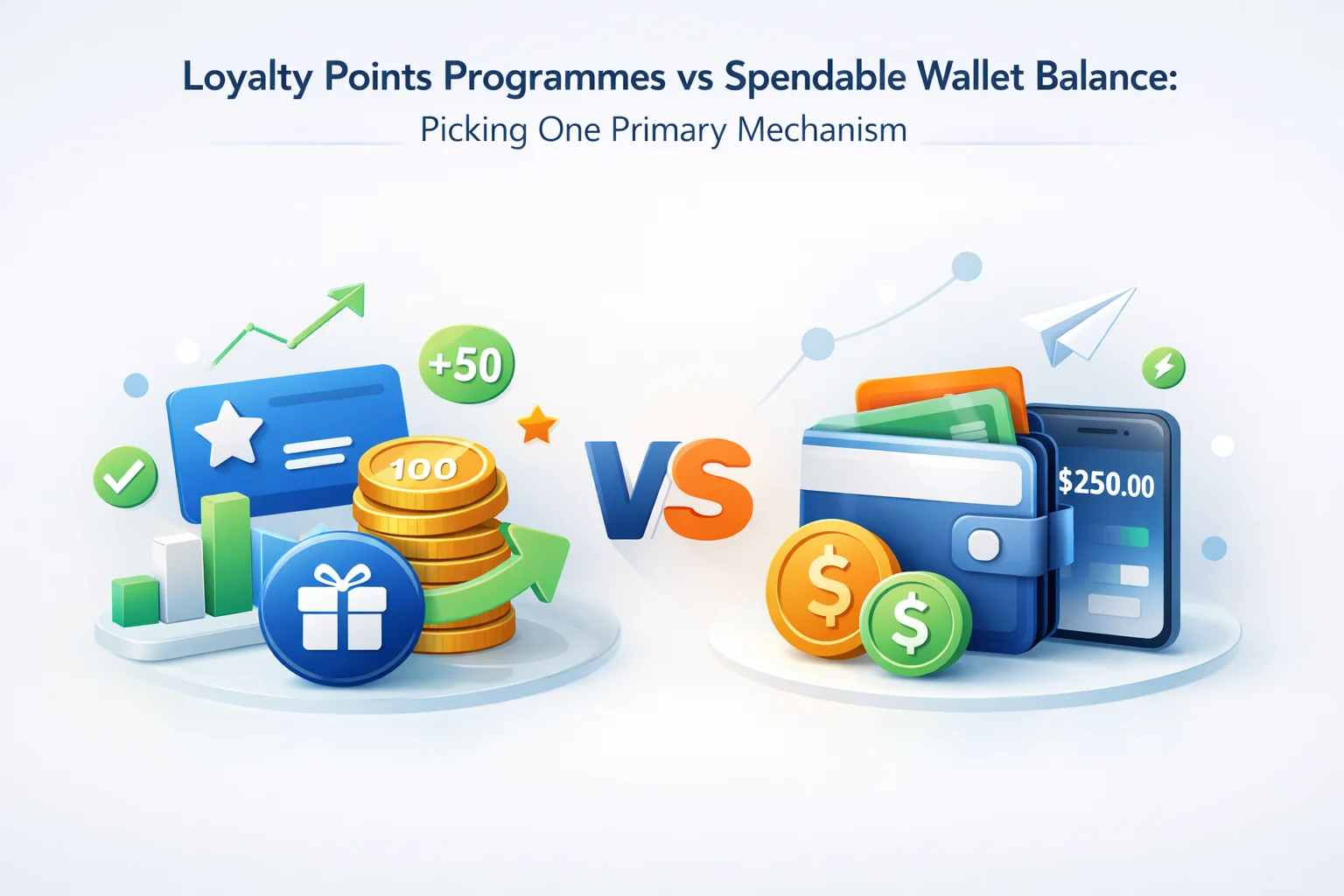
Merchants rarely wake up intending to operate two competing currencies. Points accumulate because marketing wants tiers, badges, and seasonal multipliers. Wallets appear because finance wants refundable store credit, clearer redemption near checkout, and fewer abstract conversion ratios between “stars” and pounds. Each path is defensible alone. The operational accident is declaring both “the programme” without naming which one owns the customer story at the moment of purchase.
That ambiguity surfaces in predictable places: customers ask whether points and wallet money stack, whether refunds return to points or cash-like balance, and whether expiring promotions cannibalise base earn rates. Support macros multiply. Campaign reporting splits across ledgers that never reconcile to a single lifetime value narrative. The underlying WooCommerce order is simple; the promises layered on top are not.
When you standardise on spendable wallet infrastructure with operational guardrails for cashback and refunds, teams adopt a WooCommerce wallet and cashback plugin that treats customer balance as checkout-ready currency rather than abstract earn charts, which clarifies both storefront copy and month-end reviews.
Loyalty points speak in delayed gratification. They imply progress bars, tier unlocks, and seasonal bonus weeks. Spendable wallet balance speaks in immediate purchasing power—closer to money in a stored-value lane. Customers can hold both concepts, but they struggle when your website alternates metaphors mid-funnel: a product page headline promises “triple points” while checkout advertises “pay with your wallet.” The cognitive dissonance is small on paper and large on mobile screens where seconds matter.
Internal teams mirror the confusion. Marketing optimises campaigns in point multipliers while finance asks for euro-denominated liability snapshots. Support agents improvise answers when a refund policy says “back to original payment method” yet the customer insists points should also return because the wallet was topped up from a partially refunded order. Without a declared primary mechanism, each department optimises locally. The storefront becomes a battleground of half-compatible promises.
When neither instrument is dominant, customers ask operational questions you have not publicly answered: exchange rates between points and wallet credits, stacking rules during coupon events, and which balance expired first during a disputed return. Each question is reasonable; the absence of a canonical policy converts reasonable into expensive.
Campaign dashboards that count point issuances sit beside wallet top-up funnels without a single cohort view of “customers who felt rewarded and then purchased again.” Leadership reviews turn into semantics about definitions instead of decisions about allocation. A primary mechanism restores a single success metric spine.
Breakage assumptions for points rarely match spend-down curves for wallet funds. Month-end reconciliation then requires manual bridges. That is tolerable during experiments; it is brittle at scale.
WooCommerce’s order lifecycle documentation underlines how refunds and order states interact with adjustments. Reward layers that ignore those primitives inherit contradictions—especially when points engines live outside WooCommerce core hooks while wallets attach directly to checkout totals.
Declaring a primary mechanism does not erase nuance; it assigns ownership. Either points drive the loyalty story and wallet acts as operational plumbing for refunds and goodwill credits, or wallet balance drives the story and points become cosmetic milestones for campaigns that still ultimately convert into wallet currency.
Points programmes tolerate staged earn schedules because the liability often sits behind breakage assumptions and tier thresholds. Retailers with seasonal catalogs sometimes prefer points precisely because immediate cash equivalence would expose margin on clearance lines. Points also bundle neatly with gamified missions—review this, share that—where the payout is intentionally non-linear.
Spendable wallets invert several incentives. Funding a wallet shifts psychology toward fungibility: customers perceive balance as purchasing power available now. That raises redemption velocity—good for repeat orders when inventory supports it, risky when stock is shallow or fulfilment latency is unpredictable. Wallet-first programmes therefore demand tighter inventory discipline and clearer refund choreography than points-first programmes that warehouse abstraction behind multipliers.
Neither model removes legal scrutiny around stored value. Jurisdictions differ on how promotional credit, gift instruments, and redeemable balances are disclosed. Points can appear innocuous until large pools convert suddenly during a mega-sale. Wallets feel transparent yet concentrate regulatory gaze when customers treat balances like deposits. Primary-mechanism clarity supports counsel conversations because your customer-facing narrative matches the ledger’s dominant instrument.
Merchants standardising on wallet rails still borrow points tactics selectively—leaderboards for campaigns that ultimately credit wallet dollars rather than opaque stars—because the checkout truth remains unified.
Wallet-first programmes anchor configuration in administrative screens everyone can screenshot during audits: minimum and maximum loads, eligibility toggles, presentation rules, and how refunds interact with balances. Those controls translate customer promises into reproducible behaviour—critical when finance asks why a cohort carries unusually high unredeemed balances or why cashback credited before fulfilment on certain SKUs.
The admin General tab becomes the constitution of your programme—where permitted ranges and operational assumptions live before marketing dresses them for public campaigns.
Teams migrating off pure points stacks often underestimate training impact. Customer service needs scripts that explain wallet-first refunds in plain currency terms. Merchandising must stop quoting “star thresholds” when the storefront emphasises euros available at checkout. The visual evidence of unified settings reduces debate about whether engineering “supports” marketing claims—it shows they share one configuration surface.
Pair documentation habits with access control: fewer people should adjust global floors and ceilings than run weekly campaigns. Governance prevents headline promises from drifting away from backend rails after each promotion brainstorm.
Seasonal merchants should rehearse three failure drills before peak: what happens when a tier multiplier overlaps with wallet top-up bonuses, what happens when a wholesale buyer routes refunds to wallet while points programmes still reference retail catalog rules, and what happens when mobile checkout hides wallet selection until late cart edits force reapplied credits. Those drills expose narrative cracks early—when copy still lives in draft documents instead of permanent chargeback records.
Cashback is where dual programmes collide hardest. If points already reward the basket and cashback credits the wallet from the same order total, sharp customers notice compounding advantages faster than spreadsheets update. Operators must decide precedence: earn points net of wallet spend, suppress points when cashback coupons stack, or convert promotional multipliers into wallet credits instead of parallel ledgers.
Dedicated cashback tabs expose those decisions where finance can audit them—not buried inside opaque theme snippets. Teams that postpone this clarity wake up to reconciliations where cashback funded by vendor agreements posts to wallets while loyalty platforms still emit points referencing gross merchandise value. The rework cost lands on operations during peak season—not during the planning workshop when someone could still choose precedence rules calmly.
Document three explicit rules in your policy wiki: whether wallet spend reduces the base that earns points, whether refunds claw back cashback proportionally, and whether promotional categories temporarily alter both instruments together or freeze points while wallets carry the promotion. Customers tolerate complexity when your site links to a plain-language FAQ that mirrors engineering behaviour—confusion spikes when FAQs describe aspirational tiers while checkout applies wallet debits independently.
Points programmes borrow from games: variability, streaks, and perceived rarity create habits. That works when purchase intervals are long enough that small dopamine hits sustain engagement between buys—think premium apparel with seasonal drops. Wallet-first programmes borrow from banking metaphors: balances feel negotiable at checkout, which accelerates second orders when inventory depth and shipping reliability earn trust quickly—think consumables with predictable replenishment.
Neither psychology is universally superior. Misalignment arrives when a consumables brand trains customers on ladder imagery while operational reality rewards immediate wallet spend-down. Customers feel baited when tiers celebrate fictional ranks while the cart emphasises euros available today. Conversely, luxury brands that emphasise wallet cash risk cheapening positioning unless balances arrive as curated credits tied to personal shoppers or invite-only releases rather than generic cashback spray.
Category purchase cycles are uneven; assortment rotates dramatically seasonally; your brand trades aspiration and collector behaviour; breakage assumptions are ethically bounded and disclosed.
Support tickets spike around “what is a point worth,” refunds constantly rescale balances, and finance cannot explain outstanding liability to auditors without bespoke spreadsheets.
Google’s helpful content expectations reward pages that reflect genuine expertise—here, that means stating trade-offs explicitly instead of pretending every merchant should adopt identical loyalty grammar. Your storefront copy should echo whichever psychology you truly operate, not whichever buzzword performed well in a competitor swipe file.
If wallet immediacy becomes your headline, ensure My Account surfaces balances before buried tabs—customers should not hunt for liquidity you claim defines the relationship. If tiers remain narratively important, convert tier unlocks into wallet credit grants so the ledger still speaks one currency even when marketing retains ladder language.
Choose wallet-first when refunds, partial captures, and mixed payment tenders appear weekly—operations already speaks in currency. Choose points-first when engagement between purchases is marketing-owned and purchase events are sparse enough that abstractions stay manageable. Hybrid coexistence works only with an overt rank order: wallet settles checkout; points decorate identity unless explicitly converted into wallet funds on schedule.
Merchants bridging both worlds frequently standardise ledger operations using the NEXU Smart Wallet WooCommerce extension for issuing spendable balances refunds and cashback in one admin workflow, then hang optional loyalty narratives that convert into wallet funds instead of immortal parallel currencies.
Sudden switches alienate engaged collectors. Prefer phased honesty: publish a conversion schedule for outstanding points, freeze confusing multipliers during the transition window, and grant wallet credits slightly generously at the conversion boundary to acknowledge rounding anxiety. Pair email sequences with on-site banners that reuse identical numerics—nothing erodes trust faster than inbox promises that contradict cart behaviour.
Train support on three scenarios before flip-day: partially converted accounts, accounts mid-refund, and accounts that stacked coupons during legacy promotions. Scripts should cite engineering behaviour exactly; vague reassurance invites screenshots on social channels. Give finance a reconciliation worksheet mapping legacy point pools to wallet liabilities so auditors see continuity rather than rupture.
WordPress security baselines matter during migrations because incentive transitions attract account takeover attempts—wallet balances raise stakes. Pair programme communications with hardened authentication expectations so customers interpret security prompts as protective rather than punitive.
Operationalise the primary mechanism with artefacts people touch daily. Marketing briefs should name the dominant instrument in the first bullet. Checkout microcopy should repeat that language—not alternate sentences. Finance exports should label wallet columns in currency rather than abstract units unless points remain officially secondary with published conversion. Support QA should sample tickets monthly to catch terminology drift before customers do.
Technology choices should reduce bespoke glue. When WooCommerce events already signal order paid, refunded, and partially refunded, prefer reward engines that listen to those primitives rather than inventing parallel event streams that diverge under edge cases. Teams evaluating consolidation frequently land on a unified WooCommerce smart wallet layer that exposes cashback configuration refund behaviour and customer-visible balances without duplicating ledgers because it anchors incentives where commerce already happens.
Finally, measure programme health with metrics aligned to your declared primary. Wallet-primary shops track funded balance utilisation, post-wallet repeat purchase intervals, and refund-adjusted cashback accrual. Points-primary shops track tier progression velocity and ethical breakage—never confuse one scorecard with the other while promising shoppers a single coherent relationship.
Document escalation paths when metrics diverge: if wallet utilisation climbs while repeat revenue stalls, you may be subsidising discount substitution rather than incremental demand; if tier advancement accelerates while wallet balances idle, your ladder story may be cosmetic. Quarterly leadership reviews should begin with the declared primary instrument’s dashboard, then glance secondary signals only as diagnostic colour—not as parallel headline KPIs that reopen philosophical debates every month.
Pick deliberately, publish plainly, reconcile honestly. Mixed metaphors in loyalty marketing become mixed liabilities in finance; choosing one primary mechanism is how serious WooCommerce operators keep both customers and controllers aligned. When your roadmap commits to wallet-first retention with transparent cashback, standardise delivery through NEXU Smart Wallet and Cashback for WooCommerce as the spendable balance engine behind your rewards story so configuration, ledger behaviour, and storefront language finally describe the same programme.
NEXU Smart Wallet & Cashback centralises customer balances, admin guardrails, and cashback configuration so your dominant reward story matches checkout behaviour.





This guide saved us from a total mess during our dual system rollout.
Tried switching from points to wallet balance last quarter, but the playbook totally missed key refund scenarios. Ended up manually fixing 17% of partial captures because the docs never explained how expired points convert when orders change.
Eh, finally picked one. The points vs wallet setup was getting messy.