
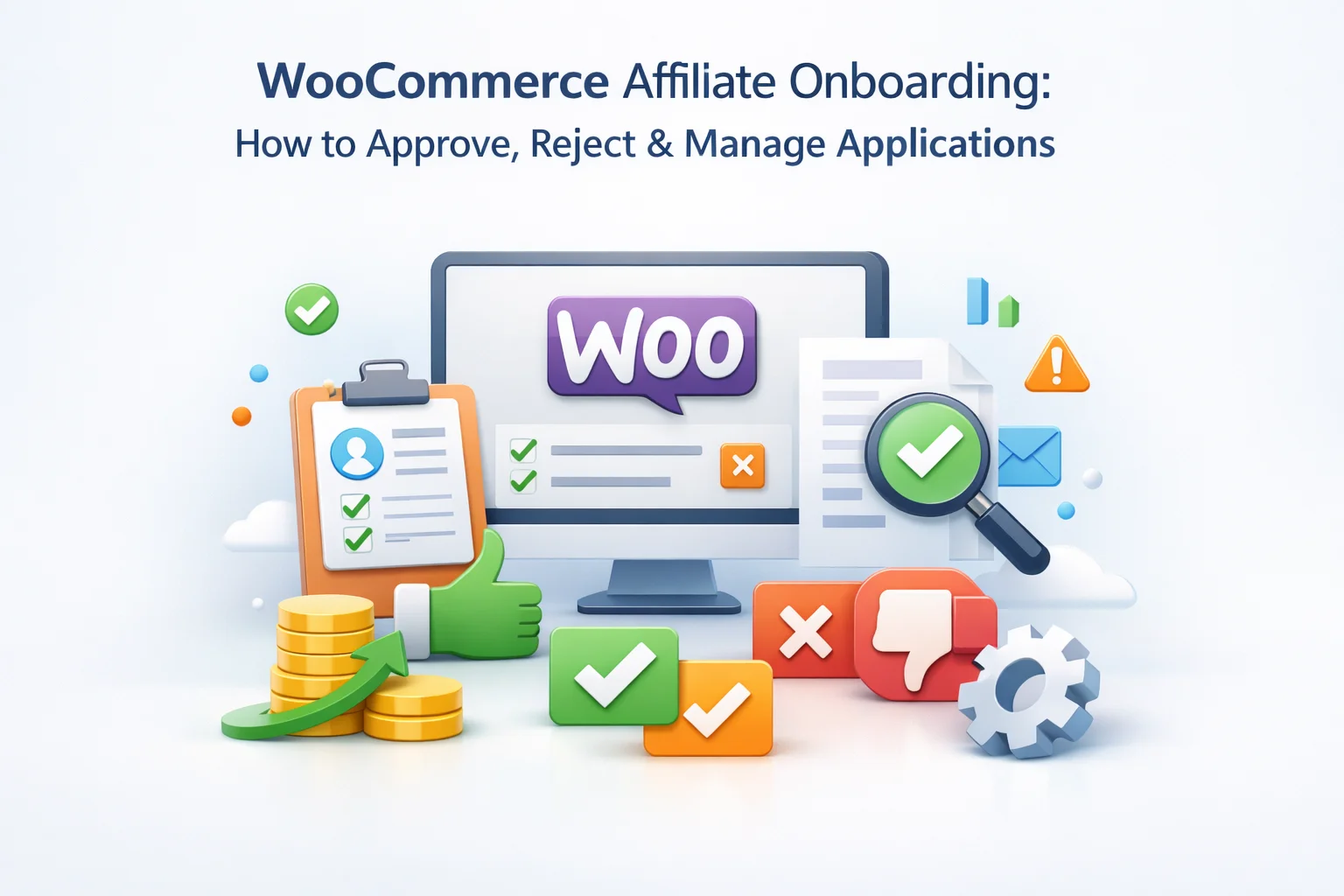
Every WooCommerce store that grows an affiliate channel eventually faces the same fork: open registration where anyone becomes an affiliate instantly, or gated onboarding where you review each applicant before they receive tracking links. Open doors maximise volume and minimise friction. Gated onboarding protects brand, reduces fraud, and keeps support load manageable when your catalogue carries restrictions. Most established stores choose a gate, then struggle with the operational details: who reviews applications, how fast, what data you collect, and how rejections sound when they hit someone’s inbox.
Affiliate Engine treats registration as a first-class workflow. The plugin ships with registration modes that either auto-activate new affiliates or hold them in a pending state until an administrator approves or rejects the request. Admin AJAX actions process approvals and rejections with optional notes, and WordPress hooks fire when an application is approved or rejected so you can extend notifications or CRM updates without forking core code. The registration experience itself is delivered through a shortcode you can place on any page, plus an Elementor widget wrapper for teams building layouts visually. Affiliate Engine, the WooCommerce affiliate registration and application approval plugin, connects that flow to the same dashboard where you later manage referrals and payouts.
For background on how WooCommerce exposes customer account areas where affiliates eventually sign in, the WooCommerce endpoints documentation explains how My Account routes are structured — useful when you link registration pages and affiliate dashboards into a coherent journey.
Automatic activation versus manual approval
Affiliate Engine exposes two registration modes in settings: automatic activation and approval-based onboarding. Automatic mode is appropriate when your risk is low, your product is broadly promotable without compliance review, and you want creators to move from signup to shareable link in a single session. Approval mode is the default in the plugin’s activation defaults, reflecting how many WooCommerce operators work: they want a human to glance at an application before granting access to referral infrastructure, coupon linking, and payout visibility.
The admin dashboard surfaces pending counts when approval mode is active, nudging operators to clear queues before applicants assume the program is inactive. That small UX detail matters because abandonment is emotional: a creator who applies during a burst of motivation and hears nothing for a week will promote a competitor. Whether you approve in hours or days, communicate the expectation on the registration page and in the confirmation message so the wait feels bounded rather than opaque.
Best for digital goods with minimal brand risk, marketplaces with strong post-signup monitoring, or internal partner portals where applicants are pre-vetted elsewhere.
Best for regulated categories, premium brands, stores with aggressive discount policies, or any programme where fraudulent self-referrals spiked in the past.
Publishing the registration experience
Operators can publish `[naff_registration_form]` on any WordPress page. Affiliate Engine also offers an admin helper that creates (or reuses) a dedicated registration page with the shortcode already embedded, storing the page ID in options so other parts of the system can link applicants consistently. If your team builds layouts in Elementor, the registration widget simply renders the same shortcode, which keeps behaviour unified rather than duplicating form logic.
Treat the registration page like a product page: clear headline, eligibility bullets, commission summary, prohibited promotion styles, cookie window if you publish one, and a support contact. Applicants should know what “approval” means in practice — for example, that you verify website ownership, social accounts, or business registration for B2B partners. Surprises belong in marketing campaigns, not in compliance checks that appear only after someone invested time filling your form.

Reviewing requests: approve, reject, and document the decision
Pending applications surface in the admin workflow where store staff can inspect details before granting affiliate capabilities. Approving a request calls the request repository approve path with the acting administrator’s user ID and an optional note. Rejecting follows the parallel reject path with the same note affordance. Both outcomes return JSON success messages to the admin interface so operators get immediate confirmation rather than silent failures that leave applicants stranded in limbo.
Use notes as internal audit trails, not as weapons. A rejection note that explains “we only work with publishers in these countries” or “we need a live channel with consistent traffic” helps sincere applicants course-correct. A blank rejection teaches nothing and invites support tickets. For approvals, notes are optional but valuable when multiple admins rotate through the queue: the note records promo codes promised, tier assignments negotiated, or compliance tickets opened.
Train reviewers on the difference between “this applicant is fraudulent” and “this applicant is not a fit yet.” Fraudulent traffic should trigger security follow-up: duplicate payment identities, recycled disposable emails, or referral patterns that match known abuse rings. Not-a-fit cases deserve kindness — many creators revisit six months later with stronger audiences. Your reject path should leave the door open when the issue is timing, not integrity. That distinction protects your brand reputation in creator communities where word travels quickly.
If you operate in multiple languages, mirror the registration page and the approval emails. Applicants who read your store in Spanish but receive English-only rejection copy assume the programme is not serious about their market. You do not need perfect translation on day one; you do need consistency between the storefront experience and the partner experience. Affiliate Engine’s form fields are labels you control, which makes localisation a content project rather than a code fork.
When an application is approved, the
naff_affiliate_application_approved action fires with the user ID and note string. Rejections trigger naff_affiliate_application_rejected. Those hooks are the right place to enqueue custom emails, Slack notifications, or CRM record updates without modifying plugin core.Custom registration fields: ask for evidence, not novels
Registration settings in Affiliate Engine let you define additional fields beyond the baseline identity data WordPress needs. Each field carries a label and input type so you can collect structured information: URLs, short text, or selection values that map to your vetting checklist. The goal is to force applicants to show their work — primary promotional URL, social handles, audience description — without turning the form into a fifteen-minute essay that filters out busy professionals.
Align questions with what you manually verify. If nobody on the team actually watches YouTube videos during vetting, do not ask for channel analytics screenshots unless fraud patterns justify it. If you do verify, ask for direct links and watch for mismatched branding, scraped content, or incentive traffic. Stores in regulated industries may need tax identifiers or corporate email domains; collect those explicitly so rejection reasons are factual rather than subjective.

| Signal | Green flag | Red flag |
|---|---|---|
| Primary channel | Consistent posting history, clear niche fit | Brand-new account, generic reposts, mismatched categories |
| Traffic intent | Editorial context, product-in-use storytelling | Coupon-only sites, misleading claims, competitor trademarks |
| Commercial honesty | Discloses affiliate relationship where required | Hidden endorsements, scraped policy pages |
For teams that need legally grounded guidance on endorsements and disclosures, the U.S. Federal Trade Commission publishes plain-language materials for digital marketers. Reviewing the FTC Disclosures 101 for social media influencers alongside your program terms keeps approvals aligned with how affiliates must talk about your products in public channels.
Security, spam, and protecting the registration endpoint
Public registration forms attract bots and throwaway signups. Layer baseline WordPress protections first: reputable hosting, rate limiting at the edge if your host supports it, and a modern CAPTCHA or turnstile if abuse appears. Monitor pending queues for bursts of identical answers or nonsense URLs. Affiliate Engine’s approval mode is your last line of defence — even if spam slips through the form, it never gains referral capabilities until a human affirms the record.
Restrict who can access affiliate settings in WordPress with least-privilege roles. Onboarding reviewers need the ability to approve or reject requests, not necessarily to change commission globals or export payout files. Separating duties reduces the blast radius if a staff account is compromised. Pair that with two-factor authentication for every administrator account and periodic audits of user lists. Good security hygiene is part of partner trust: affiliates notice when programme infrastructure feels amateur.
What happens after approval
Once approved, affiliates should land in a predictable cockpit: referral link tools, optional coupon assignment, creatives if you publish them, and visibility into pending versus paid commissions. Affiliate Engine’s WooCommerce My Account integration keeps that experience inside the storefront customers already trust, which reduces password confusion and support overhead compared to sending partners to a separate subdomain with unfamiliar login flows.
Send a concise welcome message that restates rules, points to brand assets, names the payout calendar, and introduces a human contact for escalations. If you use lifecycle email outside WordPress, trigger it from the approval hook so timing matches the moment their dashboard unlocks. The Affiliate Engine WooCommerce affiliate dashboard and onboarding toolkit is designed to sit at the centre of that post-approval experience rather than forcing you to stitch together unrelated plugins.

Templates and language partners actually read
Approval and rejection emails deserve the same care as transactional order messages. Store three plain-text templates in your help desk: approved-standard, approved-with-conditions, and rejected-actionable. The conditional approval might welcome someone while reminding them that coupon codes are issued after a quick brand review, or that paid search on your trademark is off limits. Actionable rejection should always include a next step: “Reapply when your site has three months of content in this vertical” reads better than a single word “denied.”
Keep legal and marketing in sync on wording. Affiliates screenshot emails. If your template promises “lifetime commissions” but your terms cap cookie windows, you will spend quarters unwinding confusion. Link to the canonical terms page in every outbound message and date-stamp policy PDFs when they change. Hooks such as the approval and rejection actions in Affiliate Engine are the right integration point if you want those templates sent from your ESP while the dashboard still records the authoritative decision.
Even a simple WordPress notification that the form submitted reduces “did it work?” pings. State the SLA you target for manual review.
Approve or reject through the Affiliate Engine workflow so the database state, hooks, and emails stay aligned.
Personal sentences build trust: mention the channel you liked, or the policy clause that blocked approval.
Operational cadence and queue hygiene
Assign ownership of the pending queue to a named role — even if that is a rotating weekly duty — so applications never fall into “someone will get to it” territory. Set a service-level expectation internally (for example, two business days) and measure against it. When volume spikes during launches, temporarily add reviewers or switch to auto mode only if your risk assessment supports it; do not let backlog linger as the default state.
Escalation paths matter when a borderline creator has large reach. Marketing may want a yes while finance worries about discount stacking. Decide in advance who breaks ties — usually the head of ecommerce or the CMO — and document that in your internal wiki. Affiliate Engine keeps the technical approve and reject buttons straightforward; the human process around them is what prevents inconsistent decisions that affiliates compare in private forums.
Seasonal programs should temporarily tighten fields rather than pausing approvals entirely. Add a required dropdown for “holiday campaign name” during November so you can batch-review retail applicants with the right context. Remove the field in January to keep friction low again. Small seasonal tweaks beat year-round heavyweight forms that deter professional partners who would have sailed through with baseline questions.
Rejected applicants sometimes reapply after improving their channels. Keep a lightweight record of prior decisions so you do not loop endlessly with the same unresolved issues. Approved affiliates occasionally need suspension if brand safety events occur; your onboarding discipline should match the same clarity when exits happen as when entries do.
Measure onboarding health with a few simple metrics: median hours from submission to decision, percentage of applications approved on first pass, and top three rejection reasons logged in notes. When median time creeps upward, you are understaffed or your criteria are ambiguous. When first-pass approval drops sharply, your marketing may be attracting the wrong audience or your field requirements are unclear. Review those metrics monthly with whoever owns growth so affiliate acquisition stays aligned with merchandising plans and inventory availability.
Onboarding is the handshake that sets expectations for every downstream metric: referral quality, fraud rates, payout disputes, and partner sentiment. Affiliate Engine encodes the technical side — modes, forms, approvals, rejections, hooks — while your policy and tempo determine whether that machinery feels respectful or chaotic. Affiliate Engine – Ultimate WooCommerce Referral & Affiliate Marketing Plugin gives WooCommerce teams a single place to run applications, decisions, and affiliate lifecycle management without bolting on a separate SaaS directory.
If you are migrating from spreadsheets, run the new workflow in parallel for two weeks: continue noting decisions in the sheet while duplicating them in WordPress so you can compare outcomes. The parallel period surfaces training gaps early and reassures finance that totals still reconcile. Once confidence is high, retire the sheet and let the plugin become the system of record for every future applicant. Document the cut-over date in your affiliate policy archive so historical questions have a clear answer and auditors can trace decisions.
Keep a short onboarding retrospective after each major campaign: what broke, what surprised you, what you will template next time. Those notes compound into a playbook new teammates can run without shadowing for a full quarter.
Run affiliate onboarding where you already run your store
Affiliate Engine combines registration forms, approval queues, affiliate records, and referral operations inside WordPress — so partners never wonder which system is canonical.

Finally a plugin that lets me reject applicants without burning bridges!
Finally a plugin that lets me customize affiliate signups without any coding! The form fields are so flexible
Finally, a rejection flow that doesn't burn bridges.