Next-Level Code. Nexuvibe Style ...
Hrs
Min
Sec

Most affiliate programs that stall do not fail on creativity. They fail because the store owner treated referrals as a marketing experiment without closing operational gaps first. A partner posts a link, a customer buys through a different path, and suddenly three people have opinions about who deserves credit. Without written rules and matching software behaviour, every edge case becomes a meeting. With them, edge cases become rare exceptions you can resolve in minutes.
This checklist assumes you are running WooCommerce as your commerce layer, because that is where orders, refunds, tax lines, and customer accounts actually live. WordPress handles content beautifully, but affiliates ultimately need order truth. The official WooCommerce features overview is a useful sanity check when you align your program promises with what the platform already guarantees at checkout.
The following fifteen items map cleanly to how a mature referral stack behaves in production: attribution sources, commission policy, approval timing, fraud posture, and payout governance. When you implement them inside a dedicated plugin such as Affiliate Engine, the WooCommerce referral program plugin with admin dashboard, referrals, and payout workflows, you spend launch week tuning rates instead of debugging basics.
Checklists fail when they are alphabet soup. These fifteen steps follow the sequence most stores naturally need: define the promise, lock attribution mechanics, encode commission maths, protect against abuse, then open the front door to partners. If you invert that order, you will rewrite terms twice and confuse early affiliates who already memorised your first draft. Treat the list as a dependency chain, not a buffet.
Another reason for a fixed count is psychological. “Finish the affiliate project” is vague. “Close items one through fifteen” is a sprint your team can schedule. When marketing wants to announce on Friday, engineering knows which toggles must be green by Thursday night. That alignment matters because referral traffic is vocal traffic. Affiliates talk to each other. A sloppy launch becomes a reputation issue in private Slack channels long before it shows up in public reviews.
1. Publish affiliate terms that match your actual settings. Cookie windows, coupon stacking rules, excluded products, trademark bidding, and brand voice guidelines should live in a single canonical page. When a partner misbehaves, you want to point to a URL, not an old email thread. If you promise a thirty-day attribution window in prose but leave a seven-day cookie in the system, you will pay for both confusion and distrust.
2. Decide what counts as a qualifying order. Minimum order value, allowed customer types, and geographic limits belong here. WooCommerce stores often forget digital goods and subscriptions behave differently on refunds. State whether partially refunded orders reduce commission proportionally or trigger full reversal, even if your plugin handles the mechanics later.
3. Choose default commission type and basis. Percent of product total versus fixed per item changes how affiliates talk about your program. Also decide whether tax and shipping enter the commission base, because that single choice shifts payout maths on every large B2B cart. Affiliate Engine exposes these commission settings in admin; decide the numbers before you invite partners.
4. Map commission overrides before you need them. Product-level rules, category rules, affiliate tiers, and role-based rates should have a documented priority order. Operators who wait for “special cases” end up with secret spreadsheets. The WooCommerce developer documentation hub helps technical teammates understand how product data surfaces in orders, which makes override design less hand-wavy.
5. Set approval and hold rules that finance can defend. Decide which WooCommerce order status moves a referral from pending toward payable, then decide whether a hold period starts from order placement, payment, or that approved status. These choices change cash timing. Announcing them after partners have mental models of “instant credit” creates unnecessary conflict.
Write the human-readable rules, then mirror them in software defaults.
Percentages, minimums, and bases should be locked before recruitment.
Approval triggers and hold periods protect cash flow when refunds spike.
6. Choose the referral URL parameter and identifier format. Consistency across marketing materials matters more than cleverness. Changing parameters later breaks old links unless you leave compatibility redirects. Decide once, document the format in your partner brief, and keep examples in your creatives library.
7. Set cookie lifetime to match your sales cycle. Short cookies protect margin on long-consideration purchases but under-reward legitimate introducers. Long cookies look generous yet attract critics who argue every returning customer “would have bought anyway.” Pick a value you can explain with a straight face, then align remarketing and email sequences so they do not accidentally steamroll partner expectations. Google’s SEO starter guide is a helpful parallel read while you think about how affiliates publish links that search engines crawl.
8. Enable coupon tracking only with a written coupon policy. Affiliate coupons are powerful for social and podcast audiences where cookies fail, but they also leak to deal sites. Decide how partners request codes, how often you rotate compromised codes, and whether coupon attribution wins when both a cookie and a code appear. Affiliate Engine lets you configure coupon attribution priority between cookie-first and coupon-first behaviour; choose deliberately rather than accepting whatever default loaded first.
9. Verify visit logging and fraud signals. Before launch, confirm you can answer: “Show me the visit that preceded this order.” Visits that look impossible (impossibly fast conversions, suspicious referrers) should surface in a fraud view you actually open weekly during early growth. Silence invites abuse; noisy dashboards invite tuning. Pick the lesser evil and iterate.
10. Pick registration mode: open, gated, or approval-required. Auto-approve feels fast but invites spam affiliates who dilute analytics. Approval queues add friction but improve partner quality when your team can respond within one business day. If you require approval, prepare email templates for both outcomes so applicants never wonder whether their form vanished.
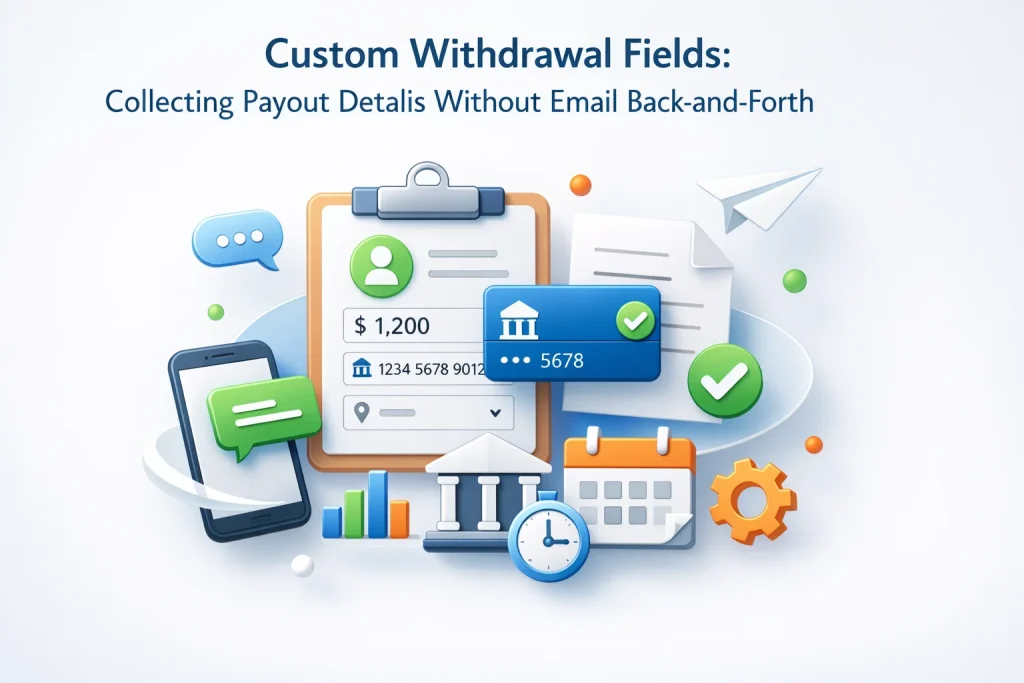
11. Configure registration fields to collect what compliance actually needs. Payment method details, tax identifiers, and promotional channel URLs reduce back-and-forth later. Keep required fields minimal enough that serious creators finish the form on mobile. Every extra mandatory textarea is an abandonment point.
12. Ship a starter creative pack. Even a modest banner set signals professionalism. Affiliates promote faster when they trust brand assets more than screenshots they pulled from your homepage. Pair assets with suggested captions and hashtag guidance so partners stay compliant with your trademark policy.
13. Define payout mechanics and thresholds. Minimum balances, payout schedules, supported methods, and tax documentation requirements should appear in both terms and dashboard copy. Ambiguity here generates the highest volume of angry tickets. If you integrate wallet payouts, test a micro-transfer before announcing the pathway publicly.
14. Align notification emails with your brand voice. Application received, approved, rejected, payout completed: each message should sound like it came from the same company your storefront projects. Inconsistent tone makes partners wonder whether they joined a side project instead of a real program.
15. Run a full rehearsal order in staging or with test mode. Click a referral link, apply a partner coupon, complete checkout, and walk the referral through approval logic. Confirm the affiliate dashboard shows the same numbers you see in admin. One dry run catches mismatched timezone assumptions, currency formatting surprises, and caching plugins stripping referral parameters.
| Launch risk | What good looks like | Who owns it |
|---|---|---|
| Attribution disputes | Documented priority rules and visible visit history | Marketing + ops lead |
| Cash timing surprises | Hold periods mirrored in partner comms | Finance approves wording |
| Brand safety incidents | Published creatives + enforcement examples | Brand + legal |
Affiliate software touches more departments than a typical WordPress plugin. Marketing cares about positioning and partner experience. Finance cares about accruals, reversals, and tax documentation. Support cares about customers who mention a code that did not apply. If everyone assumes “the plugin owner” is someone else, incidents linger. Before launch, write a short RACI-style note: who approves new partners, who adjusts commission defaults, who processes payouts, and who reads fraud alerts weekly. The note can live in your internal wiki beside links to WooCommerce order statuses and your refund policy.
Ownership clarity also speeds audits. When an accountant asks how you know a commission belongs to April instead of March, you should point to order timestamps, referral records, and hold logic rather than exporting ad hoc spreadsheets. Stores that treat referrals as first-class financial events keep healthier books and negotiate fewer emergency adjustments at quarter end.
Public commission rates, seasonal campaigns, influencer briefs, and landing pages must match what the store can enforce automatically. When marketing updates a landing page CTA, they should confirm referral parameters still survive caching and minification layers.
Hold periods and approval triggers should align with refund-heavy categories. If your average return window is thirty days, paying commissions at twenty-one days invites clawback noise. Finance should sign off before you advertise “net-15 payouts.”
When shoppers complain that a code failed, support should know whether the coupon is affiliate-linked, single-use, or restricted by category without escalating to engineering. A short internal cheat sheet prevents public contradictions.
Skipping written terms because “we are only inviting friends” is the most common shortcut. Friends become acquaintances, acquaintances become content creators with audiences, and audiences assume your public store rules apply. Another shortcut is enabling every advanced feature on day one. Tier rules, MLM add-ons, and wallet integrations each solve real problems, but stacking them before you understand baseline referral behaviour makes debugging harder. Prove the simple path first, then layer complexity when you can name the bottleneck it solves.
A third shortcut is refusing test orders because production feels busy. Referral bugs are emotionally expensive: they touch people who promote you in public. A one-hour rehearsal saves dozens of hours of reputation repair. If you must test in production, use controlled coupons, private browser sessions, and accounts that are not your personal admin login, then mark data clearly if your tooling offers a test mode.
Checklists are launch tools, not maintenance tools. Schedule a thirty-day post-launch review while memories are fresh. Compare projected payouts to actuals, scan fraud logs for patterns, and interview two affiliates about clarity of dashboards. Small adjustments early prevent structural debt. Affiliate programs compound when operators treat them like a product, not a poster.
The admin side should answer operational questions without exporting CSV files for every investigation. A dashboard tab that summarises pending requests, recent referrals, and payout pressure mirrors how healthy ecommerce teams already run customer service queues. When that visibility exists, marketing can experiment with confidence because downside risk is bounded.
Closing the loop with affiliates matters as much as closing it with finance. When dashboards explain status changes in plain language, partners spend less time guessing and more time distributing links. That behavioural shift is the hidden ROI of thoughtful launch preparation. You are not buying software to impress investors; you are buying predictable workflows that survive real traffic.
Partnerships also benefit from predictable office hours. Even if you are a small team, stating when you review applications and process payouts reduces anxiety among creators who plan content calendars around your brand. Combine that clarity with visible status inside the affiliate account area and you replace speculation with professionalism. A single sentence in your FAQ often prevents ten duplicate emails, which keeps your team focused on growth instead of inbox triage.
Finally, treat your affiliate program as a channel with its own learning curve. The first month is not representative; seasonality, creator lead times, and creative fatigue all arrive later. Capture baseline metrics now (approval times, average commission per order, top traffic sources in the visits tab) so you can compare intelligently when you change rates or expand internationally. Operators who log decisions alongside metric snapshots avoid the classic trap of debating performance without remembering which settings were live at the time.
If you want one place to execute this checklist inside WooCommerce, Affiliate Engine Ultimate WooCommerce referral and commission tracking plugin by NEXU WP centralises visits, referrals, tiers, creatives, fraud review, and payout requests so your fifteenth item is a rehearsal, not a wish.
Affiliate Engine combines partner onboarding, referral tracking, commission logic, and payout workflows in a single WooCommerce-native toolkit built for operators who prefer calm Mondays.




So if legal hasn't approved the affiliate terms yet, should I delay the launch even though everything else is good to go? Or would a disclaimer work for now?
Saved my butt on Black Friday
Hey everyone, just grabbed this checklist for a friend launching their WooCommerce store. The way it breaks down affiliate setup into clear steps (not just "figure it out") is exactly what they needed
How do you handle cases where a customer