Next-Level Code. Nexuvibe Style ...
Hrs
Min
Sec

The math is brutal for small business owners who need customer support. A single full-time support agent in the United States costs between $35,000 and $55,000 annually when you include salary, benefits, and overhead. That agent works 40 hours per week, needs training, takes vacations, calls in sick, and cannot handle more than a few conversations simultaneously. For a business doing $200,000 in annual revenue, dedicating 20% to 25% of that to a single support hire is often impossible.
But customers still have questions. They want to know shipping times at 11 PM on a Sunday. They need help finding the right product while you are asleep. They expect instant responses in an age when Amazon has trained everyone to demand immediacy. The gap between customer expectations and small business resources has never been wider.
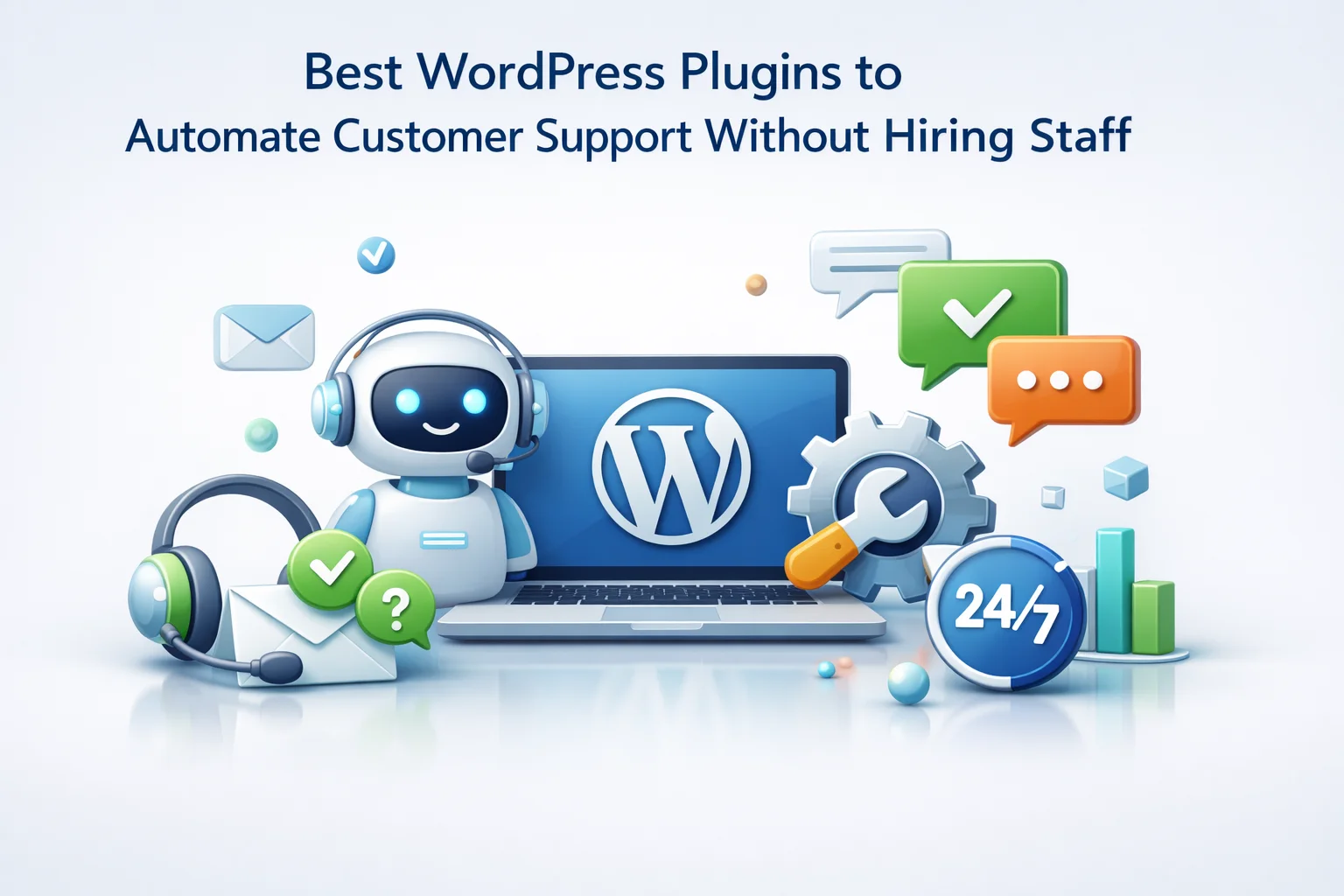
This is where WordPress automation plugins fill a critical need. The right combination of tools can handle 60% to 80% of typical customer inquiries automatically, leaving only complex or sensitive issues for human attention. This guide covers the best plugins for automating WordPress customer support across different needs and budgets.
Before diving into specific plugins, let us establish the financial case for automation. Understanding these numbers helps you evaluate the ROI of any solution you consider.
The gap is substantial. A well-configured automation stack costs 95% less than a human agent while providing round-the-clock availability. The question is not whether automation makes financial sense but which automation tools deliver the best results.
AI chatbots are the front line of automated support. They intercept customer questions, provide immediate answers, and only escalate to humans when necessary. The best ones use your actual website content to generate accurate, contextual responses.
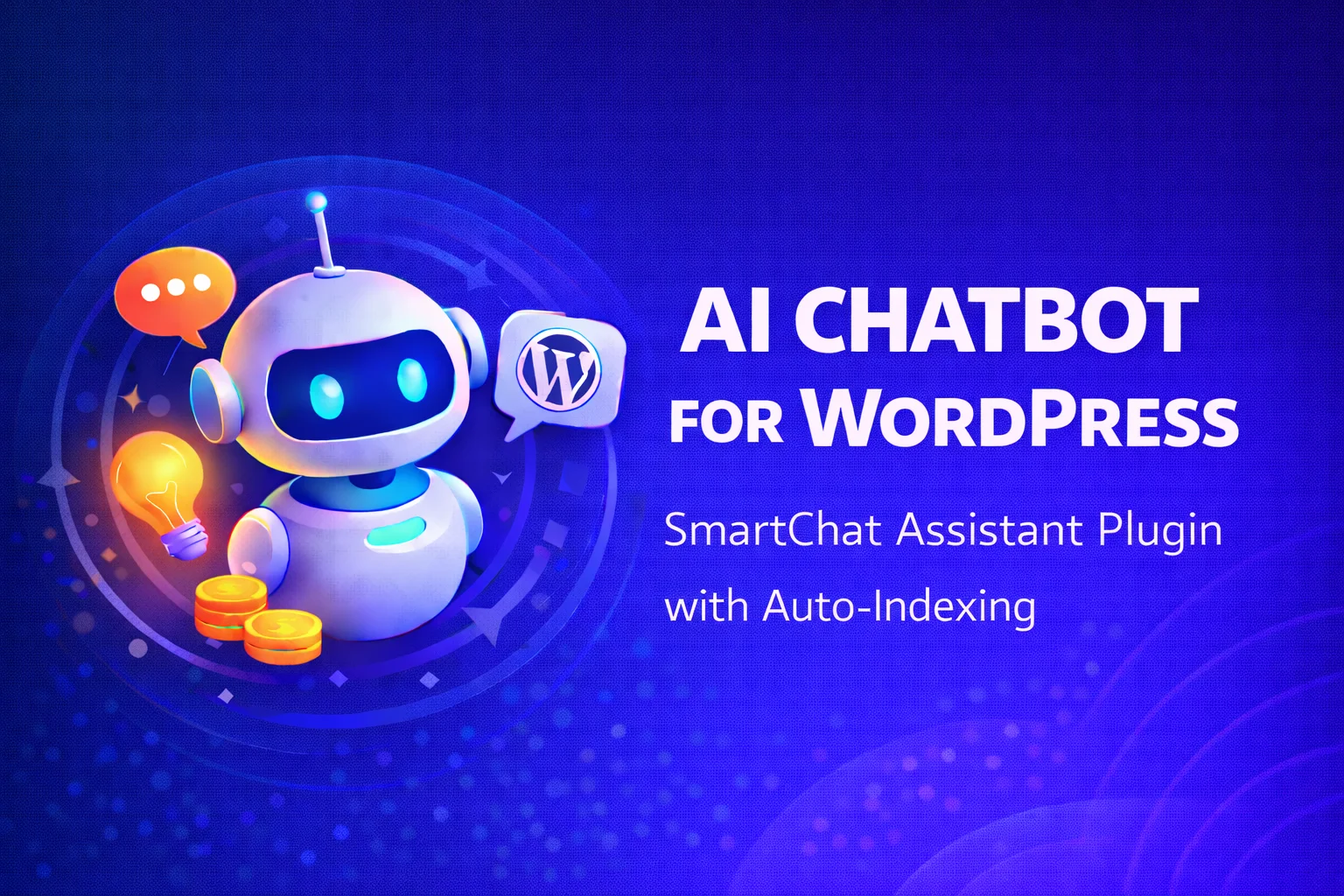
Nexu SmartChat represents the current state of the art in WordPress AI customer support automation. It automatically indexes your WooCommerce products, pages, and posts to build a knowledge base, then uses GPT-4 or Claude to generate contextually accurate responses. Unlike generic chatbots, it knows your specific products, policies, and content.
The key differentiator for Nexu SmartChat is its RAG (Retrieval-Augmented Generation) architecture. When a customer asks about shipping, the chatbot searches your actual shipping policy page and generates a response based on that content. When someone asks about a specific product, it retrieves that product’s details from your WooCommerce database. This grounding in real data prevents the hallucinations that plague generic AI chatbots.
AI Engine offers extensive customization options for developers who want to build custom AI experiences. It supports embeddings and can index content, though the setup requires more technical knowledge than plug-and-play solutions. Good for agencies building custom solutions.
WPBot uses a more traditional approach with manual FAQ entries and decision trees. It can connect to DialogFlow for natural language understanding. Works well for sites with limited, predictable question types but lacks the dynamic content understanding of RAG-based solutions.
Many customers prefer finding answers themselves rather than waiting for chat responses. A well-organized knowledge base reduces support volume by letting customers self-serve. These plugins create searchable documentation that intercepts questions before they become support tickets.
Creates a fully-featured knowledge base with categories, live search, article voting, and analytics showing which articles are most helpful. The search suggests articles as customers type, often answering their question before they finish asking it. Integrates with popular page builders.
BetterDocs includes an “Instant Answers” floating widget that searches your documentation as customers browse. When they type a question, relevant articles appear instantly. This proactive approach catches questions before customers even decide to contact support. Works well with Elementor.
A simpler option focused specifically on FAQ management. Creates accordion-style FAQ sections with search functionality. Includes FAQ schema markup for Google rich snippets, potentially capturing customer questions directly from search results before they even reach your site.
Not every question can be handled by a chatbot or knowledge base. When human intervention is needed, ticket management plugins organize the workflow. The best ones automate routing, prioritization, and initial responses to minimize the human time required per issue.
Awesome Support turns WordPress into a complete help desk. Features include automatic ticket assignment, canned responses, time tracking, and email piping. The automation rules let you auto-assign tickets based on keywords, auto-respond with relevant documentation links, and escalate urgent issues automatically.
A more streamlined option if you do not need enterprise help desk features. SupportCandy handles ticket creation, assignment, and email notifications cleanly. The auto-close feature automatically resolves tickets after a period of inactivity, reducing the administrative overhead of manual ticket management.
The most effective automation combines multiple layers. Each layer catches different types of inquiries, with only the most complex issues reaching human attention. Here is how to structure a comprehensive support automation stack.
Install a searchable knowledge base covering your most common questions. Use analytics to identify top queries and create thorough articles addressing each one. This layer catches customers who prefer self-service and reduces the load on everything else.
Deploy an AI chatbot with auto-indexing for customer questions that customers cannot find in your knowledge base or who prefer conversational interaction. The chatbot handles real-time queries, recommends products, and provides instant answers 24/7.
Configure your chatbot to create support tickets when it cannot resolve an issue or when customers explicitly request human help. The ticket system auto-assigns based on category, sends relevant knowledge base links in the auto-response, and prioritizes based on keywords.
Only issues that cannot be resolved by the first three layers reach human attention. By this point, the ticket contains conversation history, relevant context, and initial troubleshooting. You (or a part-time VA) handle the 20% to 40% of inquiries that genuinely need human judgment.
The financial case for support automation is straightforward once you measure your current support volume and costs. Here is a framework for calculating your specific ROI.
For a store handling 500 support interactions monthly at 10 minutes each, that is 83 hours of support work. At $20/hour, that is $1,660 monthly. If automation handles 70%, you save $1,162 monthly or nearly $14,000 annually. The entire automation stack described here costs under $500 per year, delivering roughly 28x ROI.
Customer support automation is not about eliminating the human element. It is about deploying human attention where it creates the most value. Routine questions about shipping times and return policies do not need a human touch. Complex issues, upset customers, and edge cases do. Automation handles the former so you can focus on the latter.
The plugins covered in this guide provide a complete toolkit for WordPress support automation. Start with an AI chatbot that actually understands your content. Add a knowledge base for customers who prefer self-service. Implement ticket automation for issues that need human review. Monitor the results and adjust.
Nexu SmartChat for automated WordPress customer support serves as the centerpiece of this stack. Its auto-indexing ensures accurate responses without manual training. Its multi-provider AI support gives you flexibility. Its conversation analytics help you continuously improve. And its human handoff feature ensures complex issues reach you when needed.
Nexu SmartChat handles customer questions 24/7 using AI that actually understands your products and policies. Save thousands in staffing costs while providing better, faster support.





I was pretty skeptical about automating support at first our consulting work is super niche, so I figured no bot could keep up. but when I ran the numbers, it was a no brainer. Hiring even one full time support person would've eaten up nearly a fifth of our margin, and that's before factoring in their limited hours.
Finally found a guide that actually gets how hard it is to run support on a tight budget! The shipping time example at 11 PM hit home my customers ask that constantly.
Didn't expect a plugin to actually pull answers right from my site's FAQ. Cut my late night "where's my order?" messages in half the first week. Still tweaking the tone, but the results speak for themselves.
Hey, solid breakdown on the cost savings here. Did the math myself automating even 60% of support tickets covers what I'd pay a part timer. Still keeping a human for edge cases, but this cuts overhead hard. worth testing.